


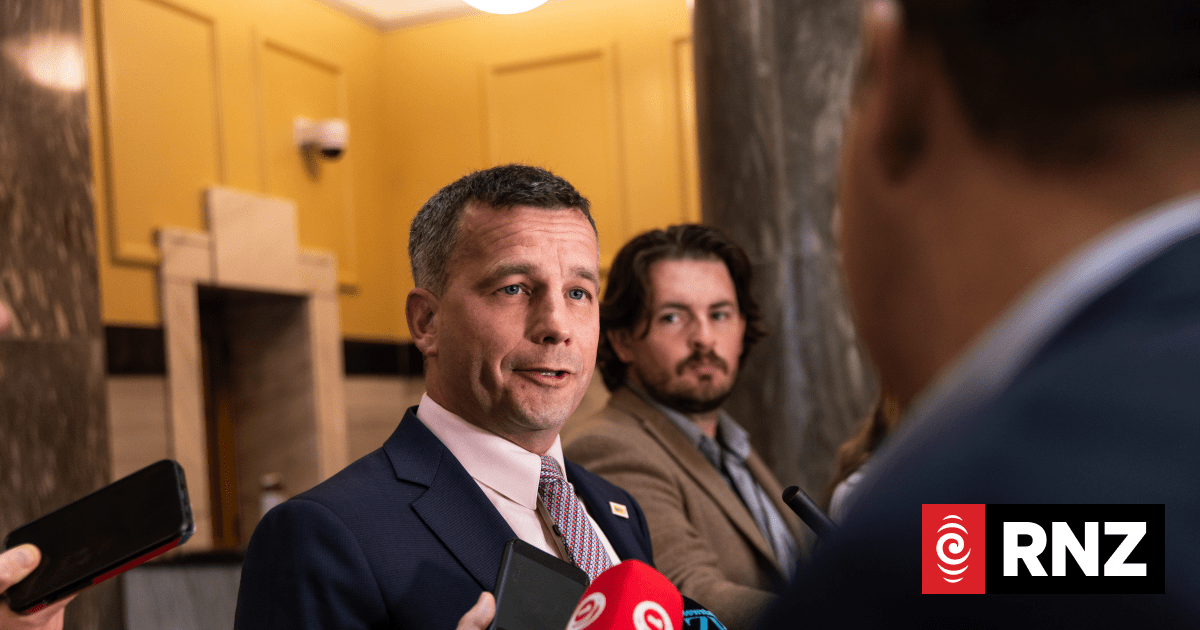
ACT Leader Advocates for Reform in Immigration Policy
David Seymour emphasized that ACT’s immigration policy is a longstanding strategy designed to tackle significant challenges facing New Zealand. He suggested that those who accuse him of competing with New Zealand First should engage more constructively in the conversation.
Critics of Seymour’s immigration framework include opposition parties, immigration attorneys, sociologists, and allies within his own coalition. However, Seymour stands firm against their critiques.
He stated, “While some dismiss our political discussions as mere melodrama, I believe that politicians must heed public concerns and respond by crafting effective policies.” With 20,000 known overstayers in the country and a stark discrepancy where fast food workers outnumber biomedical technicians by a ratio of 100 to 1, he argues that addressing these challenges is a political obligation.
When asked to substantiate his claims about fast food workers, ACT highlighted that 2,480 fast food positions had been approved since 2022, contrasting sharply with just 30 for biomedical technicians.
Political Rivalry Intensifies Over Immigration Policies
Winston Peters, the leader of New Zealand First, took to social media to voice his opinions about Seymour’s proposals. He acknowledged the effort as a “good initiative,” but lamented that essential aspects remain unaddressed. Peters encouraged ACT to keep this issue in mind for when New Zealand First reveals its comprehensive immigration strategy.
Seymour’s announcement follows his recent proposals that include increased deportations, a heightened crackdown on illegal overstays, a $6-a-day infrastructure fee on temporary work visas, and a five-year ban on welfare for residence-class visa holders. In response, Immigration Minister Erica Stanford cautioned against rushing into electoral policies that may lack careful consideration. She argued that the proposed fee could deter high-caliber talent from choosing New Zealand as a destination.
Stanford explained that while migrants currently face an upfront application cost of $11,000, measures should target the costs they impose on health and education services rather than enforcing high taxation at the outset. She warned, “Those who are driven away by such policies are the very professionals employers, particularly in the rural sector, desperately need.”
Concerns Over Political Tactics in Immigration Debate
Labour’s immigration spokesman, Phil Twyford, criticized the competing narratives between ACT and New Zealand First as a sign of “election year politics.” He expressed concern that such serious matters should not be reduced to a contest for political survival among smaller parties. Twyford concluded that immigration policy is crucial for New Zealand’s future and should not be politicized for short-term gains.
Echoing Twyford’s sentiments, Green Party spokesman Ricardo Menendez-March derided ACT’s approach as reminiscent of divisive political tactics seen elsewhere, calling it reminiscent of a Trump-inspired agenda that oversimplifies complex issues like immigration. He accused Seymour of scapegoating immigrant communities, suggesting that ACT is resorting to “straight up dog whistle” politics.
A Challenging Landscape for Immigration Policy
Social sciences expert Paul Spoonley also commented on the implications of ACT’s proposals. He pondered the values that new immigrants would be expected to adhere to and questioned how these would be communicated and enforced. “Is the Treaty of Waitangi a part of this conversation? The details seem murky,” he remarked.
Immigration attorney Alistair McClymont noted that ACT’s proposals fail to introduce meaningful changes to the current immigration system and appear to mimic New Zealand First’s xenophobic rhetoric. Twyford refrained from labeling ACT’s stance as dog whistle politics, but remarked that the party is clearly attempting to appear tough on immigration in a bid to defend its political position against New Zealand First.
In response to these objections, Seymour defended his position, stating that he has collaborated with McClymont in the past and has sought a more constructive exchange of ideas. He remarked, “It’s unfortunate that some critics reduce the immigration debate to melodrama, overlooking the real challenges Austria faces in this area.” Addressing Peters’ tweet, Seymour asserted that ACT’s longstanding policies align with what he has espoused for the past decade.
As he contend with immigration concerns, Seymour pointed to illegal overstayers as an issue that requires immediate action, stating, “Those who enter our country illegally break the law from their first act, which perpetuates stigma surrounding immigrants who do play by the rules.” His response hinges on the establishment of a specialized Immigration Bureau task force to tackle issues related to illegal status.
He also dismissed Spoonley’s concerns about increased bureaucracy stemming from recommendations to enhance the Approved Employer work visa regime. Seymour concluded, “To adapt to changing needs in the labor market, we need an annual review process that accurately reflects the skills shortages we face.”
