


Algeria Bolsters Its Space Endeavors with New Satellite Launches
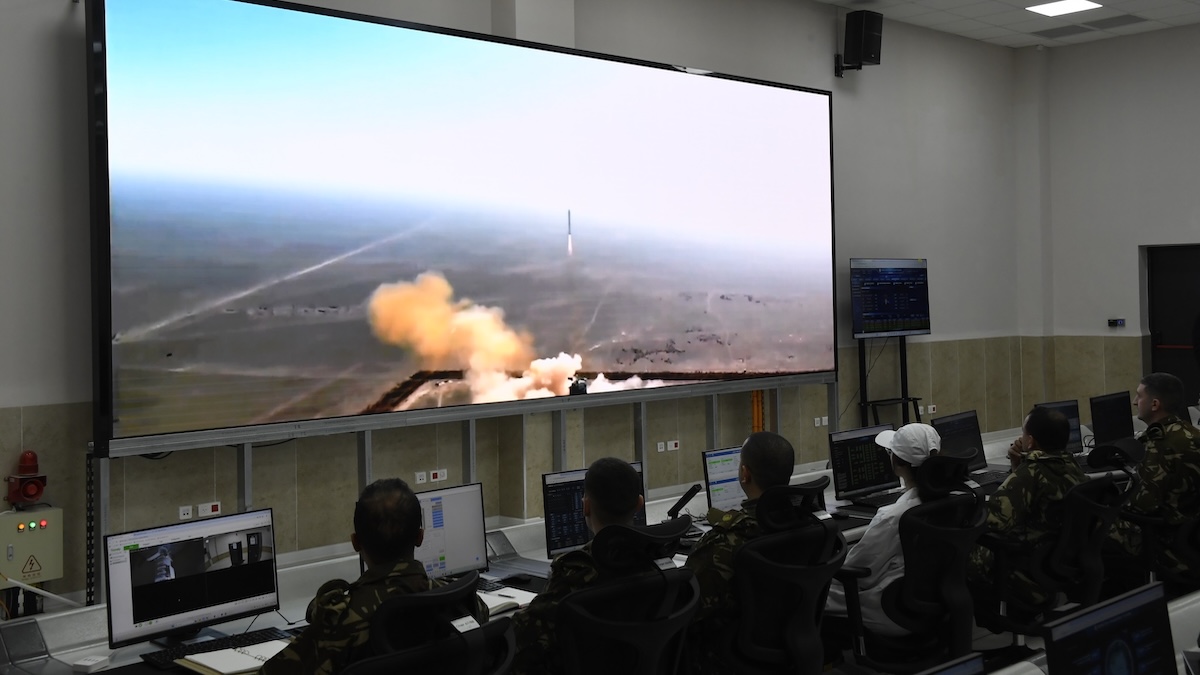
This year, Algeria significantly enhanced its presence in space by successfully launching two satellites, ALSAT-3A and ALSAT-3B, within just two weeks in January. This achievement brings the total number of satellites deployed into orbit by African nations to 69, following Egypt’s NileSat 101, which was launched in 1998.
A Frontrunner in African Space Exploration
Space exploration has emerged as a key focus for African countries aiming to harness technological advancements. By gathering vital data on weather patterns, food security, and population movements, these nations are better equipped to plan for the future effectively.
Advancements in Satellite Technology
The ALSAT-3A and ALSAT-3B satellites are designed to provide high-resolution images of the Earth, significantly enhancing land-use planning and disaster prevention efforts. This launch follows Algeria’s earlier satellites, ALSAT-2A and ALSAT-2B, both unveiled in 2010, and marks a continuation of the country’s foray into space that began with ALSAT-1 in 2002.
Key Conference on Africa’s Space Future
The 2nd NewSpace Africa Conference in April, co-hosted by the African Space Agency and Gabon’s Gabonese Space Observatory (AGEOS), tackled the continent’s future in space exploration. This three-day event gathered experts from governments, academic institutions, and the commercial space sector, all convening to devise strategies for advancing Africa’s position in the space arena.
Advocating for Equitable Development
Organizers of the conference underscored the importance of fostering development across the continent in an equitable manner. Their vision is to transform Africa’s space industry into not merely a segment of scientific exploration but a crucial enabler of sustainable development and collective prosperity across the continent.
Progress Across the Continent
Tidiane Ouattara, President of the Council of African Space Agencies, highlighted that the conference served as a platform to showcase Africa’s strides in space technology. He emphasized the shared vision of utilizing space as a catalyst for sustainable development, economic growth, and international collaboration.
Satellite Developments and Collaborations
With nearly 30 years of satellite deployments from 18 African countries—led by Egypt and South Africa—African nations continue to expand their capabilities. Satellites serve crucial functions in observation and communication, although local launch facilities remain absent. Instead, satellites are deployed using rockets from launching sites in Japan, Russia, China, the United States, and the European Space Agency.
Pioneering Efforts in Senegal
Senegal, in partnership with France’s Montpellier University Space Center, has made strides in its space initiatives, launching its first satellite, Gaindesat-1A, in 2024. This launch followed the establishment of the Senegalese Space Research Agency (ASES) in the previous year, with plans already in place to launch up to seven additional satellites by 2028. Senegal aims to develop a “Space Valley” to foster innovation and technological growth.
A Focus on Collaboration and Security
Malam Khaire, Director-General of ASES, articulated Senegal’s ambitions to position the space sector as an essential tool influencing various facets of society, with a strong emphasis on security. The organization’s five-year agreement, signed with the Senegalese Armed Forces in 2025, aims to utilize satellite technologies for data collection, reflecting a broader trend in Africa recognizing the strategic importance of space technology for national security and surveillance.
Unifying Africa’s Space Initiatives
In line with the vision for equitable development, the African Union is set to launch the African Space Agency in Cairo by the end of 2025. This institution will operate on four key pillars—enhancing Earth observation, supporting satellite communications, promoting astronomy, and advancing space science. Meshack Kinyua Ndiritu, the AU’s head of space training, emphasized the importance of uniting the continent’s disparate space programs to foster collaborative projects that benefit all Africans.
Building Infrastructure and Human Capital
Africa’s space program is still in its formative stages, according to Kinyua. The African Union is actively working to ensure that member countries develop both infrastructure and human capital necessary for advancing their ambitions in space exploration.
