


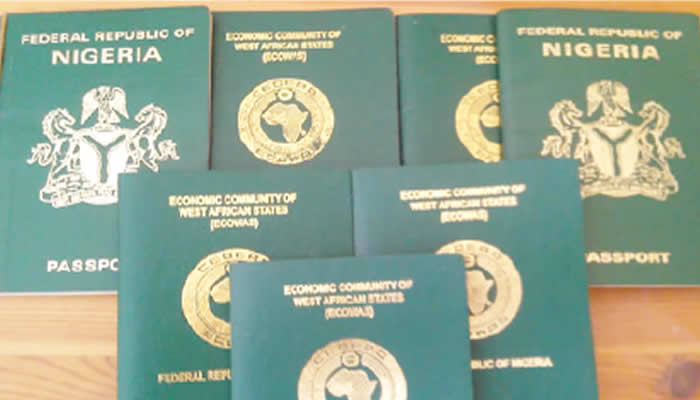
Nigeria’s Passport Ranks Higher Amid Decreased Visa-Free Access
Since President Bola Tinubu assumed office in May 2023, Nigeria’s passport has improved its position by six places in the Henry Passport Index, moving from 95th in January 2024 to 89th in the latest April 2026 edition. Despite this upward trajectory in ranking, the actual number of countries accessible to Nigerian passport holders without a visa has declined by two destinations.
This decline is attributed to a series of countries—including Ethiopia, Zambia, Zimbabwe, Lesotho, Somalia, Mauritania, and Sao Tome and Principe—updating their visa requirements for Nigerian citizens in recent years. As a result, the number of visa-free destinations has dropped from 46 in January 2025 to 44 in April 2026, according to the April 2026 Henley Passport Index.
Data from the index suggests that although Nigeria’s global ranking has improved, there has been no corresponding enhancement in passport strength. This advancement is partly due to countries that previously occupied lower ranks falling even further, thereby allowing Nigeria to rise in the index without increases in visa-free travel opportunities.
Now in its 21st year, the Henley Passport Index evaluates 199 passports globally, using exclusive data from the International Air Transport Association. Over the past two decades, the Nigerian passport has experienced a notable decline of 27 places, from 62nd in 2006 to its current position.
A comprehensive comparison reveals that while Nigerian passport holders have gained access to nine new destinations in 2026—such as Fiji, Micronesia, Mozambique, Rwanda, Togo, Samoa, Palau, Niue, and Montserrat—they simultaneously lost entry to seven others. Notably, Ethiopia, previously an easily accessible option, now requires Nigerian travelers to obtain a visa in advance, following the withdrawal of visa-on-arrival privileges.
The Zambian government has also imposed visa requirements for all West African passport holders. Visas that were previously granted upon arrival in Zimbabwe are now required to be applied for ahead of travel. Other countries, including Lesotho, Mauritania, Sao Tome and Principe, and Somalia, have enacted similar pre-visa requirements for Nigerian travelers.
While Visa-free travel to various Pacific Island nations remains open, changes in visa accessibility illustrate a growing trend of restrictions for Nigerian passport holders. Among West African countries, Ghana currently ranks 67th globally, offering 67 visa-free destinations, while The Gambia, with a population of under 2.5 million, stands at 66th with 68 visa-free options. Other regional competitors are positioned significantly higher than Nigeria, which languishes near the bottom of the rankings.
On the continental level, South Africa remains the leader, ranked 46th with visa-free access to 100 destinations. In stark contrast, Nigeria’s passport has faced increasing barriers, raising questions about the implications of national conditions on international mobility. Experts suggest that the decline in visa-free access reflects broader socio-economic challenges within Nigeria, where the current environment has prompted heightened scrutiny from foreign nations.
