


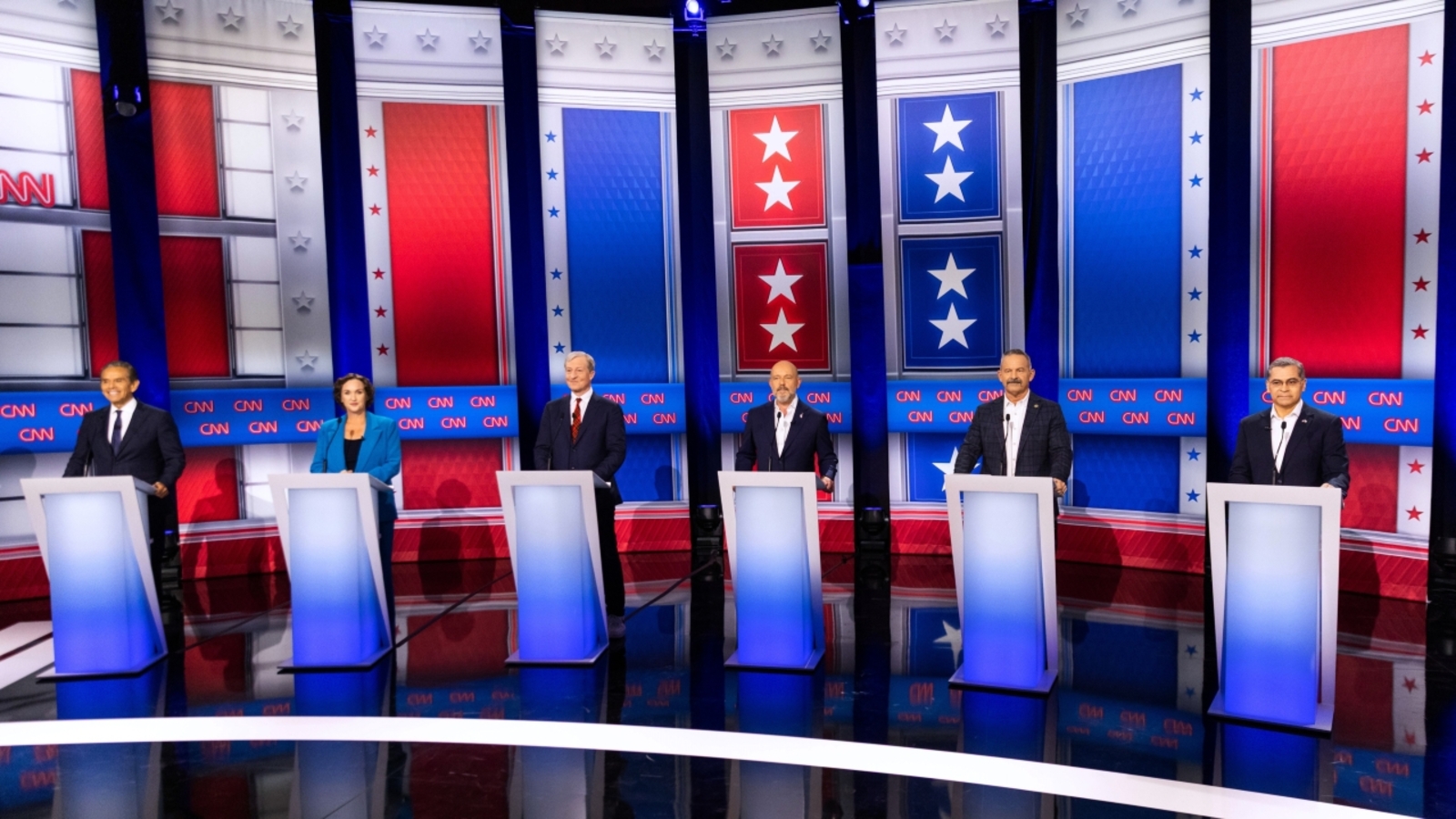
California Gubernatorial Candidates Engage in Heated Debate
Los Angeles — Seven candidates vying to succeed California’s governor took the stage Tuesday for an intense debate, targeting each other on crucial issues such as gas prices, taxes, and immigration amid a tightly contested race without a clear frontrunner. The televised event occurred as mail-in voting commenced for the primary election, which concludes on June 2nd. The urgency of this debate was evident as the candidates positioned themselves strategically for potential voter support across the nation.
Addressing California’s High Cost of Living
The discussion prominently featured California’s soaring cost of living, especially concerning gas prices. Candidates clashed over the reasons behind these high prices and potential solutions. According to AAA, the average price for gasoline in California exceeded $6 per gallon on Tuesday, prompting candidates to showcase their divergent views on addressing this issue.
Blame Game Over Gas Prices
Several Democratic candidates, including former state Attorney General Xavier Becerra, deflected responsibilities by attributing rising gas prices to President Donald Trump and ongoing geopolitical tensions. In contrast, Republican candidates Steve Hilton and Chad Bianco were quick to counter that California has historically endured higher fuel prices than most other states.
Uneasy Exchanges and Challenges to Credibility
Republican candidate Steve Hilton claimed he could reduce gas prices to $3 per gallon, a statement Democrat Matt Mahan challenged directly, accusing him of misleading voters. Hilton, who enjoys Trump’s backing, retorted by highlighting that states with lower living costs also have Trump in governance, intensifying the rhetorical sparring on stage.
Dynamics of a Diverse Candidate Pool
This election marks a rare opportunity for candidates to compete for California’s top office in a state historically dominated by Democrats. With over 50 candidates appearing on the ballot, the debate represented a pivotal moment for those seeking to take the helm from retiring Democratic Governor Gavin Newsom.
Focus on Tax Policy and Economic Strategy
The discourse also tackled tax policies, with Tom Steyer being the lone candidate to advocate for a one-time tax on billionaires, a proposal likely to feature on the ballot in November. While Steyer argued that it shouldn’t be the only tax increase pursued, Katie Porter criticized its narrow scope, emphasizing that Democrats must redirect their focus toward enhancing government efficiency rather than merely expanding it.
Broader Challenges Facing California
The backdrop of this electoral battle is underscored by California’s ongoing homelessness crisis, soaring housing costs, and a predicted budget deficit, compounded by rising prices for essential goods and services. Republicans have seized upon these pressing issues, attributing many of the state’s challenges to the predominant influence of the Democratic Party, which they argue has fostered a climate of heavy taxation and burdensome regulations.
The Landscape of California’s Political Scene
Steyer, a hedge fund manager turned activist, has invested significantly in advertising, spending nearly $150 million on radio, cable, and broadcast ads to elevate his profile, far outpacing his opponents. California’s unique electoral system combines candidates from all parties onto a single ballot, with the top two vote-getters—regardless of party affiliation—advancing to the general election in November. This arrangement has raised concerns among Democrats, who fear the potential emergence of two Republican candidates in a historically Democratic stronghold.
With Republicans having not won a statewide election in California for two decades and registered Democrats significantly outnumbering their Republican counterparts, the stakes of this election are higher than ever.
Austin reported from Sacramento, California.
