


Indiana Republicans Face Fallout from Redistricting Vote
Last year, a faction of Indiana Republicans who opposed the party’s redistricting plan found themselves at the center of a political storm, facing public condemnation from former President Donald Trump and a wave of negative advertisements. This past Tuesday, their resistance to the proposed map resulted in significant electoral consequences, as several of these Republicans lost their primary races.
In an unusual twist, three state senators spoke with NBC News, emphasizing they had no regrets about their votes, despite the backlash that ultimately led to their defeat by pro-Trump opponents. State Senator Greg Walker, a veteran legislator, stated he felt “no regrets at all” after losing to State Representative Michelle Davis.
Similarly, State Senator Jim Buck, who has served more than three decades in the Legislature, refuted any feelings of regret. “My constituency overwhelmingly told me to vote no, and I did,” he affirmed. Fellow Senator Linda Rogers echoed this sentiment, insisting she acted in accordance with her constituents’ wishes.
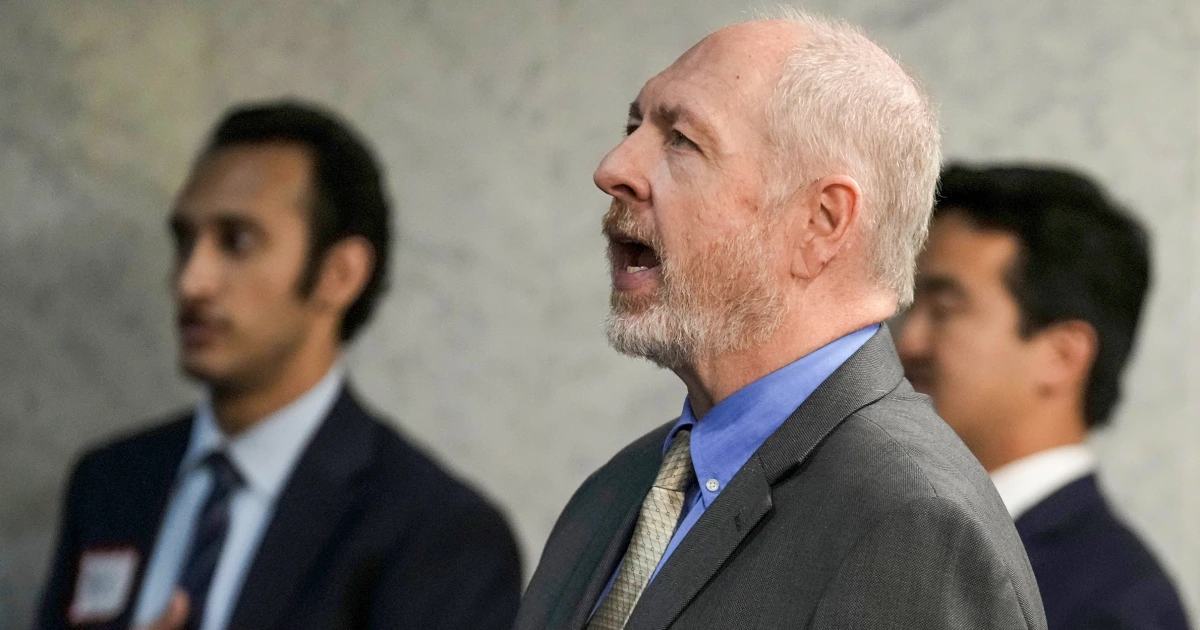
Grace Smith/IndyStar/USA Today Network (via Reuters)
Walker, Buck, and Rogers were part of a group of seven Republicans who voted against a congressional mapping proposal that could have netted the party two additional seats. They faced significant pushback, as many local voters perceived the mid-decade redistricting as an unfair political maneuver.
This situation marks an unusual rebuke to Trump, who actively campaigned for the bill’s passage, hoping to strengthen Republican control in upcoming midterm elections. On primary election day, five of the seven candidates who opposed the redistricting plan lost their races. However, one candidate, Greg Good, successfully advanced, while Spencer Deary remained in a close contest with Trump-backed opponent Paula Copenhaver, leading by just three votes.
Deary conveyed a common sentiment among his colleagues in a message to NBC News, stating, “I will never regret listening to my constituents and doing the right thing,” reinforcing the idea that standing by their principles was more important than party alignment.
Former President Trump’s involvement has transformed Indiana’s usually low-key congressional primary into a high-stakes contest, with approximately $12 million spent on advertising during battles between Trump-endorsed candidates and incumbent senators. This heightened financial battle made it increasingly difficult for traditional funding to compete against the aggressive advertising campaigns aimed at discrediting these lawmakers.
State Senator Buck remarked on the challenge posed by outside funding, recalling that approximately $1.3 million had been spent against him during the primary, in stark contrast to his campaign’s budget of less than $150,000. “Perception becomes reality,” he noted, indicating how relentless negative messaging can undermine even well-established candidates.
As the implications of these electoral defeats resonate, Buck, Rogers, and Walker expressed concern that their losses could send a worrying signal to other lawmakers across the nation about the consequences of standing up to Trump. “This is what our founders feared most,” Buck remarked, drawing attention to the tension between state interests and national party demands in today’s polarized political landscape.
These mid-decade redistricting battles are not confined to Indiana; eight states have enacted new congressional maps over the past year, further complicating the political landscape. As lawmakers navigate this treacherous terrain, discussions surrounding gerrymandering remain crucial, reflecting ongoing tensions within the legislative process at both state and national levels.
