


Nigeria’s Burgeoning Costs for Overseas Education
Reflecting on a popular adage, one might recall it pertaining to the dilemma faced by many in Nigeria: “There is water everywhere, but not a drop to drink.” This sentiment resonates particularly in light of the staggering N53 billion spent by five states to keep 120,000 Nigerian students enrolled in foreign universities over the past decade.
Shifting Perspectives on Wealth
In the not-so-distant past, significant amounts of money were astonishing; a million naira could induce fainting spells. Justice Obuhiski famously stated that encountering a million Norwegians would leave him breathless—this was in 1983. Today, conversations have shifted from thousands to billions, and the surprising figures no longer raise eyebrows. The prevalence of figures in the billions is now commonplace, even extending to luxury items, such as certain SUVs priced at a remarkable 365 million naira.
The State of Higher Education in Nigeria
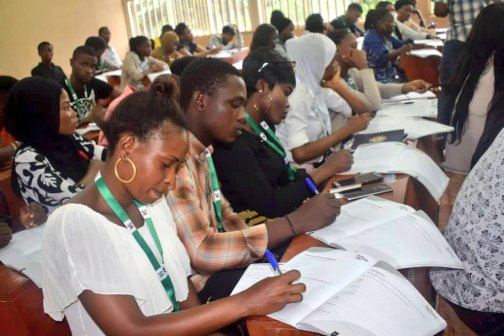
Nigeria is home to 170 universities, including 79 private institutions. Currently, the landscape consists of 43 federal universities and 48 state universities. The academic environment has been tumultuous; for much of 2021 and 2022, universities were in prolonged strikes under the watch of Chris Ngige, the then Minister of Labor. Students faced a dire learning situation as they urged the government to uphold previously established agreements while progress seemed alarmingly slow.
Leadership Changes in Academic Unions
As these events unfolded, the academic union witnessed a leadership change. Following the expiration of one leader’s term, a successor took over amidst a backdrop of students who had remained at home for nearly a year. This scenario parallels the earlier exodus of doctors, who were reported to be leaving Nigeria in search of better opportunities. Minister Ngige famously remarked on national television that the country had enough doctors and indicated that anyone wishing to emigrate could freely do so.
Critical Staffing Shortages
The shortage of educators, particularly in public universities, has become a pressing issue. Most faculties are lacking qualified personnel, with a few private universities standing out. Lecturers have lamented the appalling conditions at public institutions, while many Nigerian governors elect to send their children abroad to pursue higher education. Consequently, funds that could enhance local universities are redirected, benefiting foreign institutions that can offer superior facilities and world-class instructors.
Foreign Education Funding Trends
Between 2013 and 2023, Kano incurred a staggering spend of N36.5 billion to educate 115,288 students overseas. Similarly, Sokoto allocated N14 billion for 4,600 students from 2016 to 2022, while Borno designated NOK 588 million for 180 students from 2020 to 2023. This trend reflects a time when students traveled to Nigeria from foreign nations, contributing to a vibrant academic tapestry across cities. Notably, the former President of South Africa was among those educated at what is now known as Obafemi Awolowo University.
A Correction in Attribution
Lastly, I would like to rectify an earlier oversight concerning the esteemed Professor Moses Akinola Makinde, who interviewed Chief Obafemi Awolowo. My previous mention included only his first and middle names, inadvertently omitting his last name—a notable misstep, as a name holds significant identity and respect.
