


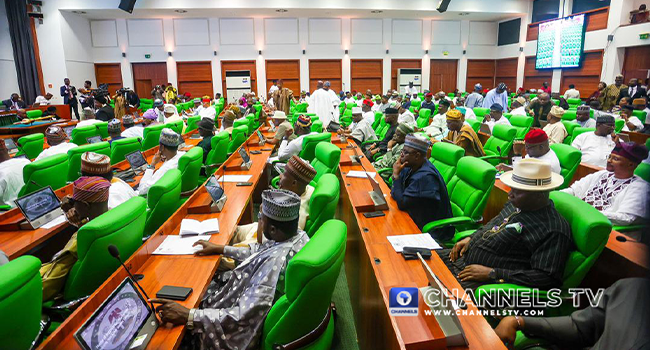
House Approves 2026 Budgets for FCTA and NDDC
The House of Representatives has officially approved the 2026 statutory budgets for the Federal Capital Territory Authority (FCTA) and the Niger Delta Development Commission (NDDC), with allocations of N2.29 trillion and N1.75 trillion, respectively. Lawmakers emphasized the importance of accountability in the execution of these budgets, particularly regarding infrastructure improvements.
Details of the Federal Capital Territory Budget
During a plenary session, the House reviewed and adopted reports from relevant committees before approving the FCT budget. Muktar Betala, Chairman of the Federal Capital Territory House Committee, outlined the budget’s structure, highlighting its dual focus on governance operations and infrastructure expansion within the capital.
Allocation Breakdown and Key Components
According to Betala, the budget allocates N165.78 billion for personnel costs and N378.23 billion for miscellaneous expenses out of the total N2.29 trillion. The remaining N1.74 trillion is designated for capital projects aimed at serving the Federal Capital Territory, specifically for the financial year from January 1, 2026, to December 31, 2026.
Investment in Education and Security
The Federal Capital Territory Authority is set to receive N151.44 billion for operational expenses. Additionally, N6.79 billion was allocated to strengthen the Security Services Division of the FCTA, a measure intended to enhance safety in both the capital and its surrounding areas. On the religious front, the budget includes N1.51 billion for the FCT Muslim Pilgrims Welfare Board and N910.2 million for the Christian Pilgrims Welfare Board.
Focus on Infrastructure Development
The education sector will benefit from an allocation of N162 billion, while engineering services will receive the largest share, amounting to N758.15 billion. Additional allocations include N143.18 billion for resettlement and compensation, N2.38 billion for public buildings, and N212.74 billion targeted at developing satellite cities. Lawmakers underscored the critical need for these investments to address longstanding infrastructure challenges, particularly in rapidly expanding communities around Abuja.
Funding for the Niger Delta Development Commission
In addition to the FCTA budget, the House also approved the NDDC’s 2026 budget of N1.75 trillion. Elhiatake Ibori-Suenu, Chairman of the House of Commons Committee on NDDC, presented the committee’s report, highlighting the Parliament’s commitment to advancing the development of oil-producing regions.
Emphasis on Accountability and Impact
Ibori-Suenu disclosed that N47.57 billion is allocated for personnel costs, while overhead costs total N49.93 billion. Notably, N22.36 billion will go toward internal capital expenditure, with a significant N1.63 trillion earmarked for development projects across the Niger Delta. Lawmakers reiterated the necessity for transparency and measurable results in project execution, calling for rigorous adherence to budgetary regulations.
Rising Expectations for Improvement
The approval of both budgets comes at a time when public expectations for enhanced infrastructure, security, and social services in both the Federal Capital Territory and the Niger Delta region are peaking. The House anticipates that the FCT budget will accelerate road expansion, urban renewal, educational advancements, and improved security measures across Abuja and its satellite communities. Similarly, the NDDC budget aims to fund vital intervention projects in transportation, healthcare, energy, coastline protection, and youth empowerment initiatives across the Niger Delta’s nine states.
