


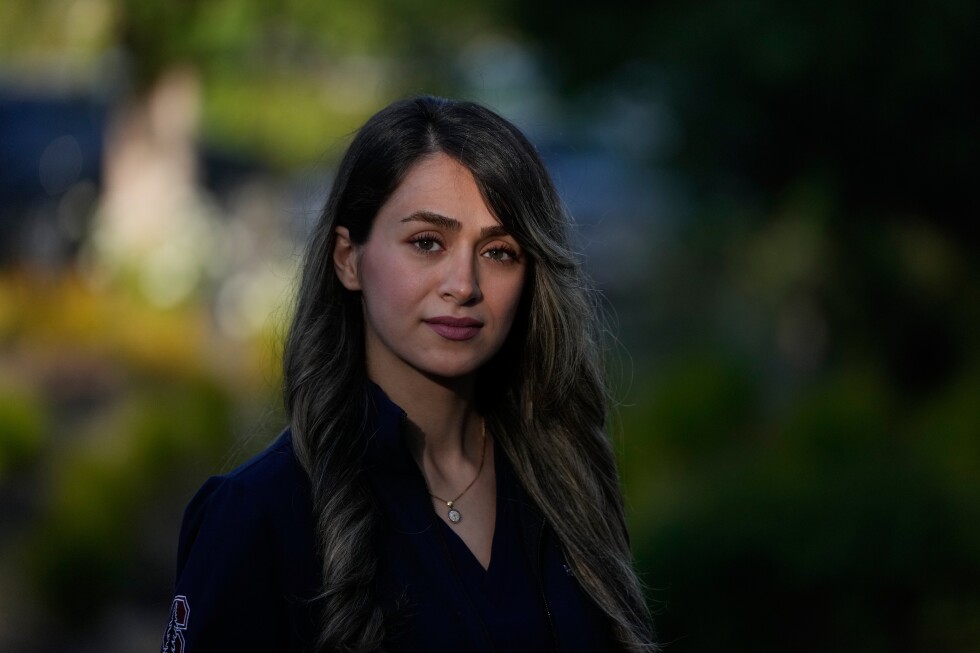
Dr. Faisal Alghoul, a Libyan physician, faces an urgent need to renew his green card to continue providing care for approximately 1,000 patients in southwestern Indiana. Unfortunately, he has been unable to do so since the Trump administration suspended application reviews for individuals from numerous high-risk countries.
With his current visa set to expire in September, Alghoul’s future hangs in the balance. Recently, however, the government granted exemptions to certain physicians with pending visa or green card applications. This move may offer hope for Alghoul’s situation, reflecting a concerted effort from medical organizations and immigration lawyers who have been advocating for months. They highlight a critical shortage of physicians, particularly foreign-trained doctors who serve disproportionately in underserved areas, as documented by the National Library of Medicine.
As a pulmonologist and intensive care unit physician, Alghoul’s work is vital, especially in rural communities spanning Indiana, Illinois, and Kentucky. He noted, “It will be about four or five months before the next pulmonologist arrives,” underscoring the urgency of filling these gaps in care.
Despite the recent exemptions, many immigration attorneys express uncertainty regarding the tangible impact of this change. While it allows for the reconsideration of cases, there is no assurance that green cards or visas will be issued. Concerns persist over whether U.S. Citizenship and Immigration Services can process these applications swiftly enough to meet crucial deadlines.
Alghoul has expressed skepticism about being recognized by the government for his contributions. He recalled past events involving immigrants in detention that have left him apprehensive about attending interviews related to his application, particularly since he has lived in the United States since 2016.
Employment Struggles for Immigrants and Their Families
The suspension of application reviews affects thousands, including researchers and entrepreneurs from 39 countries, such as Iran, Afghanistan, and Venezuela. Many individuals in this predicament are unable to legally work, obtain health insurance, or even secure driver’s licenses. Those who leave the United States face difficulties reentering the country.
Last year, the Trump administration halted the review of green card and visa applications from individuals in high-risk countries, extending this to more than 75 nations this year. The changes were framed as precautionary measures against public assistance concerns, amid calls for broader immigration enforcement.
Incidents like the assault on National Guard members by an Afghan national have further fueled government scrutiny, raising alarms about vetting processes. While the Department of Homeland Security (DHS) has not commented explicitly on the impact of the exemptions for physicians, they emphasized the importance of rigorous vetting, citing shortcomings in the previous administration’s approach.
Doctors Face Uncertain Futures
Prior to the recent exemptions, many immigrants resorted to federal lawsuits in an effort to compel government action on their applications. Dr. Zahra Shokri Warniab, an Iranian researcher in radiology who came to the U.S. three years ago, found herself ensnared by this process. Awaiting a green card to enter a residency program, her application was indefinitely suspended until she filed a lawsuit that led to a federal judge ordering a review of her case.
Ultimately, her application was denied, which she perceives as retaliation for her legal action. Shokri Warniab described her situation as bewildering, especially after government lawyers cited perceived contradictions in her application regarding her intentions as a medical practitioner versus a researcher.
Impact of Immigration Policies on Professionals
Many skilled migrants in science and technology fields continue to grapple with work restrictions while awaiting employment authorization. For those hailing from regions facing geopolitical turmoil, the uncertainty is even more profound. For example, Kaveh Javansir-Javid from Iran, who has been in the U.S. for seven years pursuing a doctorate in agriculture, finds himself in a precarious financial situation as he awaits work authorization. His recent ability to secure a job in his field hinges on the approval of his pending application.
Javansir-Javid mentioned he has been borrowing money for rent and depends on financial support from his wife, who is also Iranian and contends with her own visa challenges following graduation. He stated, “My whole life is on hold,” reflecting the precarious existence many face in this limbo.
