


Artificial Intelligence as a Growth Catalyst for Africa
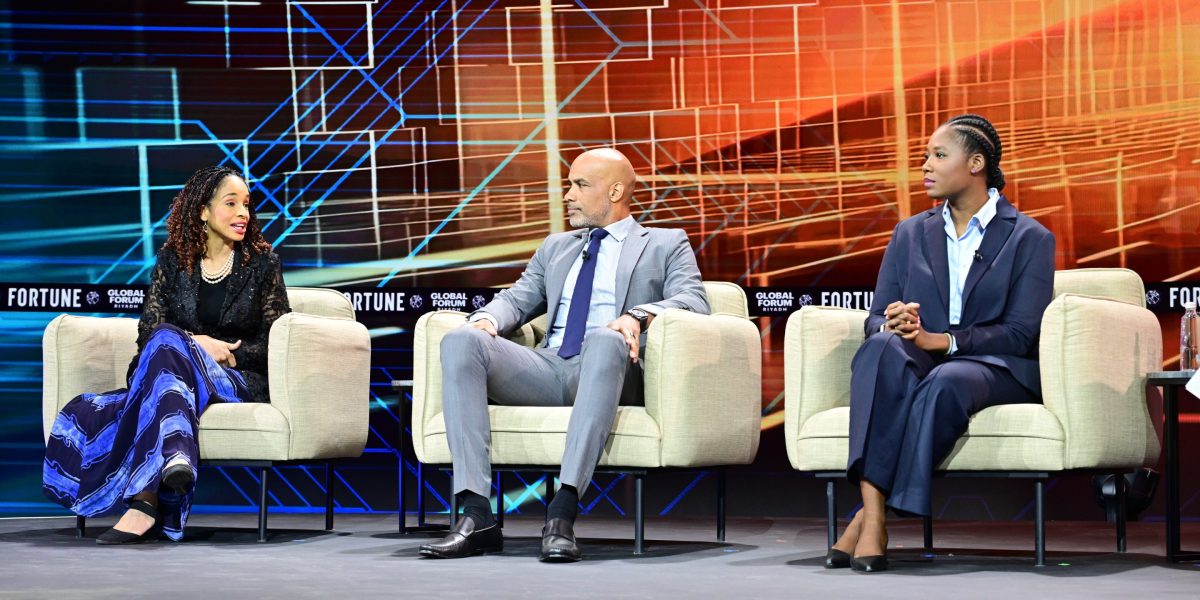
Artificial intelligence is set to serve as a transformative engine for economic growth across African nations, which are also expected to emerge as contributors to the global AI landscape in the years ahead. This perspective was shared by Kate Kallot, founder and CEO of Amini, a data infrastructure company, during her address at Fortune’s Global Forum in Riyadh, Saudi Arabia.
Kallot, a former executive at Nvidia, explained that her company is actively working on enhancing computing capacity to provide AI solutions tailored specifically for the African context. She projected that AI’s impact could inject approximately $2.9 trillion into African economies over the next five years, driven by a growing recognition among governments that data and computing power are essential infrastructural components—akin to roads and hospitals.
As infrastructure investments increase, Kallot emphasized that African governments are insisting that large-scale language models (LLMs) deployed on the continent reflect local realities. Despite LLMs being predominantly developed using internet data, nearly a billion Africans remain offline, which poses challenges in creating relevant AI solutions for the region.
According to Kallot, a new paradigm of strategic partnerships is emerging, spreading from governmental circles into the private sector, and fostering a wave of startups dedicated to shaping the future of their economies. She expressed optimism for the role of technology and AI, believing they could become significant equalizers for Africa.
However, Kallot pointed out a disconnect in the global narrative that often overlooks and undervalues AI innovations originating from Africa. She asserted that the continent is leading the way in promoting efficient, responsible, and inclusive AI development, with the world gradually learning from its advancements.
In her vision for the future, Kallot projected that within the next five to ten years, Africa will be exporting valuable information to other nations in the Global South, reinforcing the idea that the continent is a burgeoning hub of innovation.
Shifting Perceptions About Africa
Ndidi Okonkwo Nwuneri, CEO of the global advocacy group One Campaign, highlighted that entrenched negative narratives surrounding Africa have tangible economic consequences. Such biases can inflate borrowing costs for African countries, leading to an estimated $4.2 billion in additional expenses due to unfavorable press coverage. On the contrary, certain sectors are poised to yield returns of up to tenfold.
Okonkwo Nwuneri called for a narrative shift, urging stakeholders to understand that Africa is primarily about return on investment rather than risk. She emphasized the importance of forming partnerships that promote equitable financing and drive economic results and job creation.
Similarly, Boris Kodjoe, co-founder of the investment and impact platform Full Circle Africa, is dedicated to altering the prevailing narrative about the continent. The former model and actor highlighted that the African diaspora, recognized as the world’s third-largest group after China and India, has been cultivating significant capital, which is crucial for Africa’s growth trajectory.
Kodjoe noted that contemporary African economies are characterized by a youthful, creative, and digitally savvy population that is increasingly defined by cultural and technological advancements rather than mere reliance on natural resources. He remarked that “Africa is the only region where the population is younger, more connected, and more entrepreneurial,” suggesting that the global perspective is shifting from questioning “Why Africa?” to asking “When can we enter Africa?” He firmly believes the time is ripe for investment and engagement on the continent.
