


Virginia Supreme Court Blocks Democratic Congressional Map
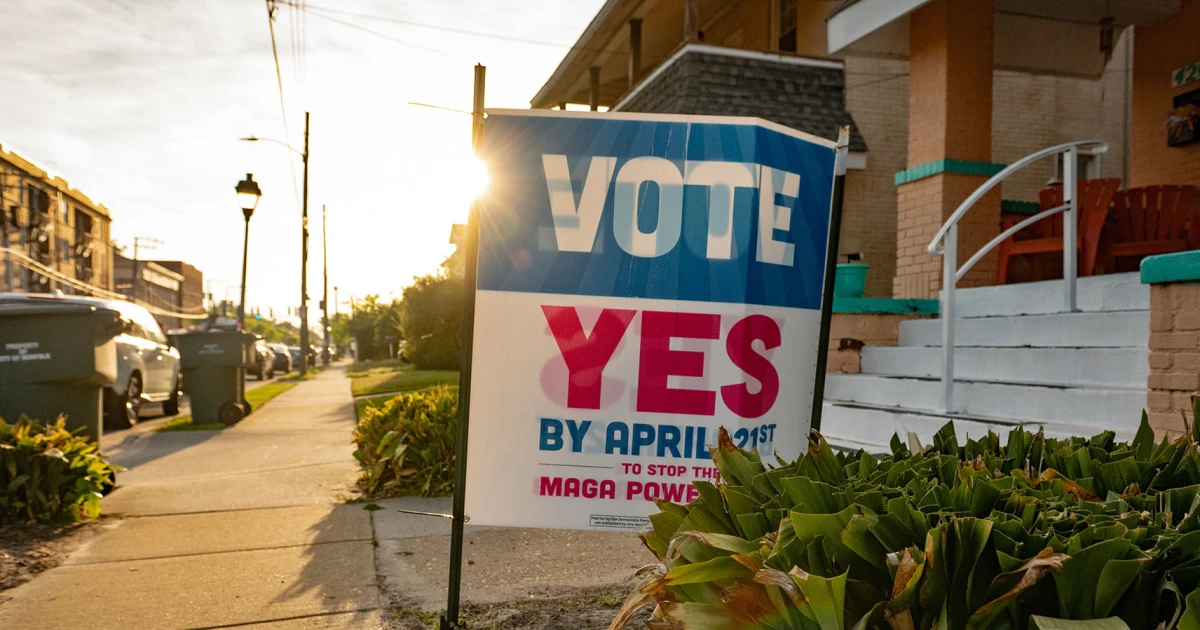
The Virginia Supreme Court has blocked the implementation of a new congressional map drafted by Democrats, marking a significant victory for Republicans as they aim to safeguard their slim House majority in the upcoming midterm elections.
Court Ruling Disqualifies Redistricting Efforts
In a ruling issued weeks after Virginia voters narrowly approved the map in a statewide referendum, the court determined that Democratic lawmakers had failed to meet the procedural requirements necessary for a constitutional amendment to be placed on the ballot. This amendment was intended to facilitate the redrawing of district lines, with Democrats seeking to secure up to four additional seats in Congress.
Redistricting Landscape Favors Republicans
The court’s decision, coupled with Republican initiatives in other states last year and a recent U.S. Supreme Court ruling that overturned restrictions on racial gerrymandering mandated by the Voting Rights Act, gives Republicans a strategic advantage in redistricting efforts ahead of the midterm elections.
Potential Seat Gains amidst Electoral Uncertainty
Currently, Republicans could potentially gain as many as 14 seats from redistricted maps across six states, while Democrats might secure six additional seats. However, the actual electoral outcomes may vary significantly, as winning in these newly drawn districts remains a challenge for both parties.
Constitutional Amendment Process Called into Question
The Virginia Supreme Court’s judgment was based on the conclusion that the state legislature initiated the constitutional amendment process too late to validate the election results. The court’s order emphasized that this procedural violation compromised the integrity of the referendum.
Criticism of Legislative Actions and Political Implications
Justice Arthur Kelsey criticized the state for claiming that the court should refrain from ruling on the matter after the voters had already approved the amendment. This assertion was particularly concerning given that state attorneys argued the court should delay its decision until the special election had concluded.
Significant Resources Invested in the Redistricting Referendum
The special elections surrounding this issue came at a substantial cost—$5 million was allocated for administration, and tens of millions more were spent on advertising, resulting in over three million citizens casting their votes.
Responses to the Court’s Decision
Virginians for Fair Maps, a group opposing the Democratic redistricting initiative, celebrated the court’s ruling, citing it as a reflection of voters’ desire to choose their elected officials. Republican leaders heralded the decision as a rebuke to what they termed deceptive practices by Democrats. On the other hand, Virginia House Speaker Don Scott, a principal advocate for the redistricting initiative, expressed that the matter was fundamentally about the integrity of electoral representation, asserting that the will of the voters remains paramount.
Legal Considerations Ahead
Virginia Attorney General Jay Jones announced that his team is deliberating the court’s unprecedented order and exploring legal options to uphold the electoral integrity in Virginia. The process for enacting constitutional amendments requires passage in two consecutive legislative sessions, with an election intervening each time. The Republicans contend that the Democratic-controlled legislature initiated the amendment when early voting was already underway ahead of Virginia’s statewide election in 2025.
Impact of the Decision on Upcoming Elections
With the Virginia Supreme Court’s ruling, the state’s midterm elections will proceed using the current congressional maps, where Democrats represent six of the state’s eleven districts. The decision could play a pivotal role in shaping the dynamics of the House majority as both parties gear up for the electoral contests ahead.
