


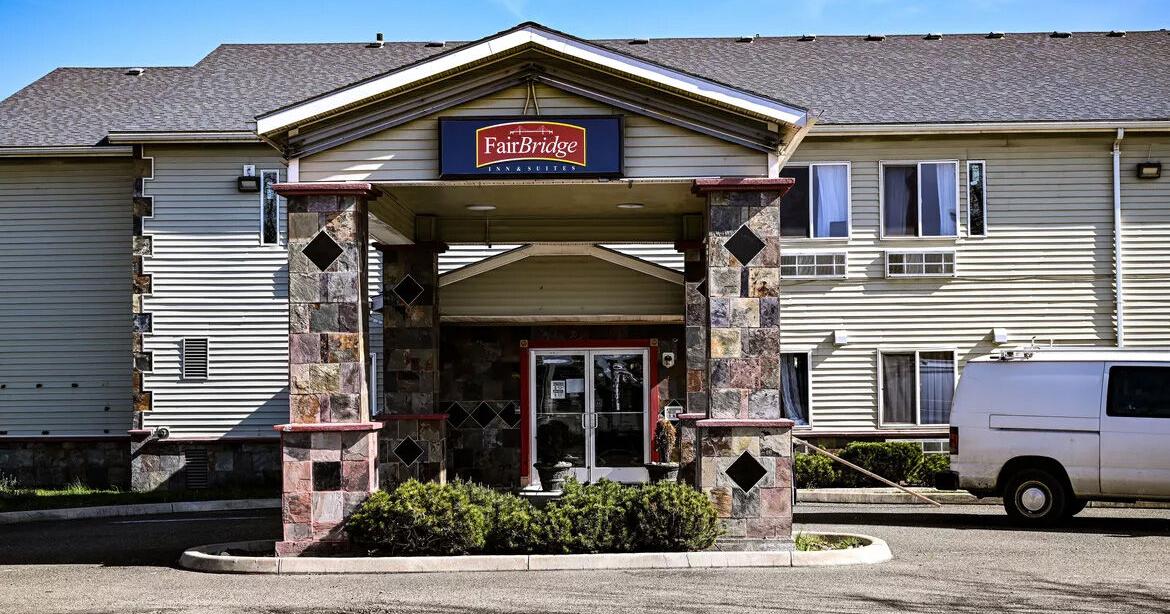
Farm Workers to Benefit from Hotel Conversion in Sunnyside
The Fairbridge Inn & Suites in Sunnyside is set to transition into temporary housing for farm workers, following recent federal legislative changes that allow for lower wages. As indications of this shift emerge through official documents and a new website, a formal announcement has yet to be made.
The hotel, which sold for $2.9 million on December 9, is now under the management of Central Valley Housing LLC, led by Chicago’s Steven Galich. The facility’s website highlights its design as “reliable group housing” featuring practical bunk bed accommodations and a self-service kitchen tailored for seasonal and H-2A workers.
This development comes in the wake of a policy change last year that permits employers to deduct housing costs from H-2A workers’ paychecks, a practice that was previously covered entirely by employers.
Understanding the H-2A Visa Program
The H-2A visa program, enacted in 1986, facilitates the temporary influx of foreign workers—mainly from Mexico—into the U.S. agricultural sector. As of mid-2023, Washington state alone has around 28,000 H-2A workers authorized to work.
In October 2023, the White House announced regulatory changes to the wage rate that employers are required to pay these temporary workers. Notably, Washington state employers can now deduct $2.49 per hour from H-2A workers’ wages for housing costs, marking a significant shift from prior practices where this expense was not passed on to workers.
Preparations Underway for Housing Conversion
According to records from the Department of Revenue, alterations for the hotel began in January, just a month after the property was sold. The modifications include installing arc fault circuit breakers to prevent electrical fires and replacing wall outlets to comply with dormitory safety standards. Plans indicate that 48 of the hotel’s rooms will be reconfigured for dormitory-style occupancy, although specifics regarding room capacity remain unclear.
Moreover, blueprints obtained reveal the intention to construct two single-family buildings, each spanning 1,300 square feet, designed for shared cooking and dining spaces. The overall cost of this project is estimated at $354,562.
Increased Demand for H-2A Workers Amid Staffing Challenges
Scott Dilley, communications director for the Workers, Farmers, and Labor Association (WAFLA), reports a surge in interest for hiring H-2A workers, largely driven by housing availability. Dilley noted the ongoing shortage of domestic workers, highlighting a long-standing issue that has become more pressing.
“We just don’t have enough American workers,” Dilley explained. “That’s why there’s a reliance on H-2A workers,” he continued, adding that concerns over immigration enforcement play a role in the renewed interest in this visa program.
Labor advocates are, however, cautious about the implications of expanding H-2A housing on local job opportunities. Lionor Galindo Cárdenas, the political and legislative coordinator for the United Farm Workers Party, expressed concern about how much workers will be charged for housing; specifically, the impact it may have on the already struggling local workforce.
Local Voices Raise Concerns About H-2A Impacts
Cárdenas stated, “With so many local farm workers struggling to find work, it is concerning that producers are trying to bring in more guest workers, which means fewer jobs and shorter working hours for locals.” Similarly, Marisela Santana-Walle, environmental justice coordinator for ELLA, a social justice organization based in Lower Yakima Valley, echoed these worries. She noted that many farmworkers have sought employment far outside their local area due to competition from H-2A workers.
“They’re being chased by H-2A workers,” Santana-Walle said, attributing the situation to companies keen on maximizing profits while minimizing wages and resources allocated to labor.
