


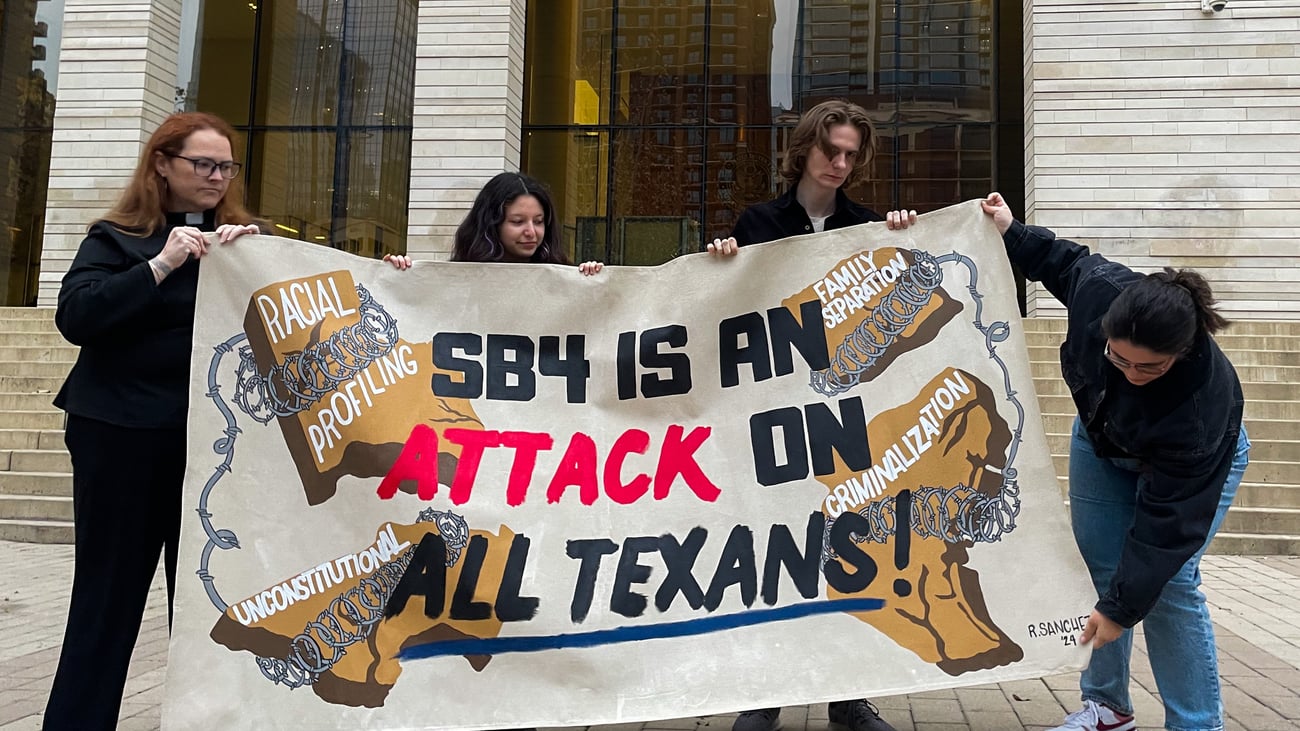
Concerns Mount Over Texas Immigration Law Ahead of Implementation
AUSTIN, Texas – Two anonymous Honduran immigrants at the center of a class action lawsuit against Texas are expressing fears of imminent arrest and deportation if a controversial state law takes effect as scheduled. With enforcement set to begin Friday, opponents argue the law conflicts with federal immigration enforcement, raising significant constitutional concerns.
Legal Challenges to Senate Bill 4
At a recent hearing, civil rights organizations representing the immigrants contended that several provisions of Senate Bill 4, which criminalizes unauthorized entry into the U.S., violate the Supremacy Clause of the U.S. Constitution. They petitioned the court to prevent Freeman Martin, director of the Texas Department of Public Safety, from enforcing these provisions, which they argue intrude into areas solely designated for federal immigration authorities.
Judicial Skepticism Regarding Constitutional Validity
U.S. District Judge David Alan Ezra openly questioned the constitutionality of SB 4 during the preliminary injunction hearing, acknowledging that the law contains several “problematic provisions.” However, he emphasized that he would not rush his decision, suggesting that the law could still go into effect as planned.
Details of the Lawsuit and Its Implications
The plaintiffs, represented by the American Civil Liberties Union (ACLU), the ACLU of Texas, and the Texas Civil Rights Project, are challenging provisions that criminalize illegal re-entry into the U.S., allow magistrate judges to issue removal orders, and require removal proceedings to continue regardless of pending federal immigration cases. They assert that immigration enforcement should be managed exclusively by the federal government.
Risk of Deportation for Vulnerable Immigrants
Cody Wofsy, deputy director of the ACLU Immigrant Rights Project, emphasized the urgency of the situation, arguing that without a halt to the enforcement of SB 4, his clients face an imminent risk of arrest. One plaintiff, a 59-year-old green card holder, could be subject to deportation under SB 4 due to re-entering the U.S. after a previous deportation, despite having certain protections under federal law that SB 4 does not recognize.
State’s Defense and Enforcement Strategies
In contrast, Martin and the Department of Public Safety contend that the plaintiffs do not qualify for protection under this law. State attorney Monroe David Bryant asserted that there is no evidence that the plaintiffs have suffered irreparable harm and remarked on the state’s ambiguous enforcement strategy as illegal border crossings decline in 2023. Ezra questioned the state’s intentions, seeking clarity on SB 4’s application amidst ongoing collaboration with federal immigration authorities.
Judicial Precedents and Broader Implications
Bryant noted that nothing in the U.S. Constitution or legislative action grants states the authority to preempt immigration enforcement. However, Ezra expressed concern that SB 4 could create unique immigration regulations that might contradict federal objectives, stating that the law appears to establish a sovereign right for Texas to arrest, prosecute, and deport individuals without federal oversight. This dilemma echoes previous challenges to similar laws, including a lawsuit from the Biden administration which aimed to invalidate comparable provisions.
