


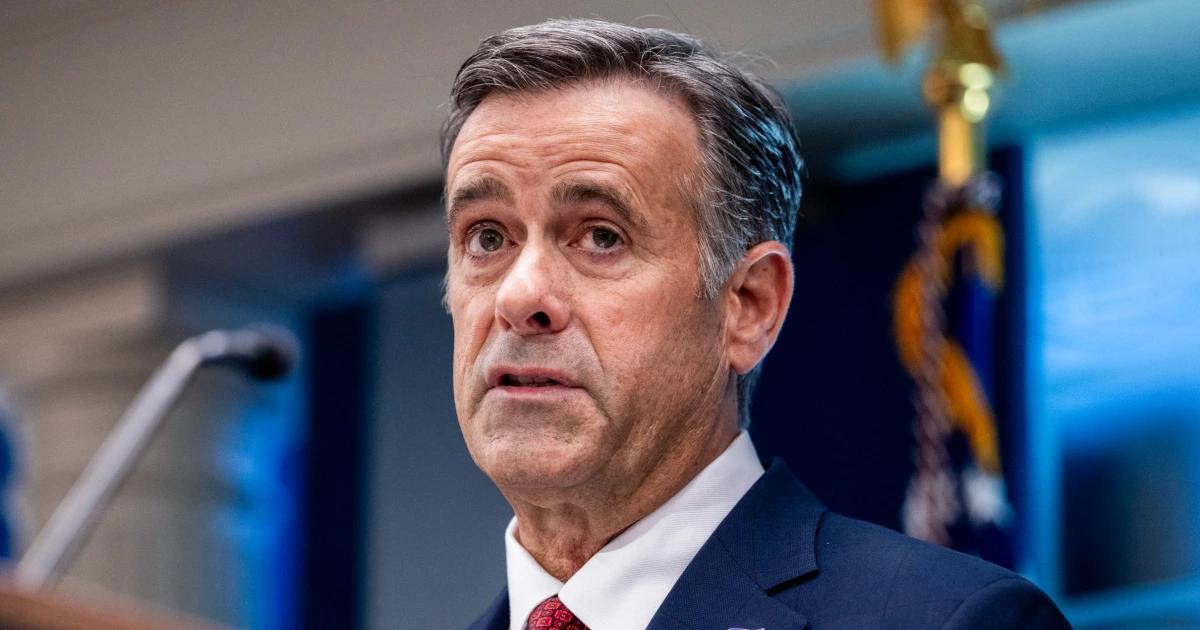
CIA Director Engages with Cuban Officials in Havana
John Ratcliffe, the Director of the Central Intelligence Agency (CIA), held discussions with Cuban officials in Havana on Thursday, as confirmed by both CIA representatives and the Cuban government.
Key Meetings with Senior Officials
During this meeting, Ratcliffe met with Laurito Rodríguez Castro, a prominent official in the Cuban government and the grandson of former President Raúl Castro. Rodríguez Castro holds significant roles as Cuba’s interior minister and head of its intelligence agency.
Focus on Strategic Changes
A CIA representative indicated that Ratcliffe’s visit aimed to deliver a message from President Trump: the United States is prepared to address economic and security concerns, contingent upon fundamental changes within Cuba.
Discussions on Cooperation and Security
Topics raised during the meeting included intelligence cooperation and economic stability, particularly the need for Cuba to cease being a haven for adversarial activities in the Western Hemisphere.
Cuba Reiterates Its Position
The Cuban government responded by stating that it presented information proving that Cuba poses no threat to U.S. national security. Furthermore, Cuba expressed that there is no justification for its designation as a state sponsor of terrorism.
Recent Developments in U.S.-Cuba Relations
Earlier this year, the Biden administration removed Cuba from the U.S. list of state sponsors of terrorism. However, the Trump administration reinstated this classification on the first day of his second term, complicating diplomatic efforts.
Context of the Ongoing Cuban Energy Crisis
This meeting occurs amid an energy crisis in Cuba, exacerbated by recent U.S. military actions, including the arrest of Venezuela’s president—Cuba’s critical ally and oil supplier.
U.S. Assistance and Criticism of Cuban Government
The U.S. State Department announced its readiness to provide $100 million in assistance aimed at the Cuban populace, though it criticized the Cuban government as a “corrupt regime.” The announcement included commitments to enhance internet access and deliver humanitarian support.
Cuban Government Seeks Clarification on Aid
Cuba’s Foreign Minister Bruno Rodríguez indicated the government’s openness to accept aid offered in good faith but criticized the perceived double standards in U.S. policy, noting the economic sanctions imposed on Cuba. Rodríguez expressed a desire for clarity on how aid would be implemented without political manipulation.
U.S. Sanctions and Changing Diplomatic Landscape
U.S. sanctions on Cuba have roots dating back to the Cold War, with fluctuating relations over the years. The thaw in relations during the Obama administration in 2014 was largely reversed by President Trump in 2017. Recently, the geopolitical landscape shifted dramatically with U.S. military involvement in Venezuela, further straining Cuba’s energy supply.
