


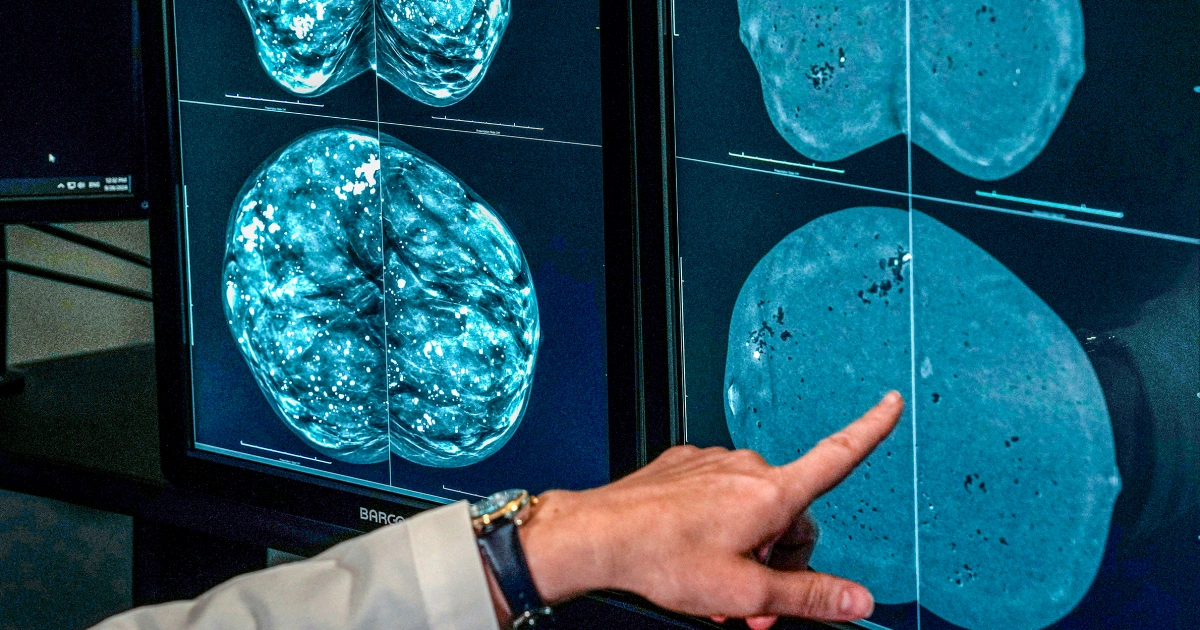
Challenges in Determining Mammogram Timing
Navigating the timing for regular mammograms can be complex. Various health organizations offer differing recommendations: some advise women to begin screening at ages 40 or 45, while others suggest starting at age 50. There is also a lack of consensus regarding the effectiveness of annual versus biennial screenings.
This divergence in recommendations stems, in part, from breast cancer screening guidelines being primarily designed for women at average risk with no signs of cancer. Given the high prevalence of breast cancer, defining what constitutes “average” risk can be challenging, complicating the assessment of the benefits and drawbacks of screening.
Understanding the Variability in Breast Cancer Risk
Dr. Laura Esserman from the University of California, San Francisco, emphasizes that breast cancer is not a singular disease. She questions the rationale of applying a uniform screening approach when women exhibit varying levels of risk. Dr. Esserman is spearheading research aimed at understanding the complexities of risk profiles to offer more personalized screening recommendations.
According to the American Cancer Society, over 320,000 women in the United States are expected to be diagnosed with breast cancer this year. While mortality rates have declined over the past few decades due to advancements in treatment, breast cancer remains the second leading cause of cancer-related deaths among women in the country, with diagnoses showing a gradual increase.
Mammogram Recommendations
The latest guidelines from the American College of Physicians recommend that women aged 50 to 74 with average risk receive mammograms every two years. For those aged 40 to 49, discussions with healthcare providers about the pros and cons of screening are advised, with biennial testing an option if chosen.
This recent guidance surprised many, as most health organizations suggest beginning screenings in the 40s. The U.S. Preventive Services Task Force has recently updated its recommendations to commence biennial screenings at age 40, diverging from prior guidelines that started at age 50.
Meanwhile, the American Cancer Society historically recommends annual mammograms for women aged 45 to 54, but permits earlier screenings starting at age 40. Women over 55 may opt for either annual or biennial screenings, based on personal choice.
Debates Among Experts on Screening Practices
As a woman’s risk of developing breast cancer increases with age, more frequent screenings may be beneficial. However, accurately assessing risk beyond common factors like the BRCA1 and BRCA2 genes remains challenging. Age is frequently used as a proxy to estimate risk since breast cancer incidence rises with age.
Mammography is not without its limitations; there are instances in which cancer may be missed or detected after a routine screening. Experts strive to balance the potential benefits of early cancer detection against the risks of unnecessary stress or follow-up procedures that can arise from false alarms. Dr. Carolyn Crandall from UCLA, who chaired the American College of Physicians’ report, notes that while mammography has benefits, the risk-benefit ratio varies for women aged 40 to 49.
Influence of Breast Density on Screening Guidelines
Nearly half of women over 40 have dense breast tissue, which can obscure tumors on mammograms and slightly elevate cancer risk. Following a mammogram, women are informed about their breast density; however, the necessity of supplementary screenings like ultrasound or MRI for those with dense breasts remains uncertain. The American College of Physicians now recommends considering 3D mammography, known as digital breast tomosynthesis (DBT), to enhance screening outcomes.
The Future of Breast Cancer Screening
Looking ahead, integrating genetic tests that extend beyond the well-known BRCA genes along with a more comprehensive assessment of risk factors may refine mammography schedules for women. The WISDOM trial, involving around 46,000 women, categorized participants as low-risk, average-risk, or high-risk based on age, genetic background, lifestyle, and breast density. This classification dictated whether women should wait until age 50, have biennial or annual mammograms, or follow more frequent screening for the high-risk group.
Research findings indicate that risk-based screening is as effective as standard annual screenings, as reported by Dr. Esserman’s team in the medical journal JAMA. Interestingly, about 30% of women with heightened genetic risk awareness reported no family history of breast cancer. Further studies are underway, with early findings likely to influence screening guidelines in the near future.
Additionally, there are ongoing developments in artificial intelligence tools designed to evaluate a woman’s risk of developing breast cancer based on mammography results, potentially identifying candidates who may require adjusted screening frequencies.
In the meantime, women are encouraged to discuss personal risk factors with healthcare professionals, including family histories of cancer, overall health status, and reproductive history, as these elements can substantially guide individual screening decisions.
