


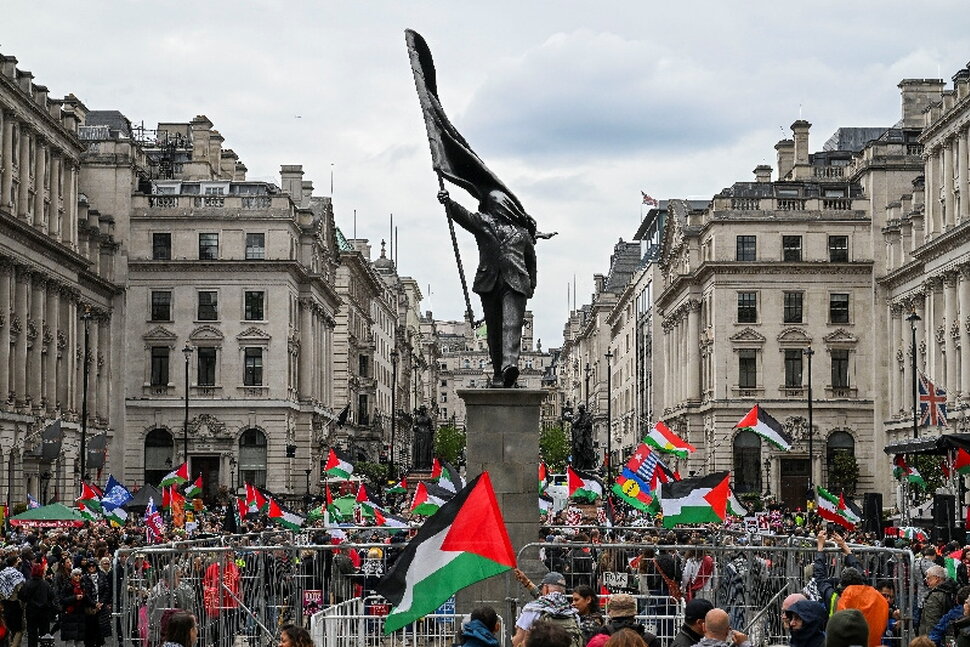
Protests Erupt in Central London Over Immigration and Palestinian Rights
LONDON, May 16 (Reuters) – Tens of thousands of individuals participated in two distinct protests in central London on Saturday, one opposing high levels of immigration and the perceived Islamic threat to British identity, while the other demonstrated in support of the Palestinian cause.
Massive Police Presence for Public Safety
In response to the potentially volatile situation, the police deployed approximately 4,000 officers, including reinforcements from neighboring areas, marking one of the largest security operations witnessed in recent years. Authorities stated they would utilize their powers as effectively as possible to maintain order.
Arrests Made Amidst Protests
By 15:30 GMT, roughly four hours into the demonstrations, police reported 31 arrests for various offenses, describing the events as having experienced very few serious incidents, despite anticipating at least 80,000 attendees beforehand.
Political Leaders Condemn Organized Protests
On the eve of the protests, Prime Minister Keir Starmer criticized the organizers of the Kingdom Unity March, labeling their actions as “spreading hate and division” during a press briefing. The march was primarily organized by anti-Muslim activist Stephen Yaxley-Lennon, known as Tommy Robinson, who has faced various legal issues, including prior convictions for assault and stalking.
Public Sentiment and Immigration Concerns
Among the demonstrators waving British flags was Alison Parr, who voiced her discontent regarding immigration levels, suggesting that “too many immigrants” disrupt the societal balance. In recent years, net immigration figures soared, peaking at approximately 900,000 in 2022 and 2023, before tightening regulations resulted in a decline to around 200,000 last year. Concerns surrounding immigration, particularly linked to asylum seekers arriving by boat, have impacted Starmer’s political standing, giving rise to support for the right-wing Reform UK Party, led by Nigel Farage.
Diverse Demonstrations Reflecting National Tensions
On the opposite end of the protest spectrum, a group of pro-Palestinian demonstrators marched with flags and placards advocating for an end to the conflict in Gaza, coinciding with Nakba Day—a day of remembrance for Palestinians regarding their loss of land during the 1948 war that led to the establishment of Israel. Protester Sharon DeWitt remarked on the injustices faced by Palestinians, emphasizing the need for recognition and statehood.
Security Challenges Amid Rising Tensions
In light of recent violence against Jewish communities, including arson incidents and targeted stabbings, police noted that over 33 large-scale pro-Palestinian marches since the Hamas-led attack on Israel in October have left many Jewish individuals apprehensive about entering central London. While the protests varied broadly in opinion, law enforcement highlighted a pattern of arrests related to racially and religiously aggravated public order offenses.
Polarizing Figures and Actions
During the Kingdom Unity March, Robinson proclaimed the gathering to be a “cultural awakening” for Britain. His recent trip to the United States included meetings with government officials and a call to address what he terms the “danger of Islam.” Meanwhile, demonstrators from the anti-immigrant feminist group Nemesis took the stage, using provocative tactics to voice their views against Islam and immigration. The juxtaposition of these protests illustrates the increasing polarization within British society.
