


Understanding the Almajiri Issue in Nigeria
Last year, during my visit to Kano for a public symposium on the importance of non-violent elections in Nigeria, I took the opportunity to visit Bayero University Teaching Hospital to see my cousin, a doctor there. His demeanor was filled with anger and concern. When I inquired about what was troubling him, he shared a harrowing experience: he had just treated an 11-year-old boy brought in by a “Good Samaritan” suffering from severe pain in his anal area. A medical examination revealed the tragic reality that the boy had been raped, a victim of predators preying on homeless Almajiri boys.
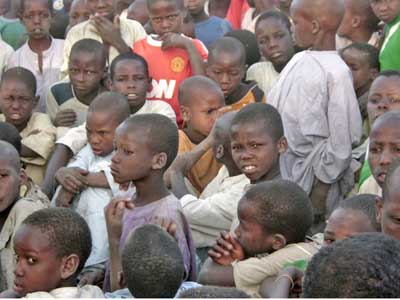
In certain regions of Nigeria, particularly in the north, it has become commonplace to see children wandering the streets. The term “Almajiri” refers to these children, originating from the Arabic word “al-mahajirun,” which signifies learned scholars who disseminated Islam’s peaceful teachings. Unfortunately, the concept of Almajiri has evolved into a system that often leads to begging and, in extreme cases, recruitment for terrorist organizations.
Originally intended as a training ground for future Islamic scholars, the Almajiri culture has been exploited, pushing children into a survival mode of begging rather than facilitating their education. This misconduct is perpetuated by semi-literate Qur’anic teachers and Marams who lack essential financial and moral support, thus transforming what should be a path to knowledge into a struggle for mere existence.
The Almajiri demographic comprises boys aged 4 to 15, often born into challenging circumstances such as polygamy, family disintegration, or economic hardship. Many families, burdened by financial constraints, see no alternative but to send their children to the streets under the guise of the Almajiri system. This process deprives these children of parental care and guidance, leaving them vulnerable to various forms of abuse, including exploitation as slaves and participation in anti-social behaviors.
Unfortunately, the Almajiri system epitomizes the effects of child abuse, social exclusion, and persistent poverty. Efforts to combat these humanitarian issues have repeatedly faced obstacles, primarily due to the system’s perceived roots in Islamic and Fulani cultural practices. Islamic teachings discourage begging, except in rare circumstances, indicating that the current Almajiri practices diverge significantly from authentic Islamic principles.
The exploitation inherent in the Almajiri system has become a breeding ground for criminal activities, including child trafficking and sexual exploitation. Disturbingly, the apathy of elites towards these children’s plight further complicates the situation. Acknowledging that the Almajiri system has deviated from its original purpose is essential to understanding its negative impact on Nigeria’s international reputation.
While the previous administration under President Goodluck Jonathan sought to address these issues by establishing Almajiri model boarding schools aimed at integrating Western and Islamic education, the effort proved inadequate, capturing less than 5 percent of the affected children. A comprehensive strategy is imperative to eradicate the Almajiri culture and protect vulnerable children from ongoing abuse. Without a significant reform or outright ban, the persistent issues of underdevelopment, educational stagnation, and mass poverty in northern Nigeria will likely continue to escalate.
The alarming prevalence of child abuse and the violation of fundamental human rights among these young individuals call for immediate attention. The neglect surrounding their situation is deeply troubling. As it stands, Almajiri children symbolize both poverty and a distortion of Islamic values. Now is the critical moment for President Muhammadu Buhari to take decisive action towards reforming or abolishing the Almajiri system to avert a looming humanitarian crisis.
Obaro writes from Ilorin, Kwara State.
