


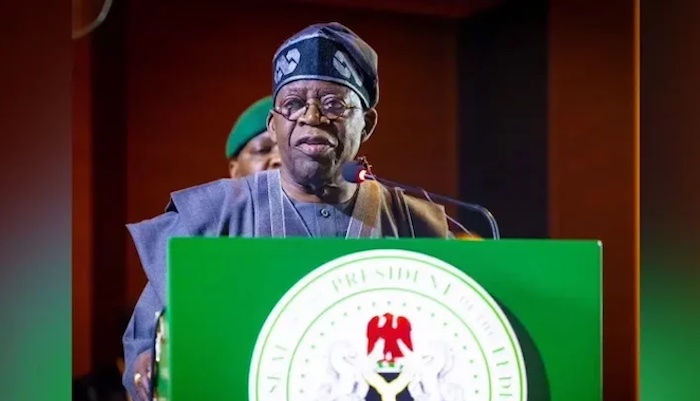
Tinubu Creates New Homeland Security Position Amid Military Concerns
President Bola Tinubu has appointed a Special Assistant for Homeland Security, the first of its kind, in response to mounting pressure from military and intelligence chiefs. Reports suggest that the move was driven by concerns over perceived overreach by the National Security Advisor (NSA), Nuhu Ribadu, particularly regarding military operations.
Sources within the presidential and security circles reveal that tensions have been growing for months. These tensions have begun to undermine the confidence in Nigeria’s national security framework. A senior official noted, “Military commanders and intelligence agencies are dissatisfied with Mr. Ribadu’s involvement in operational matters beyond his role, which should focus on coordination and information integration rather than direct command.”
Officials highlighted what they observed as a troubling structural overreach within the Office of the National Security Advisor. “We’ve witnessed the emergence of an ONSA tactical team—a scenario unheard of previously—suggesting a level of command that interferes with military operations,” an official stated, emphasizing that such direct involvement blurs the lines typically maintained between civilian advisory roles and military authority.
Appointment of Retired General Signals Strategic Shift
On May 11, 2026, President Tinubu approved the appointment of Maj. Gen. Adinka Fadewa (retired) as the new Special Assistant for Homeland Security. This decision aims to bolster domestic security measures, enhance intelligence-driven operations, and strengthen collaboration among various agencies to effectively address emerging threats.
The announcement, made via a circular from the Secretary to the Government of the Federation, Senator George Akume, praises General Fadewa as a highly decorated military veteran with over 30 years of experience in military strategy, national security, and counter-terrorism. Akume expressed confidence that Fadewa’s extensive background will support the administration’s objective to create a safer Nigeria.
Underlying Issues of Trust and Perception
The timing of this appointment is significant, occurring shortly after President Tinubu’s comments during a meeting with Plateau State officials, where he expressed determination to end the ongoing cycle of violence. Beyond the operational concerns, deeper systemic tensions surround Ribadu’s police background, which has led some military leaders to question his capability to handle pressing security matters.
“There’s a prevailing belief among military and intelligence leaders that Ribadu, being a police officer, might not fully grasp the complexities of major security challenges,” pointed out an official. In contrast, the new advisor’s military credentials offer a fresh perspective that may resonate better with the armed forces and intelligence community.
Financial Implications of Insurgency on National Resources
A third senior security official emphasized that President Tinubu’s motivation encompasses a desire to alleviate the profound human and financial toll of the country’s nearly two-decade-long insurgency. “The president is committed to doing whatever it takes to end this unrest. He recognizes that ongoing conflicts are diverting vital resources that could otherwise support education, healthcare, and infrastructure,” he remarked.
Since 2009, Nigeria has allocated over 50 trillion naira to security, a staggering figure that could have significantly advanced other sectors. This financial strain underscores the urgency of an effective resolution to the insurgency crisis, which remains the president’s top priority.
Possibility of Complementary Roles for Ribadu and Fadewa
Despite the new appointment, some officials believe it does not preclude Ribadu’s role as NSA. The president has the constitutional authority to design the security landscape as he sees fit, with both figures expected to work synergistically. “The president is equipped to create positions that help improve governance and security for Nigerians,” one official noted, suggesting that the two leaders’ backgrounds may provide complementary benefits to the nation’s security architecture.
Both men possess prior experience within the security framework, which could facilitate an effective collaboration. The NSA Directorate, at the pinnacle of Nigeria’s security coordination structure, plays a critical role in integrating information from various security agencies to deliver cohesive recommendations to the president.
As of now, the NSA office has not publicly commented on this personnel change. However, a source familiar with the matter remarked that it is not uncommon for the president to realign his security apparatus to enhance operational efficiency and effectiveness.
In summary, Tinubu’s appointment of a Special Assistant for Homeland Security marks a pivotal moment in Nigeria’s response to its complex security challenges, reflecting both proactive governance and a re-evaluation of the roles within its national security framework.
