


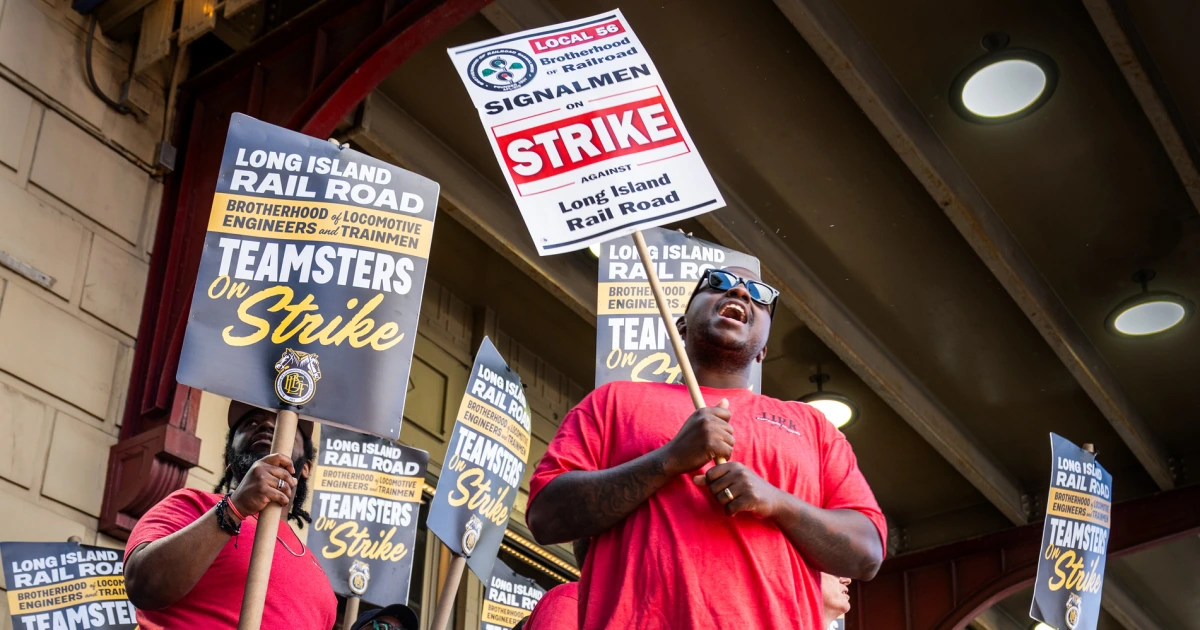
Long Island Railroad Workers Strike Disrupts Commuting in New York
New York state officials have urged commuters to work from home on Monday as a strike by Long Island Railroad (LIRR) workers threatens to disrupt travel for hundreds of thousands of passengers throughout the region.
Governor Kathy Hochul announced that the state, alongside the Metropolitan Transportation Authority (MTA), is preparing emergency transportation options, including shuttle buses and increased subway services from Long Island to Queens. This development follows a breakdown in negotiations between the MTA and the railroad workers’ union, leading to a labor walkout and train service shutdowns over the weekend.
Hochul acknowledged the challenges at a Sunday press conference, stating that it is “impossible to completely replace LIRR service.” The ongoing strike marks the first of its kind in nearly thirty years, halting operations of the nation’s busiest commuter rail system, which serves as a vital link between Long Island and New York City.
In response to the strike, shuttle buses for essential personnel are set to begin operation at around 4:30 a.m. Monday from six locations in Nassau and Suffolk counties, providing a connection to the Queens subway line. Authorities have repeatedly encouraged commuters with the ability to work remotely to stay home during this period of disruption.
The MTA has asserted its commitment to continuing negotiations. Officials criticized union leadership for abruptly leaving the bargaining table, which has exacerbated the situation. MTA CEO Janno Lieber stated that the agency remains open to further dialogue, expressing disappointment in the union’s decision to strike.
Representatives from a coalition of unions, representing approximately 3,500 LIRR workers, have accused Lieber and MTA leadership of instigating the strike by refusing to consent to wage increases, despite workers going several years without raises amid rising living costs. The union emphasized that the two sides were less than one percentage point apart on key issues when discussions fell apart, branding the strike as “completely avoidable.”
Brian Bryant, president of the IAM Union International, highlighted the workers’ dedication to passenger service and the safe operation of the LIRR but emphasized that rising living costs necessitate fair wages. He underscored the unions’ readiness to negotiate if the MTA leadership is prepared to engage seriously in discussions moving forward.
Hochul defended the MTA’s position during her address, asserting that they cannot agree to terms that would lead to drastic fare increases or higher taxes for Long Island residents. She reiterated New York’s commitment to being a “pro-worker state,” emphasizing that while fair wages and benefits are important, the MTA cannot agree to terms that could potentially raise fares by as much as 8 percent and impact taxpayers adversely.
