


Federal Court Becomes Center of Political and Immigration Tensions
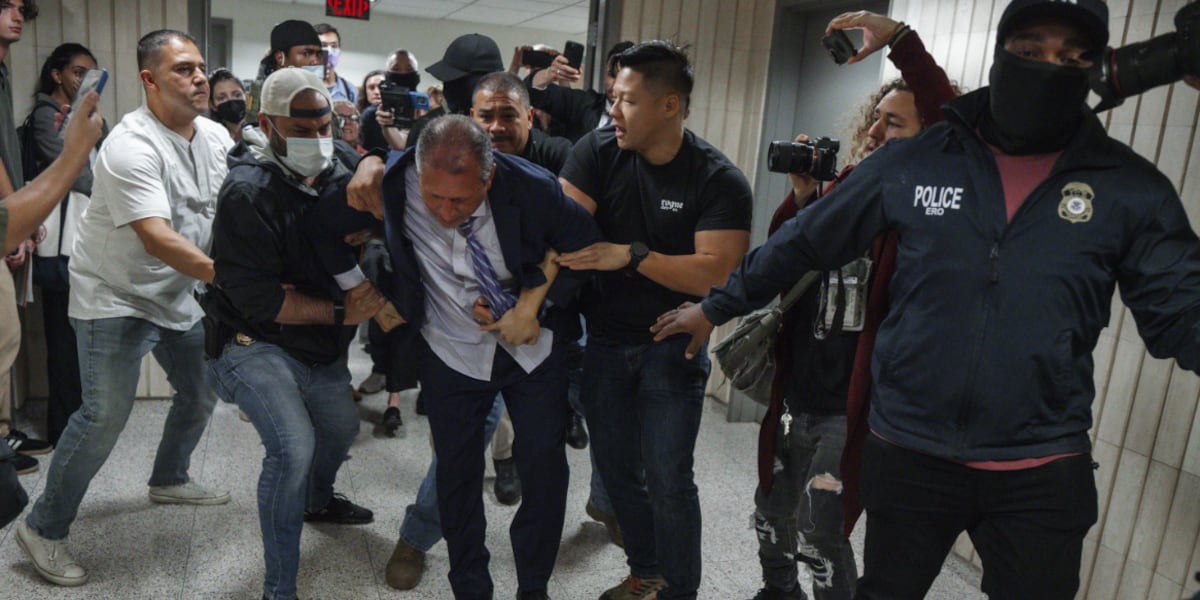
NEW YORK — A federal immigration court in Lower Manhattan has emerged as a focal point in the Trump administration’s deportation efforts within New York City. Officials have executed chaotic and, at times, violent arrests in the hallways where immigrants exit after their hearings.
Legislative Elections Highlight Diverging Views on Immigration Policy
This courthouse has transformed into a battleground for one of the city’s most closely monitored legislative elections. In the Democratic primary, incumbent U.S. Representative Dan Goldman faces off against former City Comptroller Brad Lander. With a June primary in such a heavily Democratic district, the outcome is deemed crucial. Both candidates have made the Trump administration’s immigration policies at 26 Federal Plaza central to their campaigns, though their approaches diverge significantly.
Goldman’s Legal Expertise Drives His Campaign
Goldman, an heir to the Levi Strauss fortune and a former prosecutor who played a pivotal role as lead counsel during President Donald Trump’s first impeachment, has approached the topic through a legal lens. He has lobbied for lawmakers to visit immigration detention centers, conducted oversight visits, and established his office directly across the street as a triage center. This center connects immigrants with legal services and advocacy groups, reportedly aiding in the release of over 30 individuals from federal custody.
Lander’s Activism Reflects Progressive Values
In contrast, Lander, a longtime supporter of progressive city policies, has adopted a more activist role, frequently attending hearings and acting as a court observer. He aims to accompany migrants as they navigate the building past federal agents. Lander’s participation in protests has led to two arrests, with the most recent trial date falling just before the primary election.
Contradicting Approaches to Immigration Oversight
When asked about Goldman’s approach, Lander characterized it as little more than “a strongly worded letter.” He emphasized that his own role lies in physically showing up and accompanying vulnerable individuals, standing with them through the process until they receive the necessary assistance—or face arrest. Lander’s first arrest pertained to an incident outside the courthouse that garnered significant media attention, especially as he was vying for mayor at the time.
Trial Strategy and Political Risks
Months later, following a shift in his political aspirations to Congress and after losing the mayoral primary, Lander was arrested again at a large protest event. This incident led to a charge of misdemeanor obstruction. Rather than opting for a deal that would conclude the matter within six months, Lander chose to go to trial, believing it would uncover details about federal immigration enforcement during Goldman’s oversight period.
Contrasting Campaign Strategies Emerge
Goldman has dismissed Lander’s tactics as largely performative. He expressed confusion as to why Lander would refuse to accept a resolution, arguing that the information he seeks is already accessible through his ongoing oversight. Recently, Lander attended a hearing at 26 Federal Plaza, only to learn that federal agents were positioned outside another courtroom across the street. He quickly moved to observe their activity, noticing masked officers in the waiting area.
Election Strategy and the Fight for Immigrant Rights
After observing the courtroom, Lander noted the difficulty federal agents face in determining whom to arrest. Post-hearing, he returned to 26 Federal Plaza to film a campaign video, further highlighting the contrasting styles of both candidates as they maneuver through the complex realities of immigration policy in a politically charged environment.
