


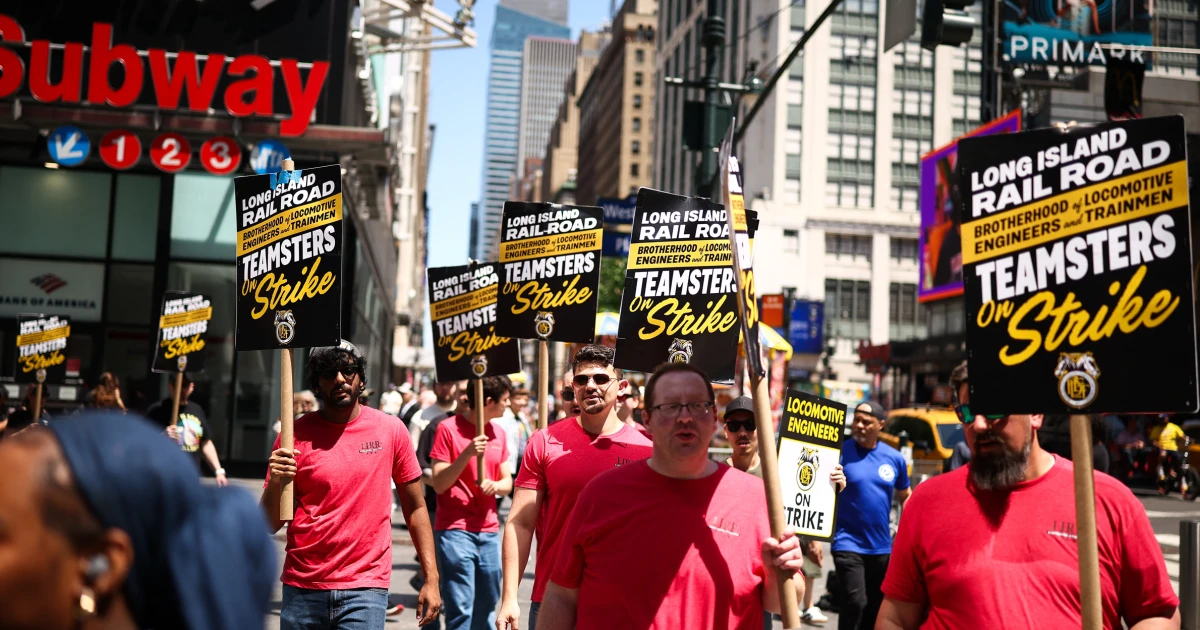
Long Island Rail Road Strikes Cause Commute Chaos
New York City commuters faced significant disruptions on Monday as Long Island Rail Road (LIRR) passengers struggled to navigate through the city on the third day of a labor strike that has paralyzed the nation’s largest commuter railroad.
Testing Alternative Travel Plans
This marked the first weekday implementation of an alternative travel strategy developed by the Metropolitan Transportation Authority (MTA) and local officials, aimed at assisting the 250,000 daily riders of the LIRR.
Breakdown in Negotiations Leads to Strike
The strike commenced after more than 3,500 LIRR employees opted to leave the company at 12:01 a.m. Saturday. Contract negotiations between the unions representing these workers and the MTA had reached an impasse, necessitating the strike.
Commuters Face Striking Union Members
Upon arrival in Manhattan, many commuters encountered striking union members at Penn Station and other travel hubs, chanting phrases such as “No contract, no service!” and “No contract, no peace!” as they sought to express their grievances.
Governor’s Call to Action
As the Monday morning rush approached, New York Governor Kathy Hochul advised commuters to consider working from home whenever possible. “Let’s face the facts: It’s impossible to completely replace LIRR service,” she emphasized during a press briefing on Sunday.
Bargaining Resumes Amidst Challenges
Negotiators from the five striking unions and the MTA returned to the bargaining table on Monday, confirming their willingness to negotiate. Hochul’s spokesperson, Sean Butler, indicated that the governor remains vigilant regarding the strike and travel alternatives, having been updated on commute times and negotiation statuses that morning.
Seeking Solutions Amidst Stalled Negotiations
Despite these discussions, there were no immediate signs of progress regarding wage adjustments and cost-of-living increases that the workers have been advocating for, but the MTA continues to hold union leadership accountable for the negotiations’ breakdown. MTA CEO Janno Lieber stated, “We’ve made it clear that if they want to come back and negotiate, we can accommodate them. They walked out and started a strike.”
Union Perspectives on the Strike
A coalition of unions representing LIRR engineers, signal workers, machinists, and others has accused MTA leadership of evading their demands for higher wages amidst soaring living costs. They asserted that negotiations were less than one percentage point apart before talks crumbled on Friday night, labeling the strike as “completely avoidable.”
