


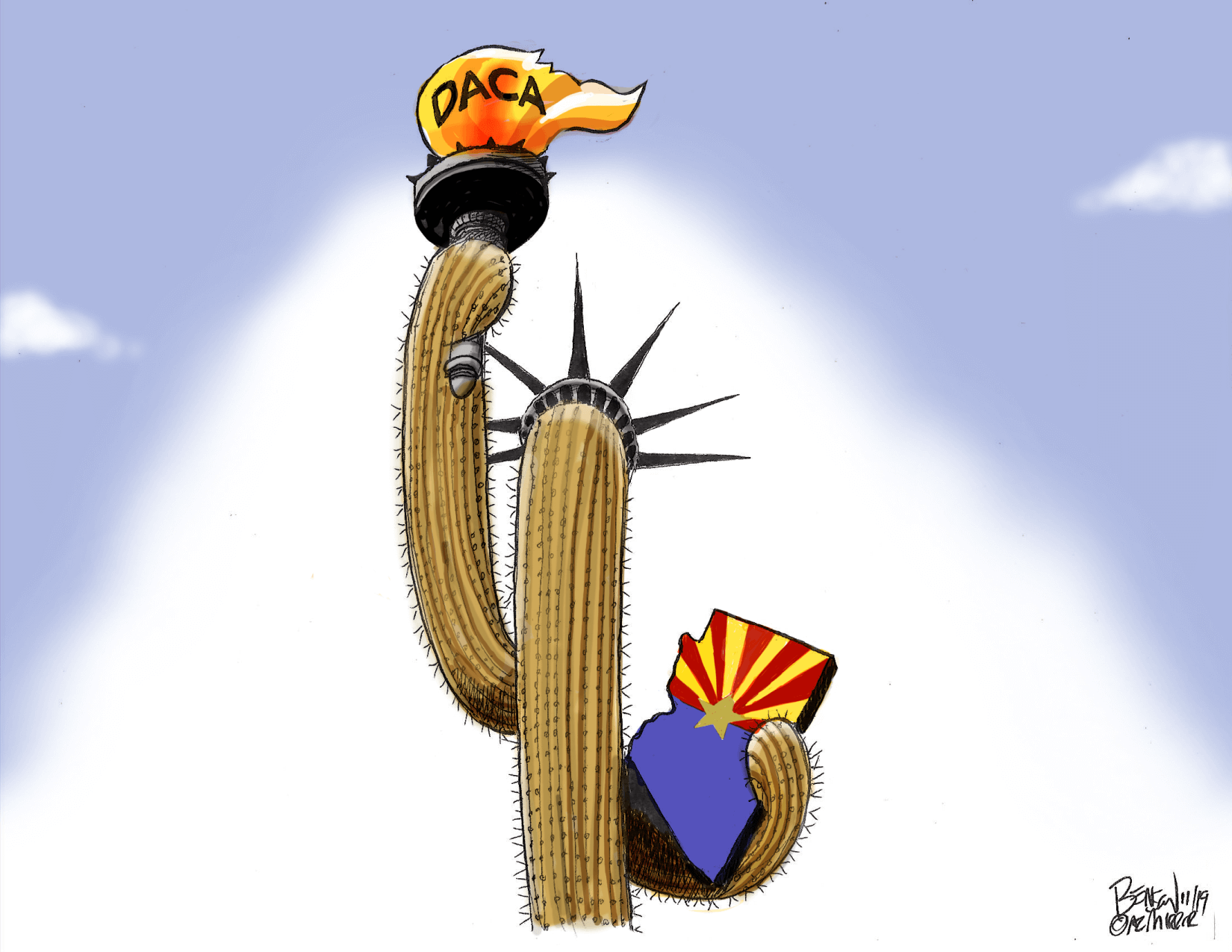
Dreamers Face Uncertainty Amid Broken Promises
Despite their lifelong allegiance to the United States and the Constitution, many Dreamers are becoming increasingly exhausted from the anxiety of living in fear of deportation and shattered expectations. These individuals, protected under the Deferred Action for Childhood Arrivals (DACA) program, represent a significant demographic that stands at a crossroads.
Immigration attorney Salvador Macias reflects on the program’s dual nature: “DACA has done great things by providing opportunities. However, I’ve always said it serves as a Band-Aid for a problem that requires more comprehensive solutions.” Macias is among the millions who are once again navigating uncertainty, as the administrative landscape has become increasingly complex since DACA was initiated during the Obama administration.
Currently, DACA allows eligible immigrants who were brought to the U.S. illegally as children to apply for temporary work permits and driver’s licenses. However, these permits require renewal every two years. Compounding the issue, delays in processing times have skyrocketed—from an expected 15 days to over 120 days—under the Trump administration’s U.S. Citizenship and Immigration Services, causing many permits to lapse and leaving recipients at risk of deportation.
Democratic Representative Greg Stanton emphasized the real-world implications of these delays during a press conference on May 11, where he met with Macias and other Dreamers. “This isn’t just a bureaucratic inconvenience; it directly affects their job security and future stability in Arizona,” Stanton stated. With employers losing reliable workers and Dreamers uncertain about their futures, he described the ongoing situation as unacceptable.
Frustration is mounting among lawmakers. A letter sent by Stanton and other Democrats on April 9 to Homeland Security Secretary Mark Wayne Mullin seeking answers about the delays has so far elicited little response. Such silence raises questions about the accountability of the Trump administration, which has pursued stricter immigration enforcement, often at the expense of those relying on DACA for their livelihood.
Recent actions from the U.S. Department of Justice’s Board of Immigration Appeals have made the landscape even more dire for Dreamers, further intensifying their fears of deportation. Also, USCIS recently introduced new criteria for DACA applicants that closely align with the contentious Texas v. United States case—a move that has alarmed many in the immigrant community.
These new factors include considerations such as urgent medical needs and the financial ability to support oneself. Most troubling is the inclusion of ambiguous language that questions whether applicants have ‘ever espoused or supported anti-American views.’ This suggests a potential for social media scrutiny, where applicants may be judged for their online presence or affiliations, thus affecting their DACA status.
Stanton has been vocal about raising awareness and drawing attention to these issues. Alongside Senator Mark Kelly, he is pushing for bipartisan legislation aimed at establishing a pathway to citizenship for Dreamers and other law-abiding immigrants. However, many remain skeptical, having heard similar promises over the years, particularly when politicians vie for Latino votes during election cycles, only to abandon these commitments afterwards.
Realistically, the immediate political landscape offers little hope for meaningful changes, especially with Congressional power currently resting in Republican hands. Even if Democrats manage to gain seats in the upcoming midterms, the Trump administration’s policies on immigration are unlikely to shift significantly.
Public support for Dreamers remains strong, as polls consistently reveal that a majority of Americans—across party lines—favor allowing those brought to the U.S. as children to stay legally. Yet, the question remains: why doesn’t Congress act in accordance with public sentiment? Dreamers contribute significantly to the economy, paying billions in taxes while building their lives in a country they view as home.
While Macias’s call to action encourages public engagement and media awareness, it’s evident that without widespread outrage and advocacy, Dreamers will continue to be treated as political bargaining chips. As the November elections approach, voters must remain informed and focus on supporting candidates who understand and advocate for the rights and futures of these individuals who have known no other home.
