


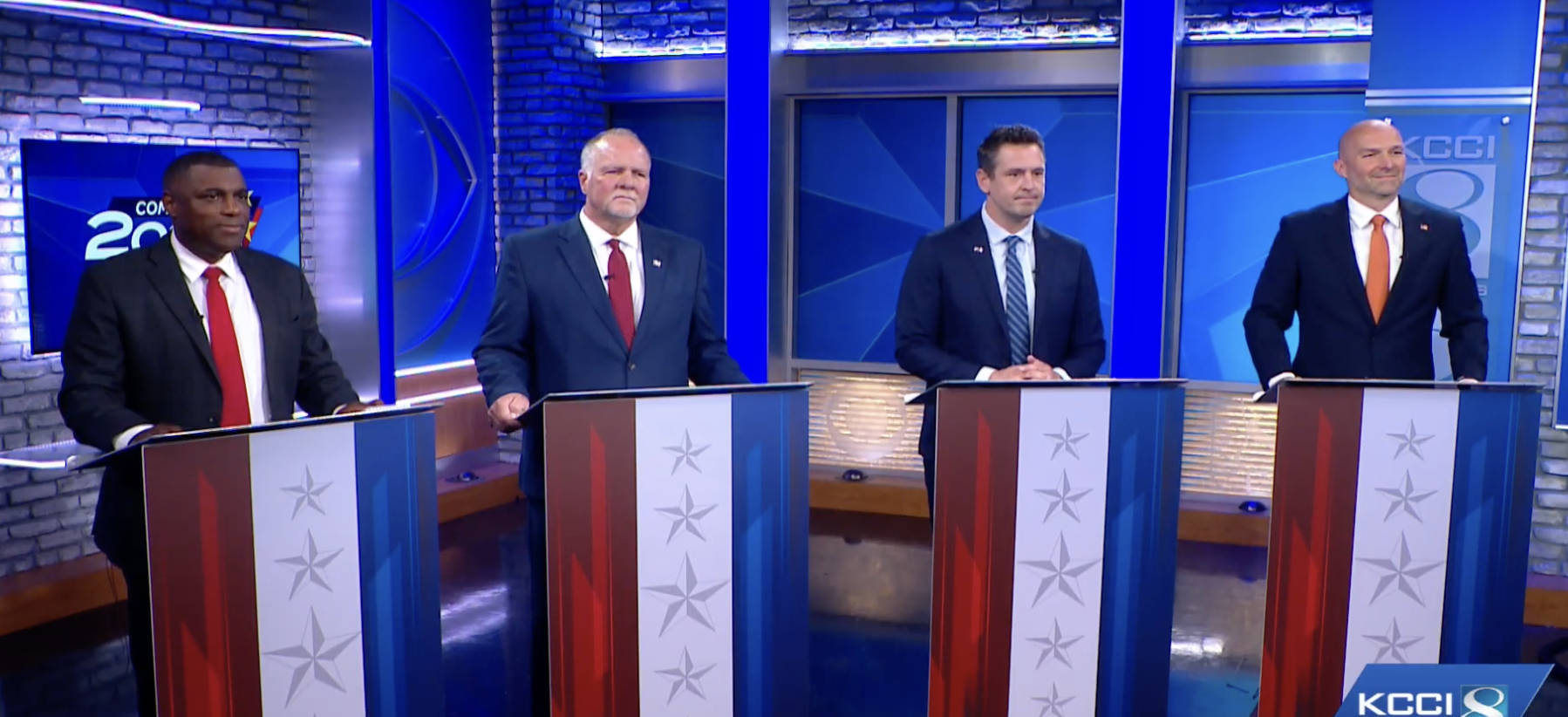
Gubernatorial Candidates Address Key Issues in Iowa Debate
During a recent debate among Republican candidates vying for the Iowa governorship, policy differences emerged on critical topics such as legal immigration and the state’s escalating cancer rates. The event, recorded on Saturday, aired on Tuesday and featured four out of the five Republican contenders: farmer and entrepreneur Zach Rahn, former Iowa Department of Administrative Services Director Adam Steen, state Representative Eddie Andrews, and former state Representative Brad Sherman.
Absence of Randy Feenstra and Historical Context
U.S. Representative Randy Feenstra, also seeking the Republican nomination, opted out of the debate sponsored by KCCI and Gray Media. His absence marked a continuation of missed discussions, having also skipped debates organized by Iowa Press in April and Moms for Liberty in January. Since 2010, Iowa has been led by Republican governors, including former Governor Terry Branstad and current Governor Kim Reynolds, yet this debate highlighted areas where candidates believe improvements are necessary.
Cancer Rates Take Center Stage
One of the pressing issues raised during the debate was Iowa’s alarmingly high cancer rates, which exceed the national average. Although Governor Reynolds and the Republican-led legislature have initiated investigations into these disparities, candidates proposed further actions to mitigate potential risk factors if elected.
Environmental Concerns and Cancer Advocacy
Rahn, endorsed by the Make America Healthy Again PAC, asserted that environmental conditions significantly contribute to Iowa’s rising cancer infection rates. He cited issues like high nitrate levels in water and farmers’ exposure to pesticides, specifically glyphosate. Rahn vehemently opposed a proposal offering agrochemical companies immunity from lawsuits related to their products, critiquing findings from the Iowa Cancer Registry that suggest farmers have lower cancer rates than the general population.
Debate Over Regulatory Approaches
Rahn argued that the state should incentivize farmers to adopt different nitrogen management practices through refundable tax credits aimed at reducing runoff. Other candidates, such as Sherman, expressed support for stricter nitrate reduction mandates for farmers, suggesting that it is the government’s duty to protect public health. Sherman emphasized the need for governmental involvement while balancing education and voluntary compliance with necessary regulations.
Contrasting Views on Government Regulation
Steen countered the call for increased regulation, asserting that governmental overreach might hinder farmers striving to address water quality issues. He highlighted the need for updated regulations from the Iowa Department of Natural Resources, which he believes currently restrict innovative practices that could enhance nitrate management in agriculture.
Divergent Perspectives on Immigration Policy
The candidates also revealed differing opinions on legal immigration, particularly concerning H-1B visas for temporary foreign workers. While they collectively voiced support for the Trump administration’s deportation efforts, Andrews called for prioritizing American-born workers in the job market. Rahn advocated for banning H-1B visa holders in government roles and requiring transparency regarding the hiring of Iowans in state contracts. Conversely, Steen expressed no issues with the existing legal immigration framework as long as workers are compliant and contributing to the tax system.
Upcoming Primary Election Context
As five Republican candidates prepare for the June 2 primary, the winner will challenge Democratic candidate and Comptroller Rob Sand, who is running unopposed in the upcoming general election set for 2026. This debate served as a significant platform for the candidates to outline their stances on pressing issues impacting Iowa, from public health to immigration reform.
