


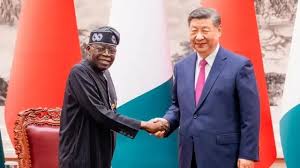
Nigeria and China Strengthen Cultural Ties through Collaborative Initiatives
Recent reaffirmations of commitment to enhancing cultural collaboration between Nigeria and China were highlighted at a cultural event in Abuja. This gathering, entitled “Impressions of the Maritime Silk Road: An Immersive Salon on the Intangible Cultural Heritage of Ancient Zaiton Port,” aimed to foster deeper connections through people-to-people exchanges.
Significant Cultural Festivities at the Chinese Cultural Center
The event, jointly organized by the Embassy of the People’s Republic of China in Nigeria and the China International Cultural Exchange and Tourism Promotion Center, attracted diplomats, government representatives, cultural workers, artists, and enthusiasts. Attendees had the opportunity to engage with various traditional Chinese heritage practices, including tea ceremonies, guqin performances, ceramic exhibitions, and incense rituals.
Historical Significance of the Silk Road Highlighted
During the proceedings, Zhou Hongyou, the Minister of the Chinese Embassy, emphasized the historical relevance of the ancient Silk Road, which once linked regions across China, Europe, and Africa through trade and cultural exchange. He noted that the spirit of collaboration and knowledge sharing established along the Silk Road continues to influence contemporary relationships, specifically between Nigeria and China.
Values of Peace and Cooperation Embedded in Cultural Exchanges
Zhou articulated that the Silk Road facilitated not only the exchange of goods—such as silk, porcelain, and spices—but also essential values including peace, cooperation, openness, inclusiveness, and mutual learning. Furthermore, he underscored how tea culture, which has been woven into the fabric of Chinese society for over 5,000 years, transcends mere social rites to become a vital instrument for cultural dialogue and international understanding.
UNESCO Recognition of Chinese Tea Culture
The Minister pointed out that China’s tea culture recently earned a place on UNESCO’s list of intangible cultural heritage, reinforcing the notion that “tea unites the world.” He expressed that modern relations between China and Nigeria are bolstered by shared principles of openness and mutual respect, especially in light of China’s Belt and Road Initiative, which focuses on expanding collaboration in sectors such as infrastructure, trade, education, and cultural exchanges.
Nigeria’s Commitment to Cultural and Economic Diplomacy
Nigeria and China have significantly fortified their diplomatic and economic relations over the years, with China emerging as Nigeria’s largest trading partner and a key investor in the nation’s infrastructure landscape. As these economic ties strengthen, both countries are actively leveraging cultural diplomacy as a means to enhance mutual understanding and reinforce bilateral cooperation.
Cultural Diplomacy Praised by Nigerian Officials
Abdulkarim Oji Ibrahim, the Undersecretary of Nigeria’s Federal Ministry of Arts, Culture, Tourism, and Creative Economy, commended the event organizers for their role in promoting cultural diplomacy. Represented by Embadu Yohanna Ayaka, the Director-General of the Ministry’s International Cultural Relations Department, Ibrahim noted that the elements reflected in Chinese tea culture resonate deeply with Nigeria’s traditions of hospitality, unity, and community.
Future Initiatives for Cultural Exchange and Economic Growth
He emphasized that tea serves not only as a beverage but as a historical vessel and symbol of cultural exchange. The Nigerian government remains dedicated to fostering international partnerships and endorsing cultural initiatives that present new opportunities within the creative economy. Efforts are currently directed toward promoting tea-related festivals, cultural hubs, agro-arts, and collaborative ventures that can enhance Nigeria’s presence in the global cultural and tourism sector. This event marked a pivotal step in an ongoing cultural exchange program focused on enriching Nigeria-China relations through the arts, heritage conservation, and tourism development.
