


Governor Plans to Let Immigration Bills Become Law Without Signature
Maryland Governor Wes Moore announced on Friday that he will permit two significant immigration bills to become law without his signature, expressing support for their objectives but voicing concerns regarding their practical implementation.
Advocacy Groups Urge Governor to Sign Legislation
This announcement follows a letter from 20 immigrant advocacy and civil rights organizations that implored Moore to endorse the Community Trust Act and the Data Privacy Act. Both measures were top priorities during the recent legislative session in Annapolis and had widespread support from constituents.
Final Bill Signing Scheduled for Tuesday
The governor is set to sign the final piece of legislation for the year on Tuesday. His office confirmed that the data privacy law is also on track to become law without his endorsement, as both pieces of legislation cleared the legislature on the final day of the session.
Details of the Community Trust Act
The Community Trust Act, spearheaded by Senator Clarence Lam, aims to eliminate the requirement for local law enforcement to obtain administrative warrants from Immigration and Customs Enforcement (ICE) to detain individuals. Instead, officers will only be required to secure judicial warrants for these actions, thereby restricting local collaboration with federal immigration authorities.
Context of the Legislation and Local Reactions
This legislative effort complements a recent federal law that bans 287(g) agreements, which are formal partnerships between ICE and local law enforcement. Initially, nine counties that had such agreements threatened to mount legal challenges, but eight promptly rescinded their agreements. Washington County stated it would refrain from enforcing the agreement, even though it remained technically in place. Some sheriffs, however, indicated they would continue informal cooperation with ICE, raising concerns among lawmakers about the implications for community policing.
Governor’s Concerns About Implementation
Governor Moore acknowledged the bill’s intent to keep local police focused on community crime but highlighted significant implementation challenges that need addressing through executive action and future congressional sessions. He emphasized the need for clear collaboration among federal, state, and local entities, remarking that the bill creates uncertainties regarding joint investigations that must be clarified in cooperation with the Maryland Attorney General’s Office.
Political Reactions to the Governor’s Decision
Senate Minority Whip Justin Ready criticized Moore’s decision not to sign the bill, describing it as an acknowledgment that the legislation poses risks to law enforcement in Maryland. He urged the governor to veto what he termed the Democratic supermajority’s overreach in Annapolis, claiming that national political interests are prioritized over public safety.
Overview of the Data Privacy Act
The Data Privacy Act, introduced by Representative Lorig Chalkudian, aims to address a loophole in Maryland’s public information law by restricting companies from selling individual personal data for immigration-related purposes. While the Senate version of the bill passed, it did not find approval in the House during this session.
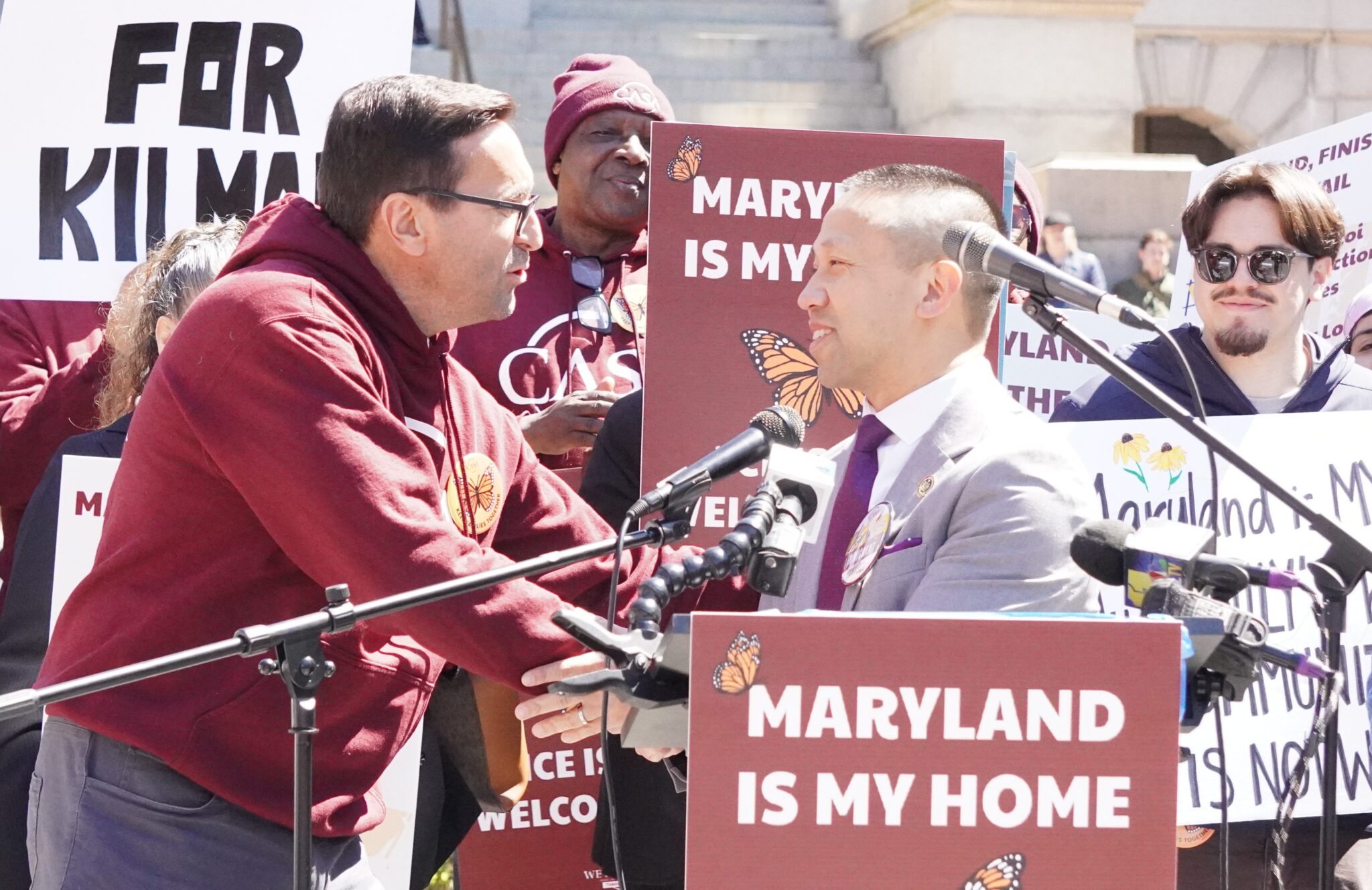
We Are CASA, leading immigrant advocacy efforts, organized rallies and public campaigns to support both pieces of legislation. Executive Director George Escobar celebrated the outcome on Friday, asserting it signifies a pivotal moment in Maryland’s history and commending the community’s activism.
While the laws will not be enacted until they officially take effect, the Maryland Legislative Latino Caucus also issued statements of support, underscoring that policy outcomes are of paramount importance in this legislative session.
