


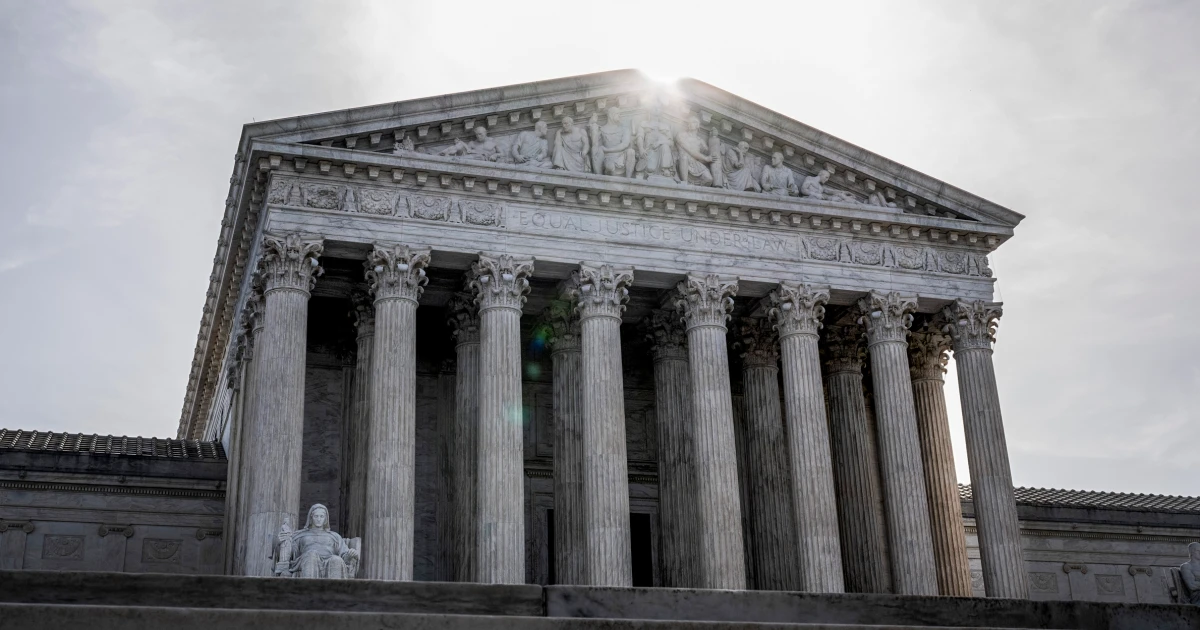
Supreme Court Overturns Murder Conviction, Citing Racial Bias in Jury Selection
WASHINGTON — In a significant ruling that underscores ongoing concerns about racial bias within the criminal justice system, the Supreme Court on Thursday overturned the murder conviction of Terry Pitchford, a Black man sentenced to death in Mississippi. The court’s decision stemmed from Pitchford’s objection to prosecutors’ attempts to exclude a potential Black juror during his trial.
Background of the Case
The 5-4 decision favored Pitchford, who was just 18 years old when he was convicted of murdering grocery store owner Ruben Britt during a robbery in 2004. Pitchford’s accomplice, Eric Brin, fired the fatal shot but escaped the death penalty due to his age. Brin eventually pleaded guilty to manslaughter for his involvement in the incident.
Ruling by Federal Judge Reinforced
The Supreme Court’s ruling reinstated a previous federal judge’s decision that vacated Pitchford’s conviction, allowing his defense team to question whether jury selection had been unlawfully influenced by racial factors. Pitchford’s attorney pointed out that, despite the county’s population being 40 percent Black, only one of the twelve jurors selected for his trial was Black.
Majority Opinion Highlights Jury Selection Flaws
Justice Brett Kavanaugh, who authored the majority opinion, emphasized the necessity for defense attorneys to be able to challenge any claims of race-neutral reasons provided by the prosecution. He noted the jury selection process in Pitchford’s case was marred by confusion and oversight, potentially affecting its fairness.
History of Racial Discrimination in Jury Selection
Prosecutors may now pursue a retrial for Pitchford, but the ruling raises critical questions about racial practices within the judicial system. Many remember that District Attorney Doug Evans, who managed Pitchford’s case, had a history of excluding Black jurors. This controversial practice was also highlighted in a 2019 Supreme Court decision that invalidated the murder conviction of Curtis Flowers, another Black man, due to similar juror exclusion tactics employed by Evans.
Legal Precedents and Challenges
Pitchford’s argument hinges on a violation of the 1986 Supreme Court ruling in Batson v. Kentucky, which prohibits the exclusion of jurors based solely on race. The Mississippi Supreme Court previously maintained that Pitchford had forfeited his right to contest the state’s rationale for excluding Black jurors. However, after challenging this decision in federal court, a judge ruled in favor of Pitchford in 2023, only for the U.S. 5th Circuit Court of Appeals to later dismiss his claims.
Split Court Opinion with Dissenting Views
In Thursday’s ruling, Justices Roberts and the three liberal members joined Kavanaugh in the majority. Conversely, four conservative justices dissented. Justice Neil Gorsuch cautioned that the court might have overreached by supporting Pitchford, particularly as federal law restricts federal courts’ ability to offer relief to inmates within state prisons. He remarked that, while the court’s decision could be viewed as flawed, its implications would likely remain limited.
