


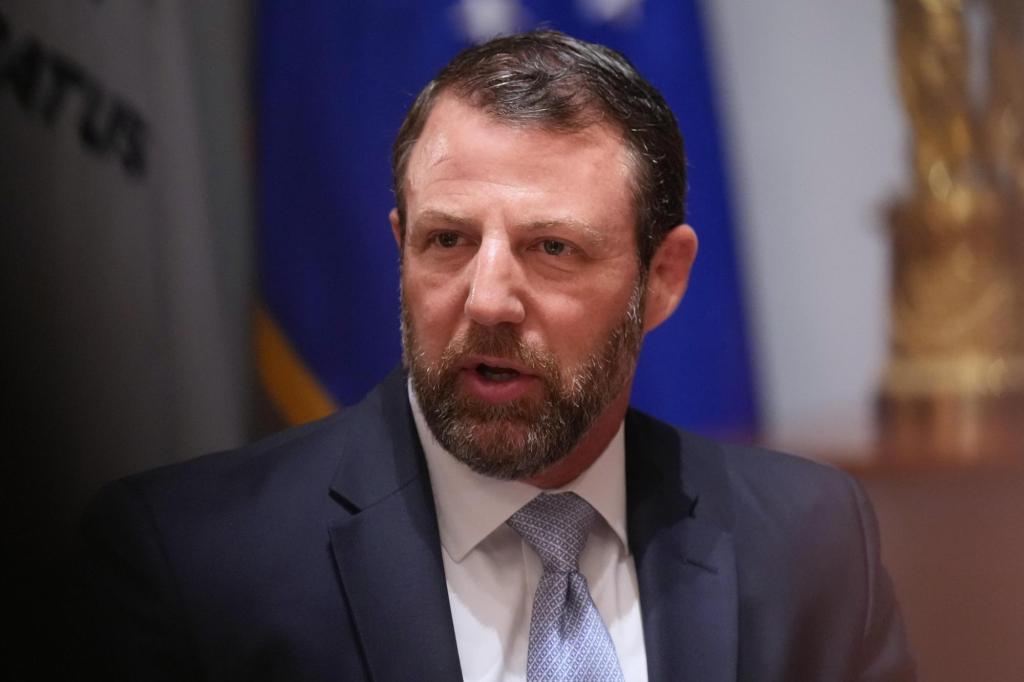
Senate Hearing Highlights Tensions Over DHS Staffing and Immigration Policy
In a contentious Senate hearing on Tuesday, Democrats fiercely criticized Homeland Security Secretary Mark Wayne Mullin for his recent comments regarding potential layoffs of staff at airports in designated sanctuary cities. They labeled his remarks as “outrageous” and accused the Department of Homeland Security of mismanaging billions in taxpayer dollars.
Mullin, who portrayed himself as a source of stability during his confirmation hearing earlier this year following a tumultuous leadership period, faced skepticism from Democrats concerning his capacity to effectively reshape the department’s immigration enforcement policies and uphold the rule of law. Washington state Senator Patty Murray asserted her intentions to closely monitor Mullin’s actions, emphasizing that “we’re still getting crazy proposals.”
Mullin Defends Against Criticism
In response to the criticism directed at him, Mullin described the attacks as “bizarre” and “completely wrong.” His appearance before the Homeland Security Appropriations subcommittee coincides with ongoing Senate discussions about funding immigration enforcement agencies through the end of President Donald Trump’s term, aiming to sidestep reliance on Democrats who seek more restrained monetary support for the agency.
Efforts to secure long-term funding for key agencies have encountered resistance from Republicans due to a proposed $1.776 billion settlement fund intended to compensate individuals believed to have been politically prosecuted under the Trump administration. This funding proposal was effectively halted during the Tuesday session.
Concerns About Airport Staffing Cuts
Murray specifically highlighted Mullin’s indications that he might withdraw U.S. Customs and Border Protection agents from airports in cities that do not comply with Immigration and Customs Enforcement. She described this potential action as utterly unacceptable, warning of its ramifications on the economy in both blue and red states alike.
While the concept of “sanctuary cities” lacks a precise definition, it typically refers to localities that limit cooperation with federal immigration enforcement. Although Mullin has not formalized any proposals, he has voiced intentions to consider this drastic measure, raising alarms within the travel industry, which previously met with him regarding other administration policies.
Travel Industry Voices Concerns
The U.S. Travel Association, along with major airlines, quickly condemned any plans to relocate CBP personnel from airports, noting the potential disruption as millions of tourists prepare for significant events like the World Cup. Despite the outcry, Mullin was not directly questioned about the staffing cuts during the hearing and avoided discussing the contentious issue.
Murray stressed her belief that the White House continues to exert considerable influence over Mullin and the Department of Homeland Security, stating, “I have yet to see you take the reins back from Stephen Miller,” who is known for his role in shaping the administration’s strict immigration policies.
Questions Surround Detention Center Conditions
Mullin also faced scrutiny from Democratic Senator Chris Murphy regarding the treatment of detainees at the ICE detention center in Newark, New Jersey. Concerns regarding the living conditions and medical care provided at the facility were raised, with allegations of substandard food and inadequate health services. Murphy reported hearing disturbing testimonials about “rotten food” and the pressure detainees face to sign deportation documents.
In defense, Mullin insisted that there are currently about 700 detainees housed at the Newark facility, which has a capacity for up to 1,000. He remarked that a recent health inspection found “zero violations,” countering claims of mistreatment. Mullin also alleged that some protesters had attacked DHS employees, which compounded the tensions surrounding the department’s operations.
Disaster Relief Funding Under Fire
Criticism also extended to the disbursement of funds for disaster relief through the Federal Emergency Management Agency. Senator Gary Peters from Michigan questioned whether disaster relief approvals were affected by political leanings, citing reports that President Trump had favored disaster declarations in predominantly red states over blue ones.
Mullin rebutted this assertion, maintaining that diverse disaster responses in both red and blue states have occurred. He firmly stated that disaster relief processes “should not be politicized,” a sentiment echoed by Republicans who largely supported Mullin’s adherence to the rule of law.
This hearing marked Mullin’s first appearance before the Senate since his confirmation in March. Appointed by President Trump following the dismissal of his predecessor, Kristi Noem, Mullin is scheduled to address the budget before the House of Representatives in the coming days.
Contributions to this report were made by Associated Press writers Rio Yamat in Las Vegas and Gabriela Aung Angueira in San Diego, California.
