


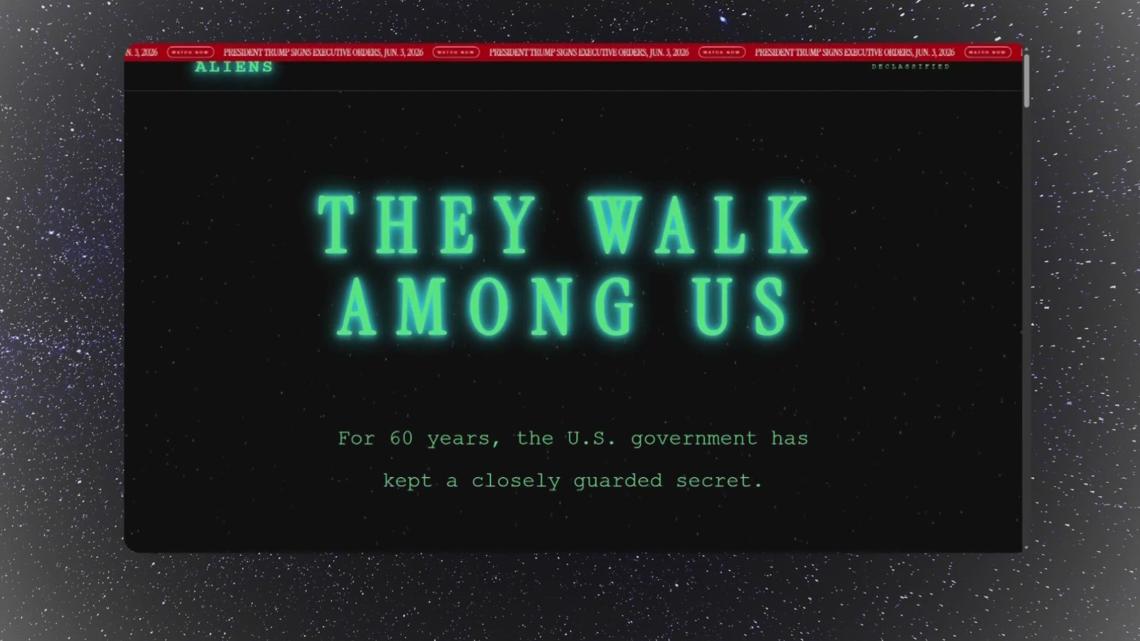
Concerns Rise Over White House Immigration Website’s Accuracy
Immigration lawyers and community members are raising alarms about the White House’s new immigration enforcement website, which they argue may distort deportation statistics and portray criminal activity inaccurately.
Critical Response to Alien-Themed Website
In Boise, Idaho, the newly launched immigration enforcement website—marked by an alien-themed design and featuring music alongside deportation statistics—has come under fire for its potentially misleading representations. Critics, including immigration attorney Nikki Ramirez, contend that the website exacerbates existing divisions surrounding immigration issues.
Perpetuating Fear Among the Public
Ramirez emphasized that the site is contributing to a culture of fear, stating, “I think it’s misleading and I think it’s creating a perception of fear. I think fear is something that needs to stop.”
Misrepresentation of Deportation Statistics
The website presents deportation figures that categorize individuals as criminals and gang members. Ramirez notes that this simplistic categorization fails to accurately portray the demographics of those currently facing deportation proceedings. “The reality is that we’re excluding many individuals without criminal records; the vast majority I’ve encountered are law-abiding,” she explained.
Immigration Violations vs. Criminal Charges
Reports indicate that during enforcement operations, federal agents detained hundreds of individuals. While some faced criminal charges, many were arrested solely for immigration violations. Critics argue that this blending of data can mislead the public about the nature and scope of these detentions.
Voices from Affected Families
Family members impacted by the recent detentions have expressed concern, highlighting that many of those detained have no criminal history. One daughter shared, “He has no criminal history whatsoever. He’s not a bad person,” illustrating the disconnect between public perception and individual cases.
White House Response to Criticism
In an email to KTVB, the White House defended its immigration enforcement efforts, but notably, did not address the specific concerns regarding the presentation of data on the new website. Critics argue that the issue lies not with the data itself, but rather with the implications it carries for public understanding of immigration.
Call for Humanization in Immigration Discourse
As debates about immigration policy persist, community voices are advocating for a more humane perspective. One community member remarked, “I believe we are all humans. We should be treated like humans and not like aliens.” Ramirez echoed this sentiment, emphasizing, “Many of these individuals are neighbors who support us. The narrative framing them all as criminal aliens fosters unnecessary division in our society.”
