


Drumming as a Language: The Richness of African Communication
When individuals in Africa hear the rhythmic tones of the talking drum, they are attuned to a depth of meaning often lost on Western audiences. These drums, which emulate the pitch, rhythm, and dynamics of human speech, have served for centuries as instruments for conveying messages, preserving oral history, and marking community ceremonies and events.
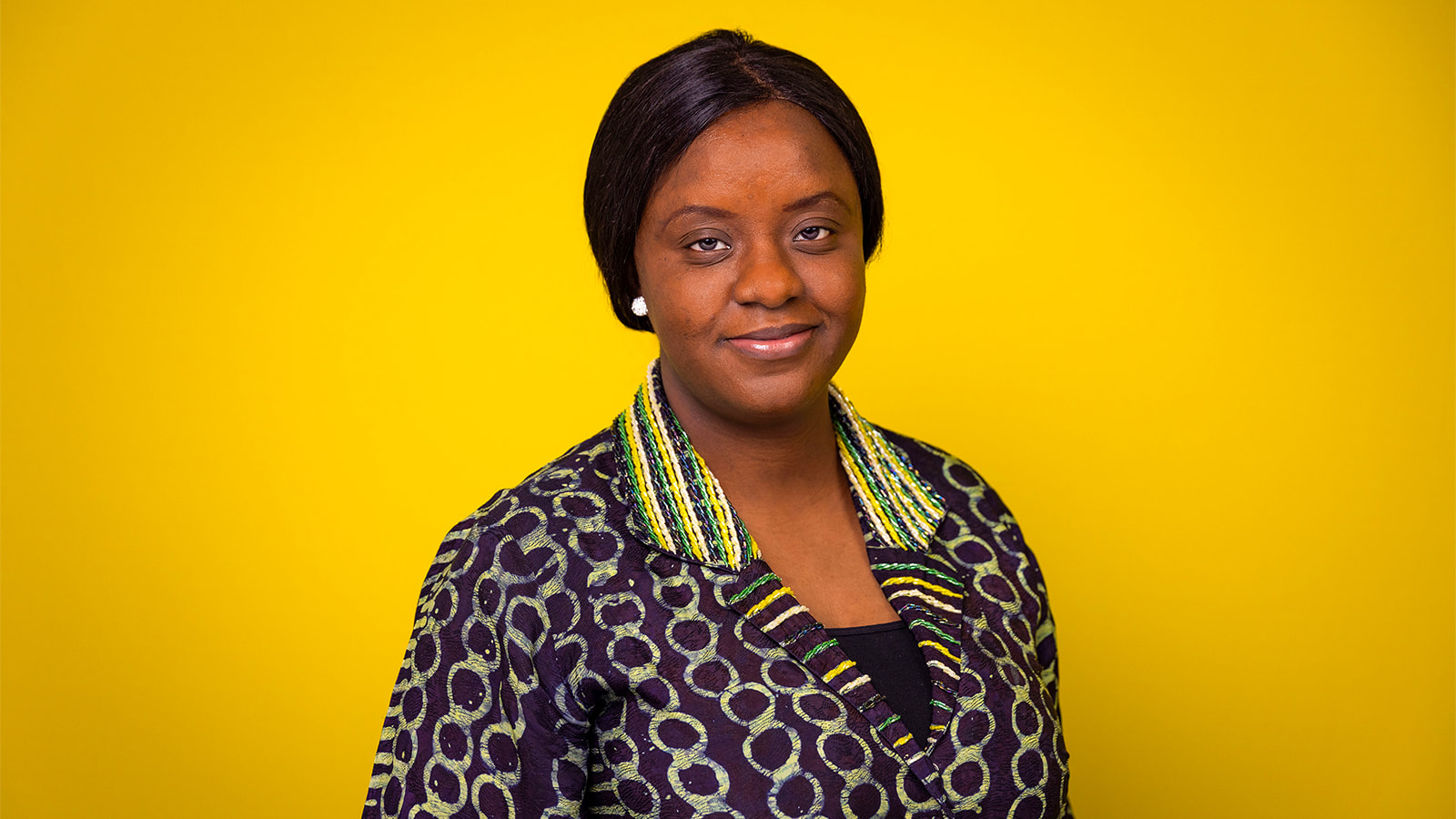
Dr. Ife Adebala, a computational linguist and artificial intelligence expert at the University of Alberta’s Alberta Machine Intelligence Institute, highlights that in many communities, drums provide a vital means of sharing information or encoding messages meant for insiders only. She explains, “It’s a complete communication strategy in itself.”
Adebala is among the 25 newly appointed faculty members dedicated to advancing AI research, as announced at an upper limit meeting sponsored by the Alberta Machine Intelligence Institute (Amii) last month. With a significant $30 million investment from the Canadian Institute for Advanced Study, the goal is to unite top talent across various disciplines, from engineering to health sciences, to push the boundaries of artificial intelligence.
Tonal variation plays a crucial role in over 2,000 African languages and dialects, many of which remain untranscribed. Adebala notes that the tone can be the distinguishing factor between words that appear identical in spelling, emphasizing the complexity of these languages.
These auditory nuances represent a vital type of data. According to Adebala, the AI field has been slow to adapt, mainly because it has primarily focused on text-based language. As a result, numerous oral languages and dialects are often excluded from AI applications, leading to an incomplete representation of human linguistic diversity.
Adebala’s research aims to incorporate over 500 African languages into the realm of natural language processing. By developing data and models, her work seeks to create a “corpus,” effectively defining machine-readable characteristics of these languages. The overarching goal is to facilitate access to technology for Africans in their native languages, enriching both spoken and written forms.
From a functional standpoint, Adebala strives to enhance access to AI tools for Africans, enabling them to navigate search engines, ChatGPT, Google Maps, and agricultural technologies with greater ease. Additionally, her research contributes significantly to language preservation, documenting diverse languages for future generations and advocating for policies that aim to sustain them.
With a robust background in linguistics and computer science, Adebala also holds adjunct professorships in modern language and cultural studies, as well as media and technology research within the Department of Computational Science at the University of Alberta.
Despite the fact that millions speak African languages, data availability remains scarce for many indigenous languages due to prevalent language policies favoring foreign languages. Adebala highlights the related issue of societal perceptions, where speakers of native languages often feel inferior, leading to a preference for learning foreign tongues over embracing their own. This dynamic has a direct impact on the richness of data available for research and AI development.
In a previous endeavor supported by the Gates Foundation, Adebala was instrumental in collecting approximately 2,500 hours of audio across five African languages to delve into the significance of tone in computer language models. The research uncovered that natural language processing systems struggle to interpret tone in isolation, necessitating contextual information for accurate understanding.
“We know that humans can process tones and attribute meaning, even in the absence of consonants and vowels,” Adebala remarks. These various characteristics not only enhance our comprehension of human language but also shed light on the intricacies of human reasoning.
