


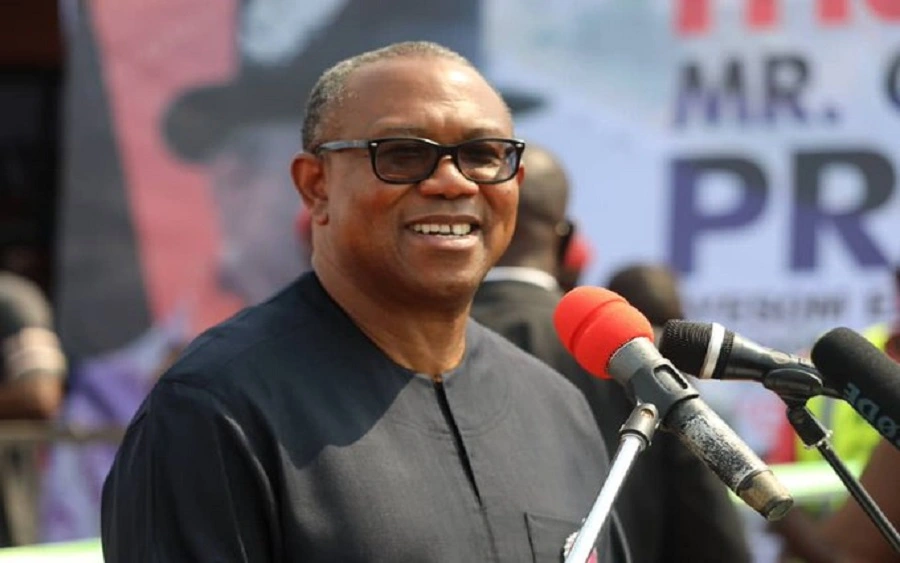
Peter Obi Highlights Concerns Over Nigeria’s Debt Situation
Peter Obi, the presidential candidate of the Nigeria Democratic Congress (NDC) for the 2027 elections, has voiced strong criticisms against President Bola Tinubu’s administration, particularly regarding what he describes as excessive borrowing and a significant lack of transparency in financial management. He has urged the federal government to provide clarity on the nation’s escalating debt crisis.
In a statement released by Ibrahim Umar, the Coordinator of the Peter Obi Media Office, the former governor of Anambra State emphasized that Nigerians deserve comprehensive explanations concerning the use of borrowed funds, especially given the deteriorating economic landscape.
On social media, Obi reviewed the borrowing patterns under successive governments led by the All Progressives Congress (APC), from former President Muhammadu Buhari to the current administration, asserting that Nigeria’s debt burden is rising at an alarming pace. He noted that under the Tinubu administration alone, the total debt has surged to approximately 200 trillion naira.
Obi highlighted that this figure represents an increase of over 100 trillion naira within just three years, a stark contrast to the roughly 49 trillion naira accumulated during Buhari’s eight-year tenure, which was projected to reach about 80 trillion naira. He remarked, “As millions of Nigerians grapple with the implications of this unsustainable debt accumulation, the situation is exacerbated by the government’s reckless borrowing strategies and the alarming lack of accountability surrounding these funds.”
According to data from the Federal Budget Office, Obi claimed that the federal government borrowed 11.89 trillion naira from January to September 2025, surpassing the initial borrowing target of 10.34 trillion naira by nearly 1.54 trillion naira. He stressed that under a responsible administration, such fiscal overreach would necessitate rigorous scrutiny from relevant governmental bodies.
Obi also expressed his concerns over the allocation of borrowed funds, indicating that only 3.1 trillion naira was directed towards capital projects during the same period, a mere 17.66% of the 17.58 trillion naira earmarked for such projects. He pointed out a concerning deficit of approximately 14.48 trillion naira, emphasizing the need for the government to disclose how the remaining funds were utilized.
Nigeria’s Rising Debt Profile Raises Alarm
Recent data from the Debt Management Office (DMO) indicates that Nigeria’s total public debt now stands at around 159 trillion naira, equivalent to about 111 billion dollars. This figure marks a significant rise from the 87.38 trillion naira recorded at the conclusion of Buhari’s administration.
Reports suggest that the national debt has escalated by more than 65 trillion naira during President Tinubu’s first two years in office, driven largely by new domestic and foreign borrowings, as well as the effects of exchange rate adjustments on external debt. The growing debt profile remains a topic of fervent discussion among economists, opposition politicians, and policy analysts, who are raising alarms about increasing debt servicing costs and overall fiscal sustainability. There is a pressing need to ensure that borrowed funds are directed towards productive investments that can stimulate economic growth and enhance infrastructure.
