


African Startups Showcase AI Innovations in Google Accelerator Program
Fifteen AI-focused startups from eight African nations have successfully completed the Google for Startups Accelerator Africa program, with 60% of participants already achieving profitability and generating an average monthly revenue of $60,000, organizers revealed on Thursday.
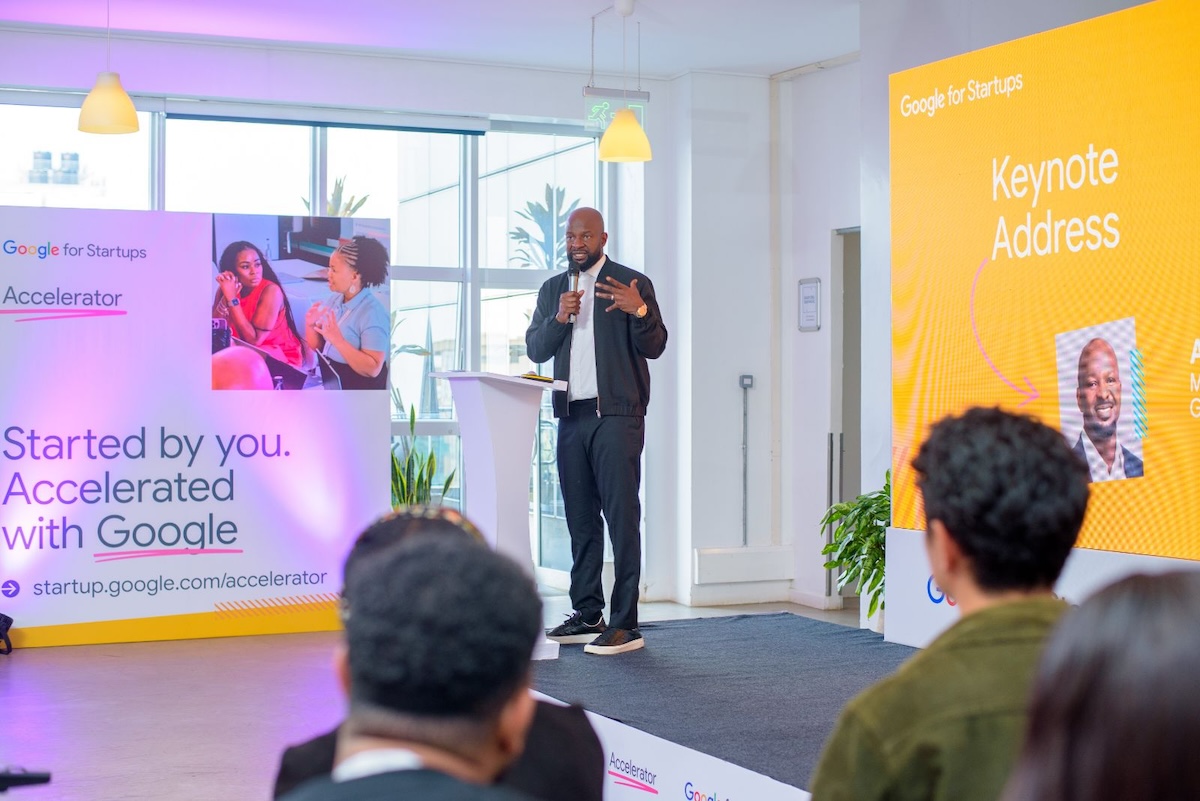
The graduation ceremony, held during Closeout Week and Demo Day in Nairobi, featured startups from Nigeria, Kenya, South Africa, Uganda, Tanzania, Senegal, Ivory Coast, and Angola. The three-month hybrid program, which took place from March to June 2026, paired growth-stage founders with Google’s technological resources and engineering mentors aimed at facilitating scalability.
This diverse cohort spans various industries, including fintech, mobility, healthtech, agritech, and software as a service (SaaS). Throughout the program, the startups collectively raised $1.1 million, demonstrating their potential in the competitive landscape of tech innovation.
During Demo Day, Alex Okosi, Google’s managing director for Africa, expressed pride in the innovative ways these startups are leveraging AI to address real-world challenges across the continent. He emphasized the program’s blended support model, which combines equity-free assistance with access to Google services, allowing founders to maximize their chances of success.
Folarin Aiyegbusi, Google’s Head of Africa Startup Ecosystem, mentioned that this year’s program placed a special emphasis on AI and machine learning as tools to tackle societal issues. He highlighted that the initiative continues to empower founders to broaden their impact within their communities while unlocking pathways to economic growth.
The graduating cohort includes four companies from Kenya, each addressing what organizers term the “invisible infrastructure gap” in the local economy. Notable examples include CoreMana, which utilizes AI to analyze real-time data from informal food markets, thereby enhancing visibility within previously opaque supply chains. Duck tackles retail out-of-stock challenges by equipping consumer brands with actionable intelligence and real-time insights, while ReportsAI transforms unstructured data into compliance-ready reports. Meanwhile, VunaPay offers a fintech solution designed to resolve payment delays for smallholder farmers by catering to agricultural cooperatives.
Safiri, a prominent travel and tourism platform from Tanzania, also participated, focusing on enhancing the digital infrastructure for transportation and showcasing the country’s tourism potential. The broader cohort featured Anda Africa from Angola, which leverages AI for credit scoring among informal taxi operators, and Bani from Nigeria, a provider of cross-border payments infrastructure. Emaisha Pay from Uganda specializes in the financial aspects of agricultural trade and embedded finance.
South Africa’s contributions included Loop, aimed at digitizing mobility and payment systems, and Vambo AI, which develops a multilingual AI infrastructure for African languages. Senegal’s Maad operates an AI-driven omnichannel platform for consumer brands, while a trio of Nigerian startups—MasteryHive AI, Regxta, and Termii—focus on transaction reconciliation, anti-money laundering monitoring, and AI-based communications infrastructure, respectively. Finally, Ivory Coast’s Meditect adds to the initiative with its cloud software designed for the digital transformation of pharmacies.
Since its inception in 2018, the Google for Startups Accelerator Africa program has supported over 190 startups across 17 African nations. To date, these alumni have collectively raised more than $400 million, creating over 3,500 jobs. Google has also contributed $11 million in non-equity funding and product credits to foster innovation within the region.
