


Trump Administration Files Lawsuit Against New York Immigration Law
The Trump administration has initiated legal action against New York, contesting recently enacted immigration legislation. The lawsuit claims that state lawmakers have overstepped their authority concerning federal immigration enforcement regulations.
Allegations of Constitutional Violations
In a complaint lodged on Monday in federal court in Buffalo, the U.S. Department of Justice asserted that the new state law, which was part of a $277 billion budget, infringes upon the U.S. Constitution’s Supremacy Clause. This clause stipulates that states cannot impose regulations on federal activities within their jurisdiction.
Counteraction by New York Officials
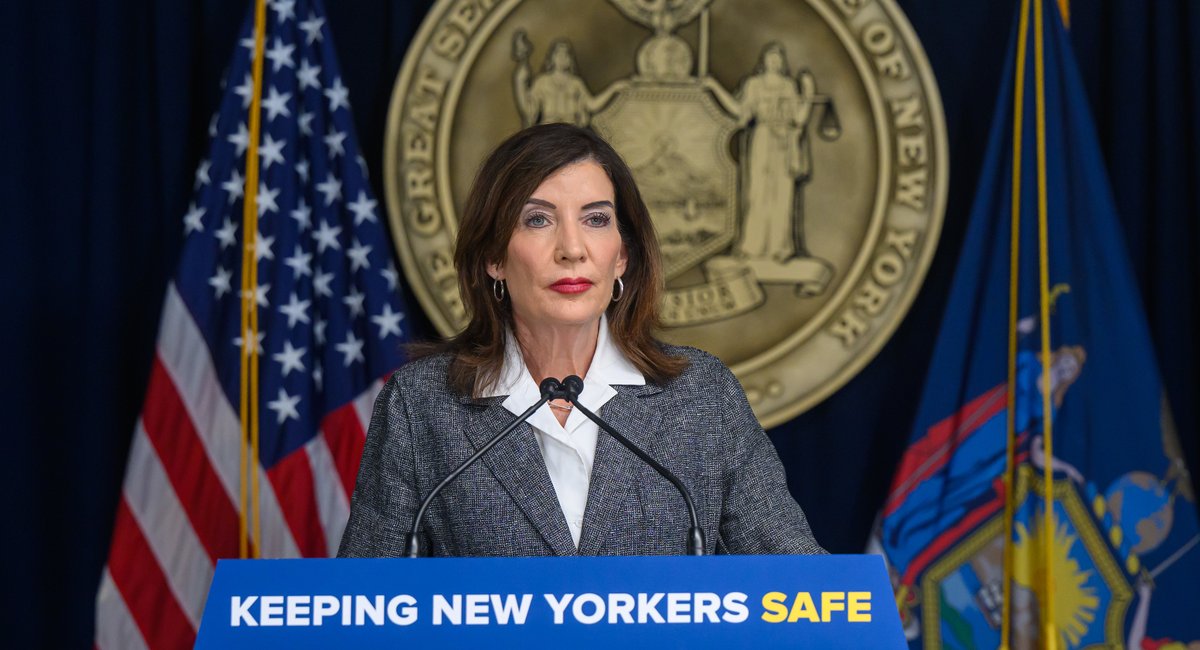
Governor Kathy Hochul and Attorney General Letitia James responded late Monday with a countersuit aimed at enabling the enforcement of the state law later this summer. The opposing lawsuits revolve around two key provisions of the newly established legislation.
Provisions of the Challenged Law
The first provision prohibits law enforcement officers, including U.S. Immigration and Customs Enforcement (ICE) agents, from concealing their identities while on duty or engaging with the public. However, a covert operations exception is included. This provision is set to take effect this week. The second provision forbids formal 287(g) cooperation agreements between ICE and local law enforcement agencies.
Federal Government’s Stance on Immigration Enforcement
The federal government contends that these provisions significantly undermine essential tools for effective immigration enforcement. The Justice Department’s complaint emphasizes that state-imposed laws hinder the principles of federalism that undergird the constitutional framework, thereby violating the Supremacy Clause. It argues that such actions adversely affect both the U.S. populace and New York residents.
Defense from New York’s Leadership
Governor Hochul, representing the Democratic Party, vocally defended the legislation. Hochul stated that public trust is paramount and that citizens have the right to know who is enforcing laws in their neighborhoods. She emphasized that local resources should safeguard public safety rather than serve the agenda of federal agencies accused of wrongdoing. “These laws reflect New York’s values, and we will not be bullied into renouncing them,” she asserted.
Broader Implications and Responses
Recent months have seen similar laws restricting ICE officers from wearing masks adopted in various Democratic-led states. The Department of Justice has challenged these regulations in New Jersey, Connecticut, and California. A California court recently blocked the statute there, ruling it discriminatory toward federal employees. New York lawmakers believe their mask-wearing rule will prove more effective due to its applicability across all law enforcement officers.
