


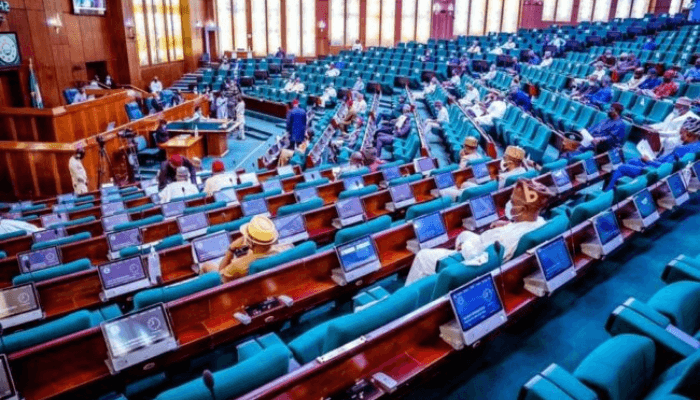
House of Representatives Launches Investigation into Phantom Budget Allocation
The House of Representatives has initiated an investigation into the controversial allocation of over N1.3 billion to the fictitious Presidential Foreign Intervention Promotion Council (PFIPC) within the 2026 Appropriations Act. This alarming development raises serious questions about the integrity of Nigeria’s public financial management system and highlights critical flaws in the national budgeting process.
This resolution arose from a motion presented by Mr. Yusuf Gagdi, the representative for Panxing/Kanke/Kanam Federal Constituency in Plateau State. Gagdi emphasized that the budgetary provision for the PFIPC, an agency that lacks both legal and administrative foundations, underscores significant weaknesses in the country’s fiscal oversight mechanisms. He suggested that similar questionable entities might have infiltrated past budgets undetected.
During the session, Gagdi expressed concern over how the erroneous organization managed to secure inclusion in the national budget despite its absence of legal legitimacy. He revealed that the PFIPC had been operating from the Federal Secretariat Complex in Abuja, collaborating with various government agencies while posing as a legitimate entity until the federal government officially disavowed its existence.
While acknowledging that the activities of the PFIPC are currently under investigation in a Federal High Court in Abuja, Gagdi affirmed that the House’s inquiry would specifically target the budgeting processes and institutional lapses that permitted this unauthorized agency to gain official approval.
The lawmaker referenced documents claiming that the organization was established under a non-existent “Chapter N2117 of the Laws of the Federation of Nigeria.” He indicated that legislative records do not support the existence of such a law, noting that the closest legal document is the Nigeria Investment Promotion Commission (NIPC) Act, which the PFIPC erroneously cited.
Gagdi raised critical questions about how such a substantial amount of public funds could be slated for an organization devoid of any lawful basis. He highlighted, “The ease with which this unestablished organization was processed through official channels indicates systemic weaknesses rather than isolated administrative errors.” In light of this statement, the House resolved to form a special committee tasked with investigating how these budget provisions were integrated into the 2026 spending framework, tracing the process from executive proposal to legislative review.
Furthermore, the House plans to summon the Minister of Budget and Economic Planning, along with the Federal Budget Director, to clarify the verification protocols in place for newly proposed institutions in the federal budget. All ministries, departments, and agencies identified in both the 2025 and 2026 Appropriations Framework will be assessed against their enabling legislation to confirm their lawful status.
To prevent similar occurrences in the future, the House directed the Budget Office to submit a certified list of all agencies proposed for funding alongside every appropriations bill, ensuring a clear linkage to the legal basis for each agency’s establishment. Mr. Gagdi reiterated the importance of adhering to Articles 80, 81, 88, and 89 of the Constitution and Articles 19, 30, and 50 of the Fiscal Responsibility Act of 2007.
Supporting Gagdi’s motion, Vice-chairman Benjamin Cull shared his own troubling experience with the PFIPC. He recounted how he received an official-looking letter bearing the presidential insignia, allegedly from both the President’s Economic Advisory Council and the President’s Foreign Intervention Advancement Council. The communication, complete with an official government logo and a “.gov.ng” website, urged his office to confirm the organization’s address before allowing representatives to meet. Cull remarked that the apparent legitimacy of the correspondence does not guarantee the authenticity of an agency and stressed the need for the House to investigate how the PFIPC gained access to government premises and senior officials.
