


Severe Rainfall Disrupts Lagos Commuters
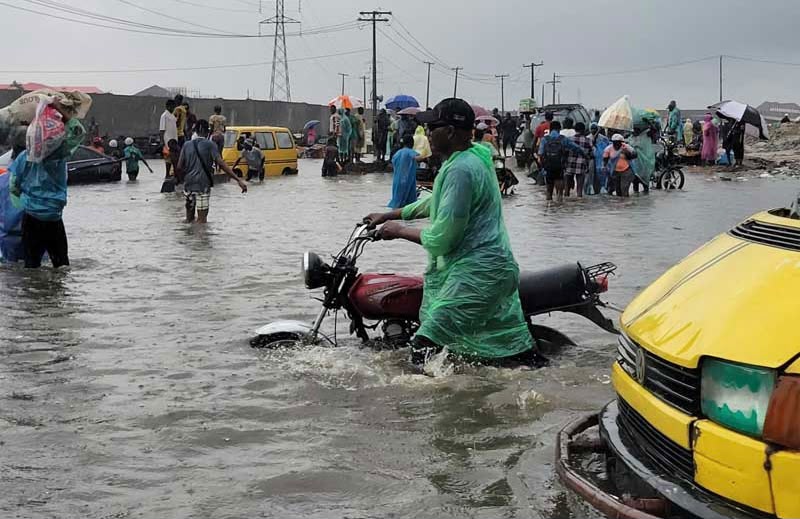
On Monday, heavy rainfall paralyzed traffic in several areas of Lagos, leaving many commuters stranded and compelling residents to traverse floodwaters. This situation resulted in a marked increase in transportation fares across the city.
In interviews with the News Agency of Nigeria (NAN), several Lagos residents described the downpour as one of the most intense in recent weeks. The deluge significantly disrupted movement, stalled business operations, and hampered overall productivity.
For countless commuters, navigating the flooded roads became a daunting challenge, leading to crowded highways and packed public transport options. Odion Okiade, who lives in the Alimosho Axis District, noted that transport operators frequently exploit such weather conditions to hike fares, with increases often reaching as much as N1,500 on rainy days. “Today’s rain was different,” she remarked, highlighting the continuous financial strain on residents who are already grappling with rising living expenses.
Another commuter, Nkiru Ogbonna, shared his experience of having to wade through knee-deep water just to reach his office. “This morning I had to wade through knee-deep water to get to work,” he recounted, indicating that such struggles have become a recurring challenge during heavy rainfalls.
Chiineme Onuoha, who commutes from the Sele axis, also faced extensive delays due to traffic congestion triggered by the severe weather. “What normally takes three to five minutes turned into a frustrating 25-minute journey, causing us to arrive late at work,” she explained, underscoring the impact of the downpour on daily schedules.
The combination of flooding and traffic chaos was lamented by another commuter, Lilian, who remarked that her journey from Oril to Costain took 45 minutes. She noted that this disruption would inevitably affect workplace productivity for many. Despite being clad in a raincoat, she arrived at her destination soaked, further emphasizing the challenges faced by commuters on such days.
Residents like Deborah, living near the river that delineates Ogun and Lagos states, expressed frustration over regular interruptions to their daily commutes caused by heavy rainfall. She called for urgent measures to alleviate flooding in vulnerable neighborhoods during the rainy season.
Oluchi Uzoma, a resident of Fantasy Island near Sango, attributed the persistent flooding in her area to careless waste disposal practices. “The rain has made it impossible for us to go anywhere; roads are no longer passable by cars,” she said, warning of the potential dangers posed by deep water-filled holes that had formed due to erosion. Many residents, she noted, are choosing to remain indoors, and businesses dependent on customer traffic are experiencing a significant decline.
Uzoma emphasized the importance of responsible waste disposal to mitigate flooding issues. “People are throwing trash into the roads and gutters, causing blockage and preventing water from flowing,” she remarked, urging her community to maintain a clean environment.
In light of these challenges, the Nigeria Meteorological Agency (NiMet) has advised residents to remain vigilant, forecasting continued rain and thunderstorms in Lagos and other southern regions of Nigeria. The agency cautioned drivers to exercise caution due to anticipated strong winds that could accompany thunderstorms, which may lead to poor visibility and slippery roads. Residents are also urged to avoid flood-prone areas and not seek shelter under trees or nearby power lines during severe weather conditions.
