


Community Response to Tragic Incident in Houston
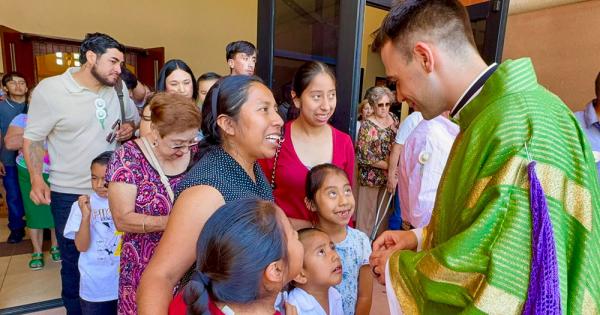
Vatican representatives were engaging with immigrant families at a Catholic diocese in Houston last week when news emerged of the tragic shooting of Lorenzo Salgado Araujo by Immigration and Customs Enforcement agents while he was transporting a construction worker. This incident has left families in the community grappling with intense fear and uncertainty.
The urgency of the situation was highlighted by a priest who declared the need for action in response to such tragedies. Mattia Ferrari, the coordinator of the World Congress of People’s Movements, expressed his horror at Salgado Araujo’s death, describing it as a “culmination of suffering” for many immigrants who endure unfair and unjust circumstances.
Since its inception in 2014, the World Congress of Peoples’ Movements has been actively supported by the Vatican’s Bishopric for Integral Human Development, which emphasizes the importance of highlighting the struggles of the poor and marginalized in the ongoing fight for justice. Ferrari emphasized the church’s role as one of service rather than leadership, advocating for grassroots movements.
Pope’s Commitment to Marginalized Communities
This situation comes in the wake of recent statements from Pope Leo, who underscored the centrality of the poor in the gospel. He urged marginalized communities to engage in collective efforts aimed at reversing social injustices that dehumanize individuals. Ferrari’s current tour was initiated after he expressed a desire to understand the challenges faced by those dealing with heightened costs of living and immigration issues in the U.S., according to Cecilia Flores, a volunteer with Catholics in Communion.
Ferrari’s tour spans six weeks, during which he will visit 21 cities across states such as California, Texas, and New York, aiming to deliver the Catholic Church’s message of support to community organizations focused on these pressing issues.
Engagement with Immigrant Communities
Flores detailed how Ferrari and his team engaged deeply with community members, posing thoughtful questions in a gentle manner. Accompanying Ferrari on this mission is Luca Cassarini, founder of Humans Saving the Mediterranean, who addresses the humanitarian crisis caused by migrant deaths in maritime crossings. Meanwhile, Cesar Piscoya, a respected advisor within the Latin American bishops’ conference, completes the delegation.
Participants shared poignant insights regarding the often-unseen suffering they encountered in America. Flores, who also serves as executive director of the Catholic Volunteer Network, remarked that many delegates found the reality of life in America starkly different from the idealized image they had previously been shown.
Addressing Broader Social Issues
The delegation’s trip was not solely focused on immigration. In Houston, they visited a dialysis center for the uninsured, highlighting the community’s healthcare challenges. In Pittsburgh, Ferrari engaged with local leaders to discuss environmental issues related to abandoned gas wells and the transition toward a sustainable energy economy.
In San Diego, the group assisted immigrants during court hearings and ICE check-ins, witnessing firsthand the emotional journeys from fear to solidarity among migrants once they learned they could help others. In Monterey Bay, California, they participated in initiatives aimed at connecting undocumented immigrants with essential health services, a community effort spearheaded by the local Industrial Areas Foundation.
Experiences of Migrants and the Call for Awareness
In Los Angeles, the delegation attended a public hearing organized by the local affiliate of the Industrial Areas Foundation. Here, migrants shared harrowing accounts of mass deportations and violent detentions. Emily, a university student without legal immigration status, expressed her fears about attending school and shared her empowering experience of testifying publicly about her challenges.
Robert Hu, an organizer with One LA, noted the significant impact of the Vatican’s presence in raising awareness about the injustices faced by these communities. Hortensia Ramirez, a leader within One LA, conveyed her deep emotional response while listening to personal stories, emphasizing the hope brought by the connection to Pope Leo.
Collaborative Efforts for Change
The delegation also participated in a panel hosted at the Dolores Mission, collaborating with other interfaith organizations to advance immigration-related initiatives. Angel Motell, lead organizer at LA Voice, shared their efforts to promote legislation that seeks to impose financial accountability on private immigration detention companies.
This collaboration marked a significant moment for community organizations working together to tackle these challenges. Flores anticipates that Ferrari’s tour will foster long-term connections and resource sharing, especially through the involvement of Piscoya, who leads the Latin American Bishops’ Conference.
During the tour, Ferrari met with local bishops, strengthening the church’s commitment to advocacy and support for communities in crisis across various regions. Despite visiting a wide range of locales, Ferrari acknowledged there is still much more to be done and expressed a desire to return in the future.
