


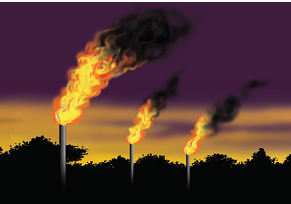
Efforts to Combat Gas Flaring Gain Momentum
The urgent need to address the issue of gas flaring in Nigeria has garnered attention, especially following remarks from Annette Günther, the German Ambassador to Nigeria and ECOWAS. According to Günther, Nigeria is projected to lose around $1.5 billion in 2024 due to gas flaring practices. She highlighted that the country will flare 5.3 billion cubic meters of gas this year, ranking Nigeria seventh globally in terms of gas flaring. Günther emphasized a new collaborative initiative aimed at finding efficient ways to utilize flare gas, reduce emissions, and create economic value. This would also aim to facilitate the supply of gas to households and industries, with possibilities for hydrogen production as well.
The welcoming response to Germany’s proposal reflects a broader hope that the Nigerian federal government will take significant steps to eliminate this long-standing issue. Data from the National Oil Spill Exploration and Response Agency (NOSDRA) reveals that Nigeria flared approximately 148.7 million standard cubic feet of gas in the first half of 2024 alone. Experts suggest that this substantial waste could provide essential relief for the current currency crisis in Nigeria, with the potential to generate nearly enough electricity to power significant portions of the nation. This is particularly concerning given that gas flaring contravenes existing Nigerian law.
While Nigeria has reaped substantial revenues from oil for decades, the persistent issue of gas flaring poses severe environmental threats. This practice, a byproduct of oil extraction, involves burning gases that release toxic emissions into the atmosphere. Research conclusively demonstrates that gas flaring jeopardizes human health, disrupts local ecosystems, contributes significantly to greenhouse gas emissions, and squanders vast resources of natural gas. Alarmingly, all Nigerian oil companies continue to engage in this reckless behavior without regard for its ramifications.
Since the inception of oil extraction in Oloibiri, Niger Delta, gas flaring has continued unchecked. Residents live in proximity to ground-level flares that emit dense clouds of toxic smoke, some surpassing the heights of skyscrapers. Environmental advocates highlight the serious health risks associated with gas flaring, including conditions such as cancer, asthma, and chronic bronchitis. The detrimental effects extend to soil quality, leading to acid rain that diminishes agricultural yields. Furthermore, pollution of marine environments contributes to declining fish populations, upsetting local ecosystems and threatening biodiversity. The ongoing consequences of gas flaring persistently undermine the well-being of both the population and the environment.
Despite the urgent need for change, previous governments have failed to implement decisive actions to mitigate gas flaring. In 1969, the administration of General Yakubu Gowon mandated that oil companies cease flaring gas within five years of commencing operations, a deadline that was consistently overlooked by successive military regimes.
Under the current civilian administration, the Federal Government introduced the Nigeria Gas Flare Commercialization Program (NGFCP) in December 2016. However, a decade later, progress remains minimal. It is noteworthy that Nigeria is a participant in the Global Gas Flaring Reduction Partnership (GGFR) Principles, which sets a target to eliminate global gas flaring by 2030.
