


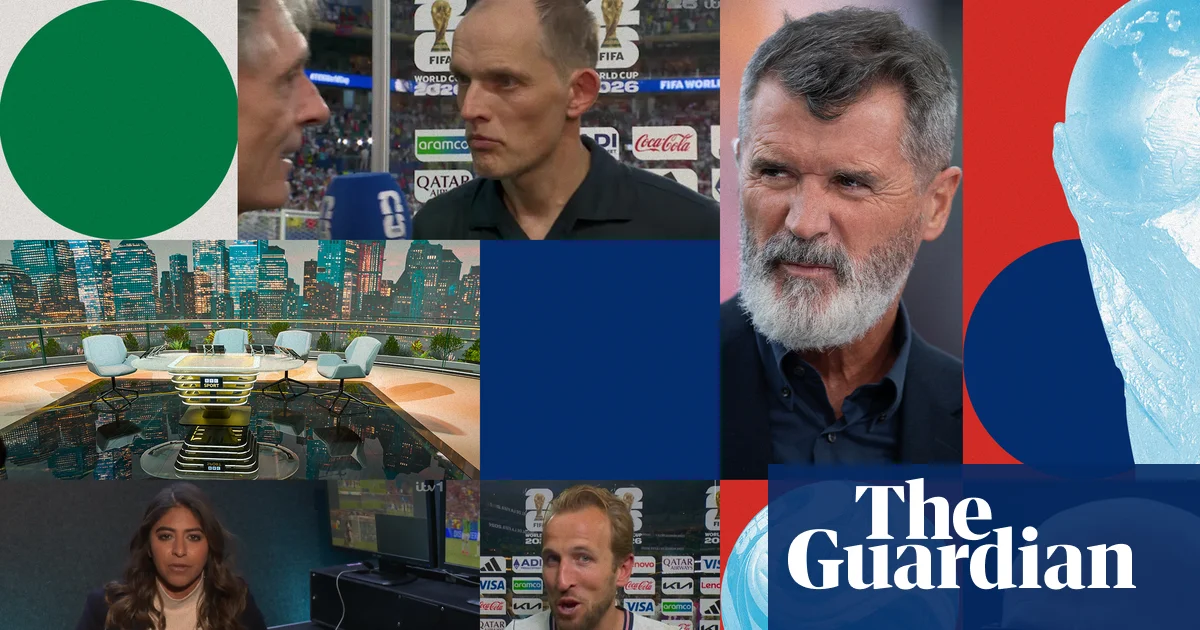
The World Cup may culminate in a clash between Argentina and Spain, yet for media enthusiasts in the UK, the real competition is a domestic one between the BBC and ITV. As the event unfolds, a closer look at their performances reveals which broadcaster emerged triumphant on key fronts.
Studio Setup
In a significant departure from tradition, the BBC opted against traveling to the U.S., instead utilizing a digital studio in Salford designed to create the illusion of being in front of iconic landmarks in the host city. This decision conveyed a rather public message regarding budget constraints: “We don’t have the resources we once did.” Meanwhile, ITV operated from New York, successfully projecting a sense of being integrated into the U.S. environment. Ironically, just as the BBC was preparing its U.S. setup, the England team returned home. Winner: ITV
Punditry Lineup
ITV showcased an impressive roster, highlighted by the dynamic presence of professional songwriter Roy Keane and Ange Postecoglou, contingent upon Australia’s involvement. Despite occasionally limited exposure, Jobi McAnuff proved effective, while Ian Wright’s lively commentary was a consistent highlight. ITV overcame initial hurdles, such as an awkward moment that left Emma Hayes looking bemused. In contrast, the BBC appeared to misjudge presenter Gary Lineker’s pundit team, leading to mixed results. Joe Hart’s insights stood out, especially against a backdrop of Alan Shearer and Wayne Rooney’s relatively uninspiring analyses. Winner: ITV
Viewers often find it perplexing how pundits, despite earning well to comment on high-stakes matches, sometimes express boredom and disinterest—this has been dubbed the Mark Lawrenson syndrome. Both Jonathan Pearce (BBC) and Lee Dixon (ITV) occasionally fell into this pattern, while Ally McCoist’s unwavering enthusiasm stood in stark contrast. Ultimately, the BBC boasts a stronger lineup, with Guy Mowbray’s commentary reigning over Sam Matterface’s. Winner: BBC
Post-Match Interviews
Post-match coverage on both channels captured headlines for vastly different reasons. Harry Kane’s faltering voice during a humorous interview with the BBC following England’s victory over Mexico became an instant classic, ripe for remixes. Conversely, Gabriel Clarke’s handling of England’s quarter-final against Norway drew criticism, particularly for Thomas Tuchel’s direct comments toward Jude Bellingham, which seemed to revive past tensions. Winner: BBC
Referee Analysis
In referee commentary, Christina Unkel’s contributions on ITV outshone those of Darren Cann on the BBC. Unkel delivered insightful, forthright evaluations, while Cann often hedged his opinions, diminishing their impact. Winner: ITV
Music and Thematic Elements
Though neither broadcaster measured up to the iconic Nessun Dorma from 1990 or the surprise hit from Mexico 1986, Rascal Flatts’ “Life is a Highway” began to gain popularity early in the tournament. It successfully evoked memorable World Cup scenes, visually and aurally outperforming the BBC’s animated title sequence. Winner: BBC
Unexpected Viral Moments
In a moment that is sure to linger, Danny Murphy’s odd tangent about a deceased cat named Bob, which had allegedly vanished in a Royal Mail van following Norway’s acquisition of player Oscar Bob, will likely haunt him indefinitely. In a witty comeback, the BBC’s Steve Bower responded dryly, “The game wasn’t that bad.” Winner: In a sense, all of us—except for Bob.
