


New Executive Order Aims to Regulate Nigeria’s Digital Economy
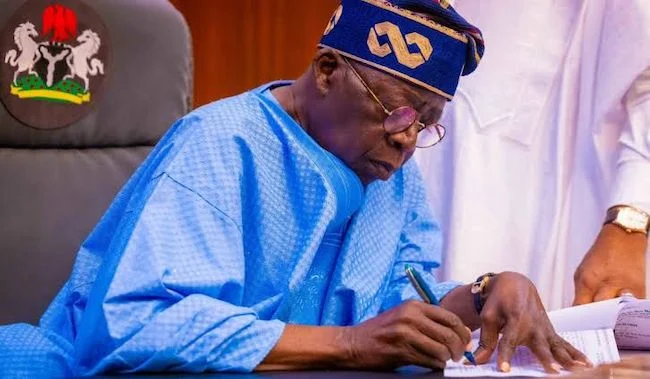
President Bola Tinubu has signed the Executive Order on Virtual Assets Adjustment 2026, aimed at harmonizing the regulation of virtual assets and fostering collaboration among the country’s financial, revenue, and capital market institutions. This landmark move is expected to enhance oversight in a rapidly evolving digital economy.
According to Bayo Onanuga, the Information and Strategic Adviser to the President, the order takes effect immediately and falls under Article 5 of the 1999 Constitution of the Federal Republic of Nigeria, as amended. The initiative seeks to address the challenges posed by a fragmented regulatory landscape that has resulted in ambiguities between currencies, money, commodities, and securities.
As virtual assets proliferate, Nigeria faces several risks, including money laundering, terrorist financing, cybersecurity threats, and fraud. The lack of coordinated oversight has allowed unregistered fraudsters to exploit systemic weaknesses, jeopardizing the financial well-being of ordinary Nigerians.
To mitigate these risks, the Executive Order introduces the Virtual Assets Council, chaired by the Central Bank of Nigeria (CBN). The council includes key financial bodies such as the Nigeria Revenue Service (NRS) and the Securities and Exchange Commission (SEC) in vice-chair roles, along with representatives from the Nigerian Financial Intelligence Unit (NFIU) and the Office of the National Security Adviser (ONSA). This collaborative framework aims to provide policy direction and facilitate partnerships among various governmental agencies.
The order also creates the Virtual Assets Authority, with its secretariat located at the CBN. This body will oversee daily coordination of information sharing, claims, and reporting among agencies, supported by a unified technological platform. This system will ensure seamless communication while maintaining individual agency control over their respective data.
Crucially, this Executive Order does not establish new regulatory authorities or transfer powers between existing agencies. Each institution retains its legal authority and independence, with the order serving to coordinate their efforts rather than replace them. The registration process will be tailored to the nature of the virtual assets involved, clarifying the responsibilities of various agencies such as the SEC and CBN, and ensuring that previously unregistered operators are brought under regulatory scrutiny.
In a further bid to support innovation, the CBN is developing a regulatory sandbox designed for virtual assets. This controlled environment will allow eligible operators to test their products and services under strict supervision, providing insights into the impact on monetary sovereignty, financial stability, and consumer protection, among other factors. Additional details about this sandbox are expected to be announced soon.
Moreover, the Nigeria Revenue Authority is finalizing a tax policy for the virtual asset sector, aimed at aligning the country’s tax laws with digital asset activities. This policy seeks to provide clarity for taxpayers and service providers, promote voluntary compliance, and ensure that the growing virtual asset sector contributes fairly to national revenue.
As part of this comprehensive effort, the federal government is also working on a white paper that outlines long-term policy directions and implementation strategies for virtual assets. The Council has been tasked with developing a consistent implementation framework within 30 days, ensuring the timely enforcement of the provisions detailed in the Executive Order.
