


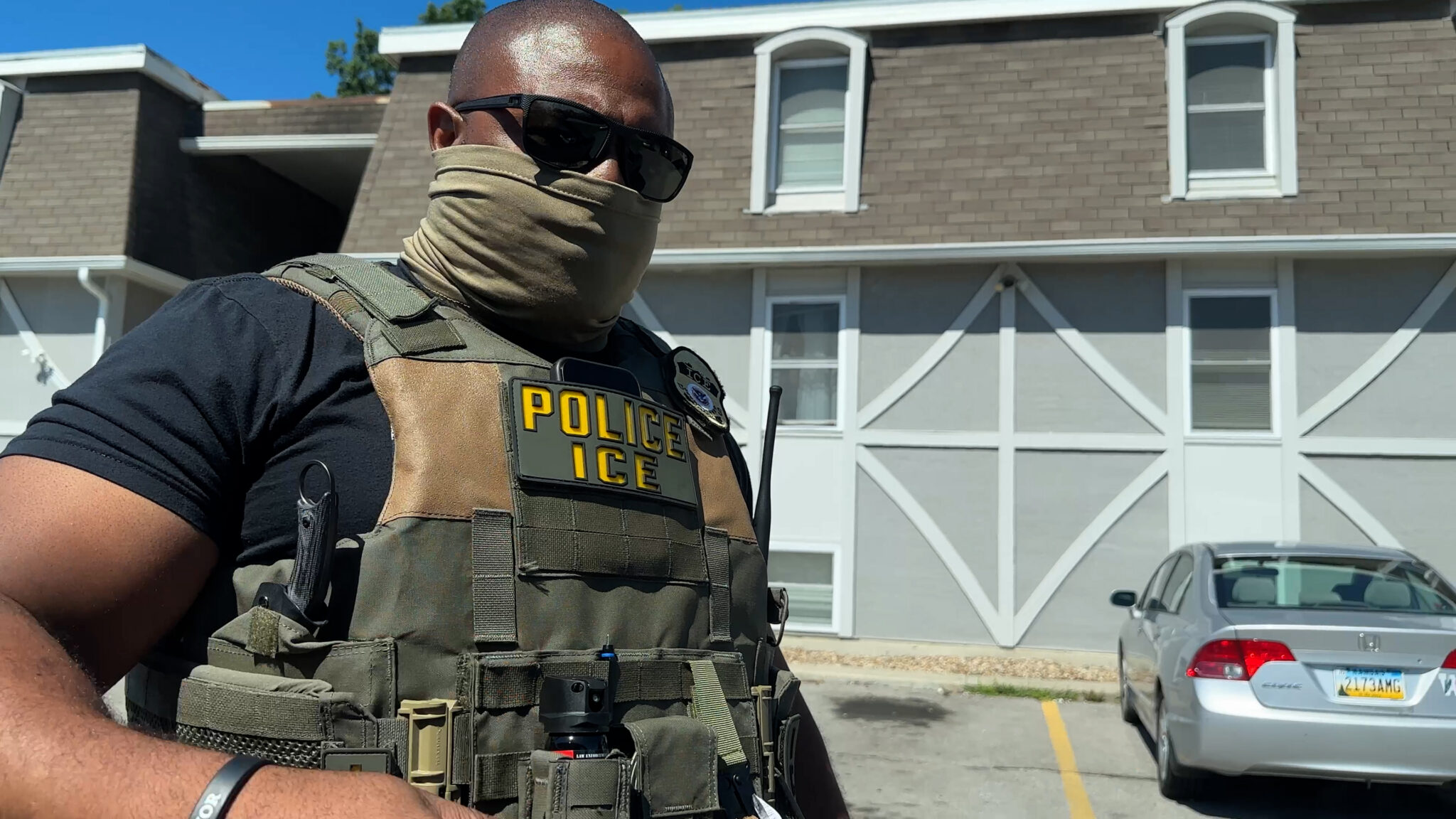
Incident Involving ICE Agents Highlights New Legal Challenges
On July 11, U.S. Immigration and Customs Enforcement (ICE) agents confronted Shana Leacox while she recorded video from her car in Olathe, Kansas. The agents ordered her to maintain a distance of 25 feet, a directive that left her feeling trapped as they locked her in place.
The officers invoked Kansas’ “Halo Act,” which took effect on July 1. This law criminalizes approaching law enforcement officials or first responders within 25 feet under specific conditions, significantly affecting how individuals document ICE operations. This change raises concerns among citizens like Leacox regarding their ability to observe and record such activities safely.
Leacox, reflecting on the situation, recalled the tragic death of Renee Good, a woman shot by ICE agents in her vehicle earlier this year. “My main thought was, ‘I should call my husband,'” she said. “But I felt compelled to keep recording.” Although she was not arrested, her experience underscores the potential for these encounters to escalate quickly.
Following the incident involving Good, ICE agents have come under scrutiny for firing upon individuals. Just recently, immigration officers were involved in the deaths of two men during a traffic stop. Following such events, the Department of Homeland Security initially directed ICE to halt traffic stops, although this directive was reversed by former President Donald Trump less than 24 hours later.
Grassroots Network for Monitoring ICE Activity
In response to escalating ICE operations in Kansas, a grassroots network of observers has formed. Leacox and hundreds of local residents are part of an encrypted messaging group that alerts members to ICE activities. These volunteers are tasked with documenting incidents and ensuring compliance by law enforcement agencies, much like Leacox did on that fateful day.
Mordecai Krehemker, a local medical technician, has participated in similar documentation efforts. “Our goal isn’t to disrupt or protest; we are there to ensure our communities are safe and that law enforcement follows the law,” he stated. The network’s leaders emphasize the importance of training in safety, constitutional rights, and maintaining appropriate distances from officers during recording.
This network functions under the threat of prosecution, with some members choosing to remain anonymous out of safety concerns. U.S. Attorney Ryan Krieghauser issued a statement advising ICE officers in Kansas City to refrain from aggressive actions that could infringe on citizens’ rights to free speech and peaceful assembly.
The Role of Video Evidence in Immigration Cases
Immigration attorney Michael Sharma Crawford has worked on detention cases across Kansas and Missouri for two decades. He argues that video recordings can serve as crucial evidence in cases involving ICE arrests. “Documentation can invalidate claims by ICE that an arrest warrant was used when, in fact, individuals were not free to leave,” he explained.
Sharma-Crawford has successfully utilized video in court cases, illustrating that evidence can contradict ICE’s narratives. Following a high-profile raid at a restaurant in 2025, ICE was found to have arrested individuals without warrants, reaffirming the value of independent documentation during such law enforcement activities.
Debate Over Free Speech and the Halo Act
Attorneys, including First Amendment specialist Max Kautsch, contend that the Halo Act poses significant constitutional issues by imposing restrictions on recording police conduct. Kautsch argues that the law is overly vague and burdens individuals’ rights to document public activities by officers.
Members of the ICE Watchers Network are attempting to comply with the law, although many express confusion about how to accurately maintain the required distance. “How do we measure 25 feet accurately?” Krehemker questioned. The ambiguity surrounding the law adds to the challenges faced by citizens trying to monitor and record law enforcement actions effectively.
Law Enforcement Response to the Halo Act
Local police departments, including those in Wichita and Kansas City, report they have yet to arrest anyone under the Halo Act, indicating that enforcement may not be as aggressive as anticipated. On the day of the incident, while officers did respond, they did not engage directly with Leacox.
ICE officer Jack Ravencamp attempted to involve law enforcement during the incident, facing scrutiny and legal challenges for his previous conduct in a separate arrest case. Calls for accountability emphasize the need for continued documentation by civilians, as Leacox and her peers stress the importance of transparency in interactions between ICE and the community.
“We must keep recording,” Leacox asserts. “These interactions must be documented to ensure that those in power are held accountable.”
