


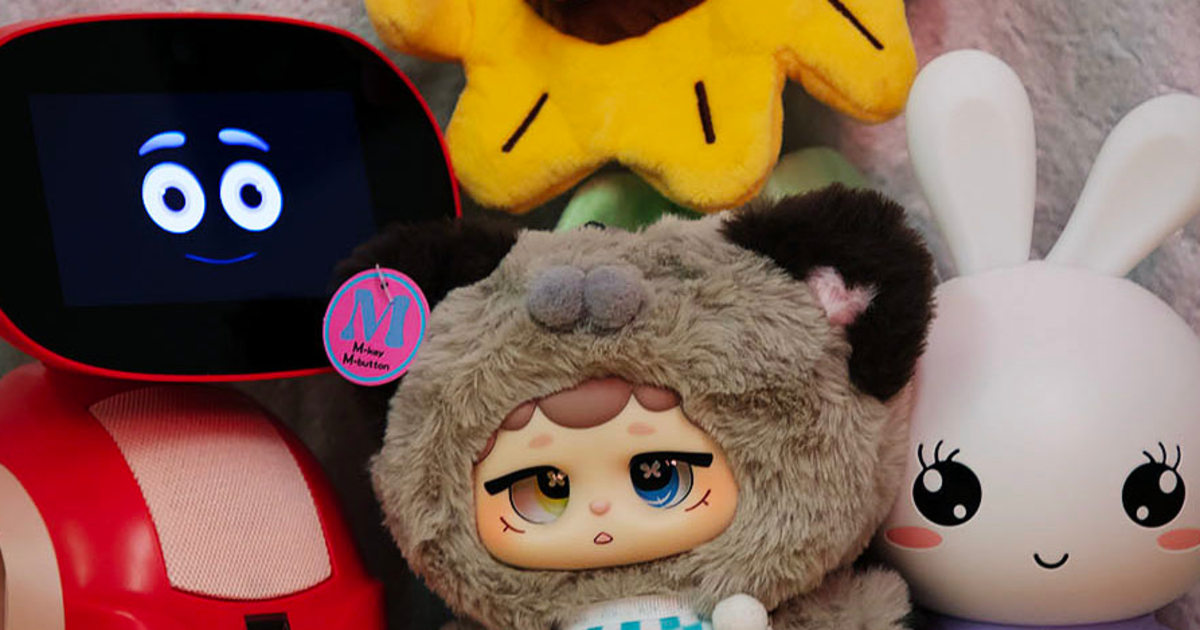
In a series of new letters issued late Tuesday, the two senators sounded the alarm about toys that use artificial intelligence and requested information from six toy manufacturers.
Marsha Blackburn, R-Tennessee, and Richard Blumenthal, R-Connecticut, sent a letter to the CEOs of Little Learners Toys, Mattel, Miko, Curio, ForoToys, and Keiy Robots, asking for information about manufacturers’ data-sharing policies, testing of toys for potential psychological and developmental harm, and safety guardrails to prevent explicit and inappropriate content from being shared with children.
“AI has great potential to benefit children in learning and accessibility, but experts have raised concerns about the lack of research conducted to fully understand AI toys and the impact these products have on children,” the senators wrote.
“Toy manufacturers have a unique and profound influence on childhood, and with that influence comes responsibility. Companies should never choose profit over the safety of children,” the letter said.
NBC News, in collaboration with the Educational Fund, reported last week that several AI-powered toys from various brands are engaging in sexual and inappropriate conversations with users. Some companies have shared step-by-step instructions in tests with researchers on how to light a match or sharpen a knife, such as the stuffed toy Milu from Chinese manufacturer Myriat.
AI-powered devices have also raised concerns about the data collection and sharing practices of toys, as well as the potential for children to become attached to or addicted to AI companions. Some toys are marketed to children as young as 3 years old.
The letter asks companies for more information about the safeguards they use to prevent toys from producing “sexually explicit, violent, or other content inappropriate for children,” as well as information about independent third-party testing conducted to ensure toys do not engage in harmful conversations.
The letter also requests information about the data collected from children and the associated privacy policies governing it. For example, Miko says it can store “your face, voice, and emotional state” for up to three years.
Given concerns that data collected by toys could be used by outside parties or state-sponsored espionage, the letter asks for information on third-party data sharing with cloud services and AI model providers.
The letter adds to the skepticism on Capitol Hill about AI-powered toys. In mid-November, Rep. Raja Krishnamoorthi (Ill.), the top Democrat on the House Select Committee on the Chinese Communist Party, warned Education Secretary Linda McMahon in a letter about AI-powered toys being manufactured in China.
“Given the security risks and privacy concerns associated with these products, we strongly encourage American educators across the country to launch a campaign aimed at increasing public awareness of the potential misuse of the data collected by these devices,” Krishnamoorthi wrote.
According to recent estimates, the AI-powered toy market is expected to grow to $25 billion by 2035, with more than 1,500 AI toy companies operating in China.
