


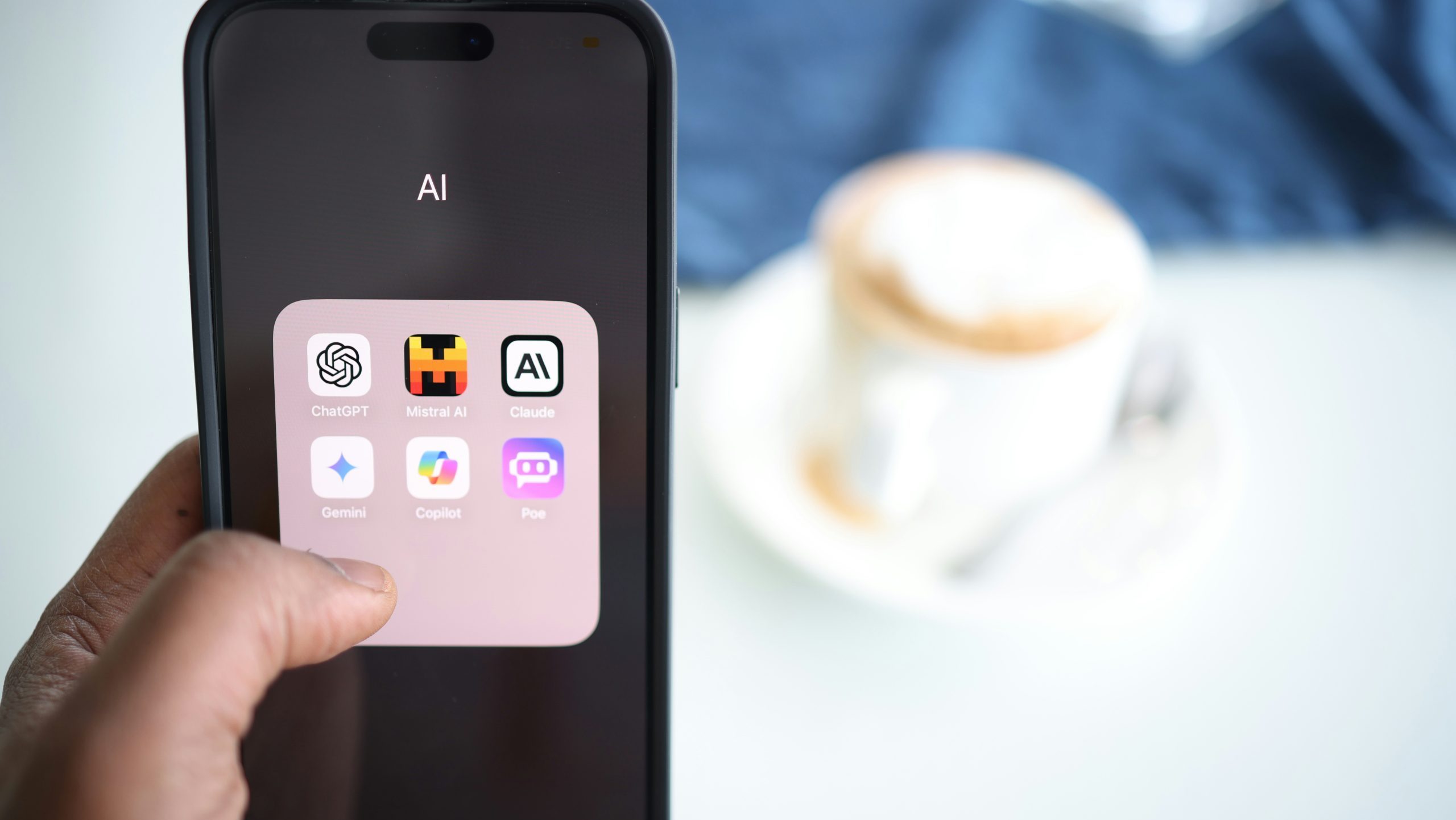
In 2025, Nigerians were using AI for more than email drafts and PDF summaries. Chatbots have become makeshift therapists, love matchmakers, and personal consultants.
As we end this year, one thing is clear. While much of the world was worried that AI would take over their jobs, Nigerians were teaching chatbots to navigate the treacherous waters of the “conversation stage” and the aftermath of a breakup.
I spoke to seven Nigerians about the dumbest things they’ve done with AI this year. Here’s what they told me:
Automated breakup recovery and emotional audit
An AI chatbot held a mirror up to the broken relationships of Lagos-based UI designer Obalorwa Olaniyi, acting as a forensic tool to uncover past trauma.
“I used it to experience heartbreak,” Olanyi said, adding that the AI ”helped me run through scenarios that identified behaviors that I was unaware of and provided advice on how to cure (without) making the same mistakes.”
This emotional audit trend was not just for the post-breakup phase. Content editor Mark* used AI as a moral compass during conflicts with his partner, relying on technology to “soundboard messages about my relationship to check for empathy.”
To avoid being labeled a manipulator, Mark used AI as a check to make sure his messages didn’t come across as offensive to his partner.
Public relations consultant Victor Illo admitted that he uses AI for “relationship recovery therapy,” and for many Nigerians, Prompt has proven more accessible and less intimidating (and perhaps cheaper) than a traditional therapist’s couch.
The pivot to digital intimacy is not local, but reflects a larger global shift in mental health care. The “AI as therapist” phenomenon will grow into a multi-billion dollar industry in 2025, with millions of users around the world choosing the non-judgmental ears of a machine over a human practitioner. In high-income countries, including the UK, the prohibitive costs of private sessions drove this trend, while in emerging markets pure anonymity was the most appealing. Digital companion apps and specialized treatment bots will become the first line of defense for a generation battling loneliness, providing 24/7 availability that human clinics cannot match.
Most of the most vulnerable members of the world’s population now have conversations within chat bubbles. A 2025 study by Kantar, an AI-native marketing data and analytics business, surveyed more than 10,000 consumers across 10 global markets, including South Africa, India and the UK, and found that 54% of global consumers are currently using AI for at least one emotional or mental well-being purpose.
Navigating the delicate art of breaking up
For many, AI has become a strategic consultant for the most troubling social transition known to humanity: the death of the speaking stage.
Getting past the “talking stage” is always a social minefield, especially if the other person is really nice. Product marketer Ianu Hounieh found himself in this exact predicament with his partner, whom he describes as “a nice and kind person.” Rather than ghosting or sending candid texts, she outsourced the emotional labor to AI.
“I wanted to end the relationship in a way that didn’t invalidate his feelings,” she says.
Using AI as a buffer against social awkwardness highlights a shift in the way people communicate. People are now using machines to maintain human empathy even when defusing situations.
For product designer Chioma Nwandiko, AI acts as a lie detector, asking for “text analysis” to check for “underlying manipulation” among other things, effectively turning her smartphone into a digital shield against “red flags” in her interactions with people.
Suburban retail and aesthetic shaman
Away from the drama of the mind, AI has found a home in mundane but essential tasks like grooming and consumerism.
Nwandiko’s usage patterns suggest that AI has become the ultimate “best friend” for shopping and styling. She used the technology to “color code hair if you want to mix and match extensions,” turning a complex visual task into a data-driven decision.
In 2025, AI was Nwandiko’s highly specialized personal assistant. She said she also asked the AI to take a photo of two competing products and decide which one was better, and asked the bot to track “random episodes of your favorite series when you want to binge-watch.”
Simulating academic shortcuts and corporate excellence
Of course, professional and academic fields were not excluded. IT support specialist David Idam brought group work to a logical, automated conclusion by “using Claude to write a term paper for the whole group.” This reduced the friction of probably dozens of hours of collaboration.
Idam’s use of AI reflects the explosion in AI adoption across the country. In Nigeria, Google search data for the second half of 2025 reveals that searches for “AI + study” have jumped more than 200% year-on-year, driven by interest in “AI + chemistry” and “AI + math”.
Nigerian students are using AI in their schoolwork, from simplifying complex terminology to drafting complete projects. This has caused concern in the academic community, as evidenced by a 290% increase in searches for “AI detection” by concerned instructors. As a result, Nigerian universities like UNILAG moved to draft formal “ethical AI” policies earlier this year after faculty reported a spike in plagiarism.
In the professional world, the desire to perform at a higher level has led corporate communicator Tope* to transform chatbots into elite advisors. He used AI to represent three top strategic consulting firms working as MBB Management Consultants: McKinsey & Company, Bain & Company, and Boston Consulting Group. Tope used AI to provide “a detailed project management plan for a website makeover project.”
The use of AI in the workforce and corporate space is having a major impact. According to a World Economic Forum report, AI has automated 30% of companies’ daily tasks, but it has also created 1.6 million unfilled AI positions worldwide.
The essence of culture
Nigerians were busy putting AI to work in 2025 to solve pressing and somewhat vexing life problems. This is a cultural tipping point where chatbots have become the primary intermediaries of our most intimate and professional vulnerabilities.
But heading into 2026, the risks are increasing. The same tools that help students write term papers are contributing to disparities that the labor market is only beginning to quantify. We are witnessing the birth of a new social trend. We are no longer just users of technology, but orchestrators of a digital consciousness that reflects us.
Rather, Nigerians have mastered the art of surviving the chaotic, beautiful, and often confusing realities of modern love and life.
