


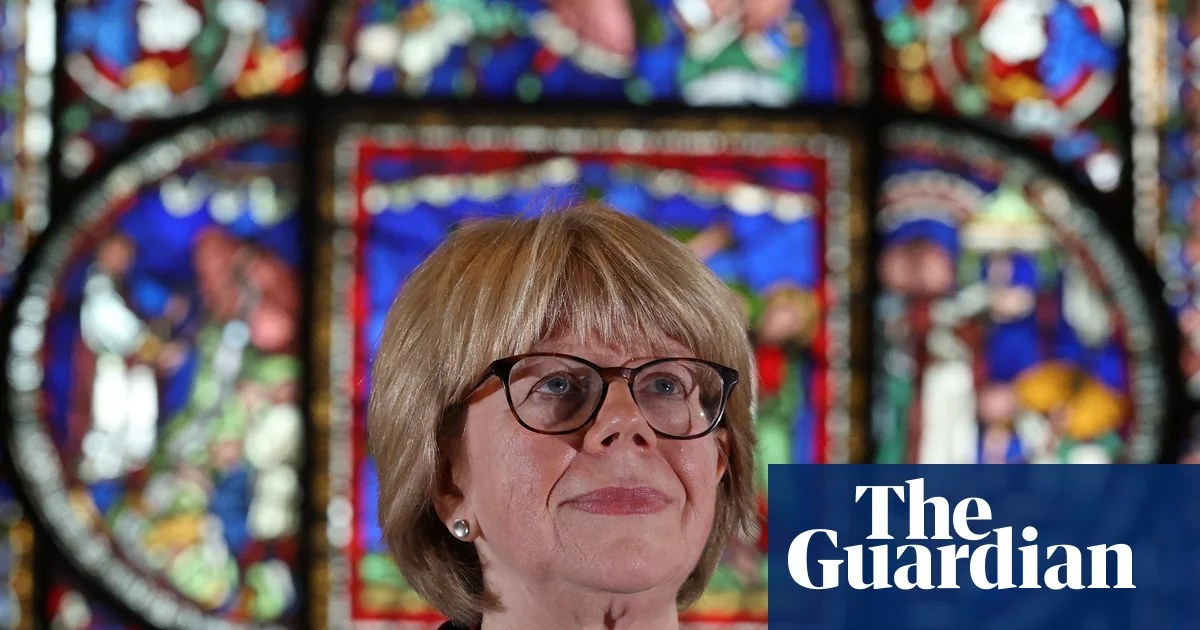
In his Christmas homily, the archbishop-elect of Canterbury warned that “the national conversation on immigration continues to divide us, when our common humanity should unite us”.
Dame Sarah Mulally, in her current role as Bishop of London, said at St Paul’s Cathedral:
“There is room in our homes, there is space in our churches, there is space in our public conversations and attitudes, and joy asks us to allow our lives to be interrupted by the needs of others, just as the people of Bethlehem were interrupted.”
“This insight is important because our society is fraught with uncertainty that is draining us. Many people are feeling the weight of economic pressures. Some feel pushed to the margins.”
“The national conversation on immigration continues to divide us, even though our common humanity should unite us.”
Many people also “experience hardship and injustice due to inequality,” she said.
The bishop added: “These problems don’t define our entire lives, but they can make us question whether the world is fraying in the corners.
“We Christians hold to joy as an act of resistance, a joy that does not discount suffering but responds to it with courage.”
She told the Christmas congregation: “God chose us to be born into a world exactly like ours: a world with limited resources and crowded homes.
“A world of political tension and uncertainty. A world where people do their best to offer kindness even when they feel limited. God doesn’t wait for perfect conditions. He arrives in the midst of imperfection.”
In his Christmas homily, the Archbishop of York also spoke about the divisions in society and how he was “intimidated” by Israeli militias during a visit to the Holy Land this year.
Stephen Cottrell said he was stopped at a checkpoint and told by the militia that he could not visit his Palestinian family in the occupied West Bank.
“We became so afraid of each other, especially strangers, that I couldn’t think of any other way to describe it,” he said. “We cannot see ourselves in them. We therefore reject our common humanity.”
He described how representatives from the Bethlehem YMCA charity, which works with “persecuted Palestinian communities” in the West Bank, presented him with an olive tree nativity scene carving depicting a “great gray wall” blocking the three kings from going to the stables to meet Mary, Joseph and Jesus.
“When we visited the Holy Land, we were so appalled to see this wall in person. We were stopped at various checkpoints and threatened by local Israeli militias that we could not visit our Palestinian families in the occupied West Bank,” he said.
He said he was not only “thinking about the walls that divide and separate sacred sites,” but also “all the walls and barriers that we’re building around the world.”
“And perhaps most alarming of all is what we build around ourselves, what we build up in our minds, and what we fear and protect ourselves from strangers.”
“The strangers we encounter – the homeless on the streets, the refugees seeking asylum, the young people who grow up deprived of opportunities and hope for the future – mean they are at risk of not being welcome when Christ comes.”
In October, Mulally was appointed the first female archbishop of Canterbury.
A former chief nursing officer in the United Kingdom, he was knighted in 2005 for his contribution to nursing and midwifery, and has been Bishop of London since 2018.
Mr Mulally will legally become Archbishop of Canterbury following a confirmation ceremony at St Paul’s Cathedral on January 28th. She will remain Bishop of London until then, and will be coronated at Canterbury Cathedral on March 25.
Justin Welby, the 105th Archbishop of Canterbury, officially resigned in early January after announcing his intention to step down in November 2024 over his handling of the church’s worst abuse scandal.
Pope Leo condemned the situation of Palestinians in Gaza in his Christmas sermon. Leo said the story of Jesus being born in a stable shows that God “pitched a fragile tent” among people around the world.
“So how can we not think about the tents in Gaza that have been exposed to rain, wind and cold for weeks?” he said.
Leo was celebrating his first Christmas since being elected as the world’s cardinal to succeed the late Pope Francis in May.
At Thursday’s service in front of thousands of people in St. Peter’s Basilica, Leo also lamented the situation of homelessness around the world and the destruction caused by the wars that are roiling the world.
“The bodies of defenseless peoples are fragile and have been tested by many wars, ongoing or concluded, which have left behind rubble and open wounds,” the Pope said.
“The hearts and lives of young people forced to take up arms are fragile. On the front lines, they feel the meaninglessness of what is being asked of them and the falsehoods filled with pompous speeches from those who are driving them to their deaths,” he said.
