


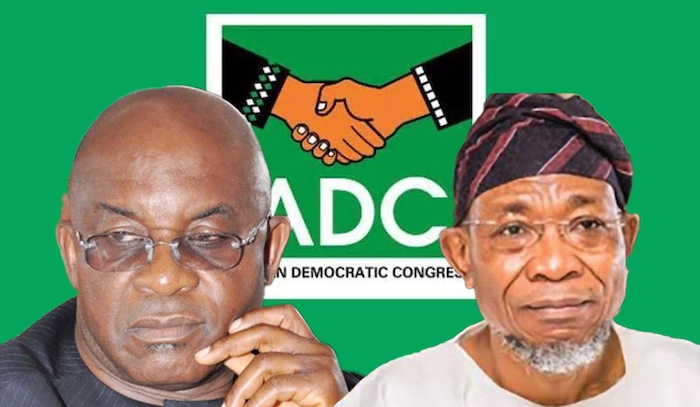
ADC Takes Legal Action Against INEC Amid Leadership Crisis
The African Democratic Congress (ADC) is embroiled in a deepening leadership crisis, prompting the party to take legal action against the Independent National Electoral Commission (INEC) in the Federal High Court of Abuja. The ADC accuses INEC of unauthorized interference in its internal affairs, exacerbating tensions within the party.
Controversial Exclusions Fuel Discontent
At the heart of the controversy is the exclusion of Mr. David Mark, the party’s national chairman, and former Osun State Governor Mr. Rauf Aregbesola from INEC’s official roster. This exclusion has ignited a fierce dispute, as ADC representatives argue that it undermines the party’s leadership legitimacy.
Legal Demands for Reinstatement
Represented by attorney Mr. Sulaiman Usman (SAN), the ADC seeks a court order mandating INEC to reinstate the National Working Committee to its pre-crisis standing. This legal action follows INEC’s April 1 decision to remove the party’s leadership from its records, a move that Mark’s faction claims contradicts a recent Court of Appeal ruling requiring all parties to maintain the status quo regarding their leadership structures.
Emerging Factions Intensify Rivalry
The ongoing dispute signals a significant rift within the ADC, morphing from a mere disagreement into a critical power struggle, especially with the 2027 general elections on the horizon. Two rival factions have emerged: one aligned with Mark and the other led by Nafiu Gombe, each asserting their legitimacy and seeking formal recognition from INEC.
Protests Reflect Rising Tensions
While the case unfolds in court, tensions escalated in Abuja as Gombe’s supporters staged a protest outside INEC’s headquarters—this occurred just a day after Mark led a large demonstration at the same venue, alongside other influential political figures. Gombe and his faction assert their rightful claim to leadership and vow to resist any attempts to marginalize them.
Leadership Statements and Party Resilience
In light of these developments, party founding chairman Ralph Nwosu emphasized that the ADC will continue its operations, asserting compliance with electoral laws. He insisted that plans for the party’s conventions remain intact, stating, “We will not allow INEC to derail our plans.” These conventions are crucial for evaluating the party’s leadership framework ahead of the 2027 elections.
INEC Stands Firm on Its Decisions
INEC, for its part, has defended its actions, asserting that they are consistent with established court orders and directives. However, the commission finds itself in a challenging position, mediating between competing factions while facing public protests and legal scrutiny.
Legal Opinions and Possible Delays
Opinions on INEC’s decision-making process are mixed, with some legal experts suggesting the commission may not have chosen the most prudent course of action. Concerns also linger regarding the speed at which the case will be resolved, particularly given its significance for upcoming elections. Protracted litigation could disrupt the ADC’s national structures, hampering its competitive standing as the 2027 elections approach.
As the situation evolves, speculation about the implications of this internal crisis persists. Some analysts contend that the turbulence within the ADC could be politically motivated, aimed at diminishing the party’s competitiveness. Nevertheless, the ruling All Progressives Congress (APC) and its allies have consistently dismissed such claims, maintaining that they are not involved in the ADC’s internal conflicts.
The unfolding legal battle will be closely monitored, as both the ADC and INEC prepare for a crucial period that will shape the party’s future and its role in the upcoming electoral landscape.
