


Africa’s Small Share in Global Exports Highlights Trade Disparities
Despite a notable increase in trade volumes, Africa represents only 3.3% of global exports, as revealed in the latest Africa Trade Report by the African Export-Import Bank. Most of the continent’s trade continues to rely heavily on the export of primary products, underscoring significant disparities in value addition across the region.
The Role of Global Trade in Africa’s Green Industrialization
Global trade plays a crucial role in advancing Africa’s aspirations for green industrialization. By opening up access to international markets, it brings in vital financing and technology necessary for transitioning from an extractive economic model to one focused on value chain development. To support this transition, reforms under the World Trade Organization (WTO), the effective implementation of the African Continental Free Trade Area (AfCFTA), and continuous investment in skill development are essential.
Navigating the Technology Gap
The technology gap in Africa is starkly illustrated by global patent trends. Between 2010 and 2019, only four countries—the United States, Japan, Germany, and China—accounted for 75% of worldwide renewable energy patent applications, with Africa contributing less than 1%. This statistic reflects the systemic exclusion of the continent from the innovation economies that are driving the green transition.
Intellectual Property and Technology Transfer Challenges
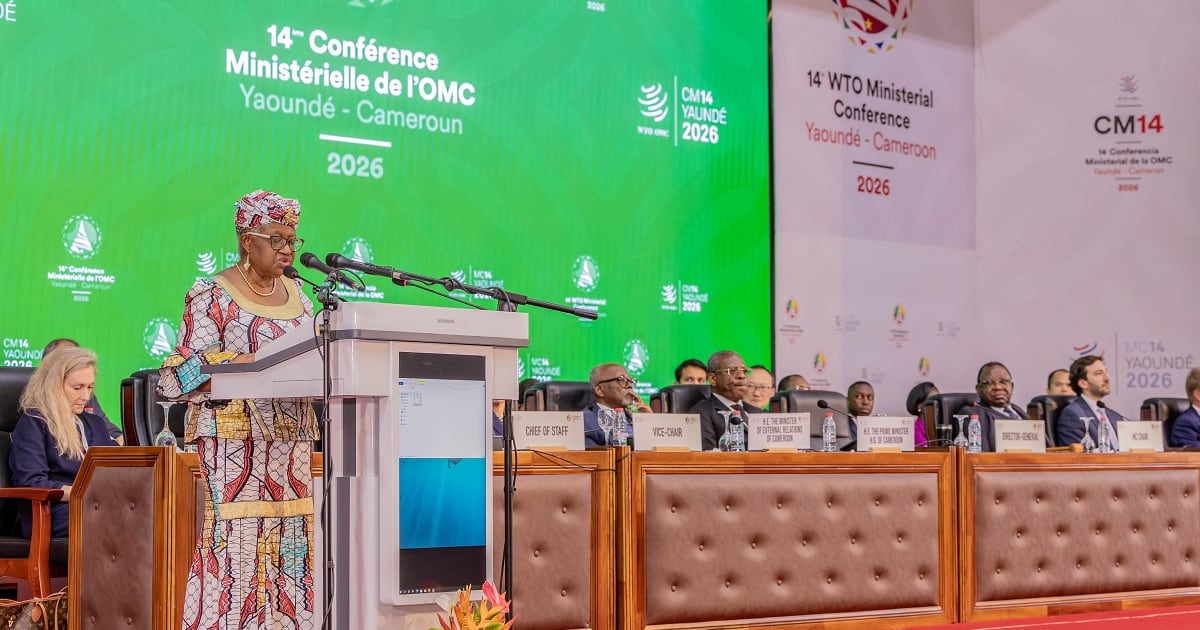
The WTO’s Agreement on Trade-Related Aspects of Intellectual Property Rights (TRIPS) aims to set minimum standards for intellectual property protection to foster innovation and decrease trade tensions. Yet, the outcomes of the WTO’s 14th Ministerial Conference (MC14) in Yaoundé, Cameroon, revealed that Article 66(2) of TRIPS, which mandates that developed nations facilitate technology transfer to least developed countries, remains largely unfulfilled.
Proposals for Operationalizing Technology Transfer
In light of this, several member states proposed the development of a “non-binding voluntary incentives” list to support the implementation of Article 66.2. These proposals build on existing principles of technology transfer and offer a practical framework for actualizing the commitments already embedded in trade agreements. For African nations to bridge the technology gap and establish robust regional value chains, support for this initiative is crucial.
The Impediments of Licensing Fees
Beyond Article 66.2, the challenges posed by travel-based licensing fees and restrictive access conditions hinder African countries’ abilities to adapt, manufacture, and innovate based on patented technologies. This issue takes on greater urgency given the continent’s exposure to climate challenges.
Impact of Climate Change on Africa’s Energy Capacity
Although Africa disproportionately bears the consequences of the global climate crisis, it contributes less than 1% of the additional renewable energy capacity worldwide and attracts only about 2% of global clean energy investments, primarily concentrated in Northern and Southern Africa.
Utilizing Compulsory Licensing for Climate Technologies
TRIPS permits compulsory licensing, allowing countries to access patented technology without the rights-holder’s consent under specific circumstances, such as public interest or environmental necessity. Given the pressing nature of climate change, this provision is especially relevant. African nations have leveraged WTO MC14 to foster discussions surrounding the effective utilization of this tool to hasten the continent’s transition to green energy.
Building Domestic Capacity through Trade Integration
Closing the technology gap is only part of the solution; Africa must also strengthen its domestic capacity to absorb, deploy, and ultimately develop its own industrial base. The AfCFTA aims to create a single market of 1.3 billion people, laying the groundwork for regional value chains in renewable energy. However, intra-African trade currently hovers around 15%, significantly lower than other regions, highlighting both the scale of the challenge and the opportunities that lie ahead.
South-South Cooperation as a Pathway Forward
As the continent that supplies raw materials essential to the global green economy, Africa has strong incentives to capture a greater share of the value chain and secure more comprehensive support. South-South cooperation has emerged as a valuable avenue, offering partnerships with countries like China, India, and Brazil to access technology and manufacturing expertise under more flexible terms compared to traditional North-South frameworks.
Examples of Successful Collaboration
Strategically developed partnerships can bolster the AfCFTA’s regional integration objectives by directing investments into areas where Africa holds comparative advantages, such as green hydrogen, battery storage, and solar PV manufacturing. A notable instance of this is the China-Ghana-Zambia Renewable Energy Technology Transfer Program, which enhanced renewable technology adoption through capacity building, expert dialogue, and technical knowledge sharing.
The Importance of Localization and Skills Development
For technology transfer to yield long-lasting benefits, it must be rooted in the local context. This is where localization and skills development come into play. Notably, foreign direct investment and technology transfer agreements should be complemented by strategies that build domestic technical and professional capacity, support local enterprises, and promote homegrown innovation.
Transforming Trade through Indigenization
Indigenization equips trade with transformative power by ensuring that capital and knowledge contribute to developing domestic industrial capabilities rather than merely passing through the continent. Morocco’s Noor concentrated solar power facility serves as a potent example, showcasing how local content requirements can bolster Africa’s energy transition ambitions. The project has been pivotal in sourcing materials locally and employing homegrown engineers, putting Morocco on track to achieve 52% renewable energy by 2030.
Integrating Skills Development into National Policies
Educational initiatives have also proven critical. For instance, Strathmore University in Kenya, in collaboration with RES4Africa, trained over 7,000 students and professionals from 2017 to 2023, contributing significantly to building a skilled workforce for decentralized renewable energy solutions. These examples emphasize that skills development and localization should be integral components of procurement frameworks, investment conditions, and national education systems, rather than sidelined as an afterthought.
Advancing the Ministerial Agenda for Technology and Industrialization
It is vital that the ministerial agenda reflects this comprehensive reality. Reforming TRIPS to fulfill existing technology transfer commitments, maximizing the use of compulsory licensing for climate technologies, leveraging the AfCFTA as a foundation for regional industrial policy, and integrating localization and skills development into investment and procurement frameworks are all interconnected elements of a broader strategy. While global trade rules alone cannot catalyze Africa’s green industrialization, they must be structured in ways that facilitate this transformation.
