


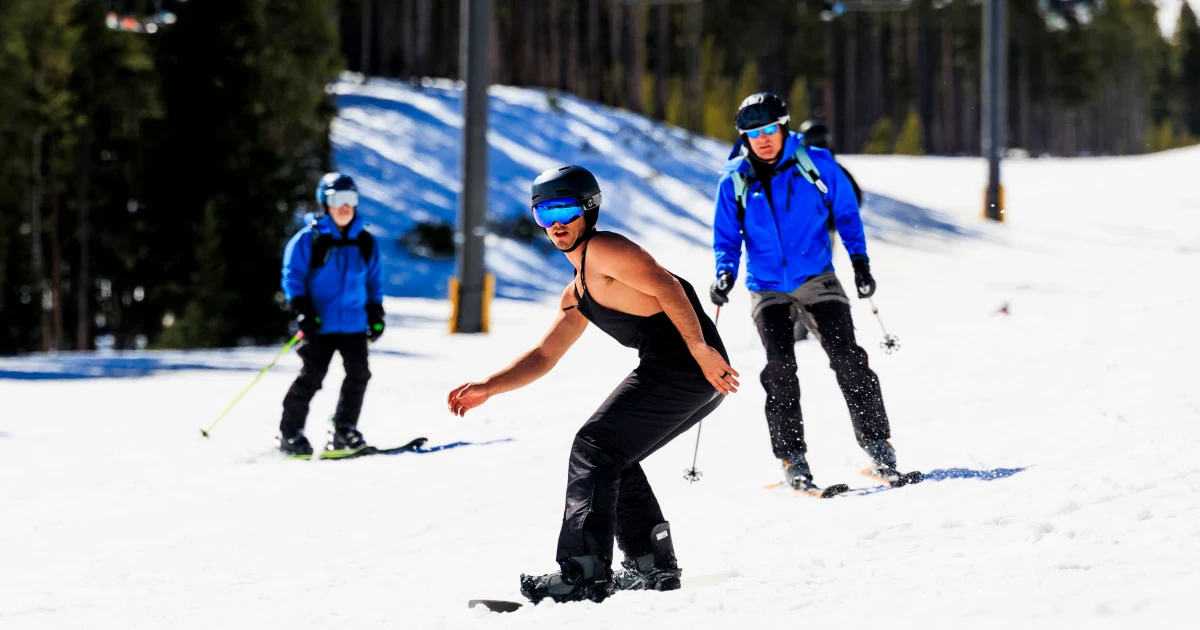
Record-Breaking Heatwave Impacts Western States
A recent heatwave has left the western United States grappling with soaring temperatures, having shattered over 1,500 records across 11 states, as reported by Climate Central. The intense weather pattern has raised alarms among climate scientists, irrigation managers, and local officials as they prepare for a potential water crisis amid unprecedented heat levels.
Snowpack Concerns Amid Rising Temperatures
Prior to the arrival of this heat, western states were already experiencing alarmingly low snowfall, entering a summer with little snowpack remaining. This scarcity raises significant concerns about water availability moving forward, particularly under the pressure of prolonged heat and increasing demand.
Unprecedented Heatwave Triggers Scientific Inquiry
While researchers have long anticipated that climate change would exacerbate heatwaves, many are exploring whether lesser-understood climate phenomena could account for the extraordinary duration and intensity observed this month. Jennifer Brady, a senior data analyst at Climate Central, noted that the scale and longevity of this heatwave stand out, reinforcing claims of a ‘new normal’ driven by climate change.
Climate Change Index Highlights Severity
Climate Central has introduced the Climate Change Index, a tool designed to assess the impact of climate change on daily temperatures. Notably, approximately 29% of the country experienced peak temperatures rated as a “5” on this index, indicating they are at least five times more likely to occur due to climate change. This marks the highest level of temperature anomalies recorded in U.S. history since data collection began in 1970.
Heatwave’s Unlikely Nature Examined
The World Weather Attribution Group reported that this March’s heatwave would be virtually impossible without the influence of climate change. During the onset of the heatwave, temperatures soared between 20 to 30 degrees Fahrenheit above average in various locations. Their findings indicate that climate change has intensified heatwaves in the West by over 7 degrees Fahrenheit, making such extremes 800 times more likely today than in a world without global warming.
Regional Variances in Temperature Increases
According to Karen McKinnon, an associate professor at UCLA, land areas are heating up faster than oceans, with the western U.S. experiencing one of the most rapid warming rates. While the global average temperature rose by 1.47 degrees Celsius (2.65 degrees Fahrenheit) compared to pre-industrial levels, McKinnon suggests that certain regions may already be facing increases of 4 to 5 degrees Fahrenheit.
Atmospheric Dynamics and Heat Domes
Researchers are delving into whether additional factors beyond baseline warming are exacerbating such severe heat events. This month’s heatwave was attributed to a phenomenon known as a “heat dome,” where high-pressure systems led to stagnant air and enhanced warming. Many scientists theorize that climate change might be altering large-scale atmospheric circulation patterns, influencing jet stream behavior and contributing to the persistence of heat domes over regions like the continental United States.
Ongoing Research on Climate Behavior
McKinnon emphasized that climate scientists are actively investigating these dynamics, yet comprehensive answers remain elusive. With numerous competing theories and the complexity of atmospheric interactions, it may take years to achieve a consensus on the interplay between climate change and shifting circulation patterns. The question remains pivotal: Are these significant changes in air circulation caused by climate change?
