


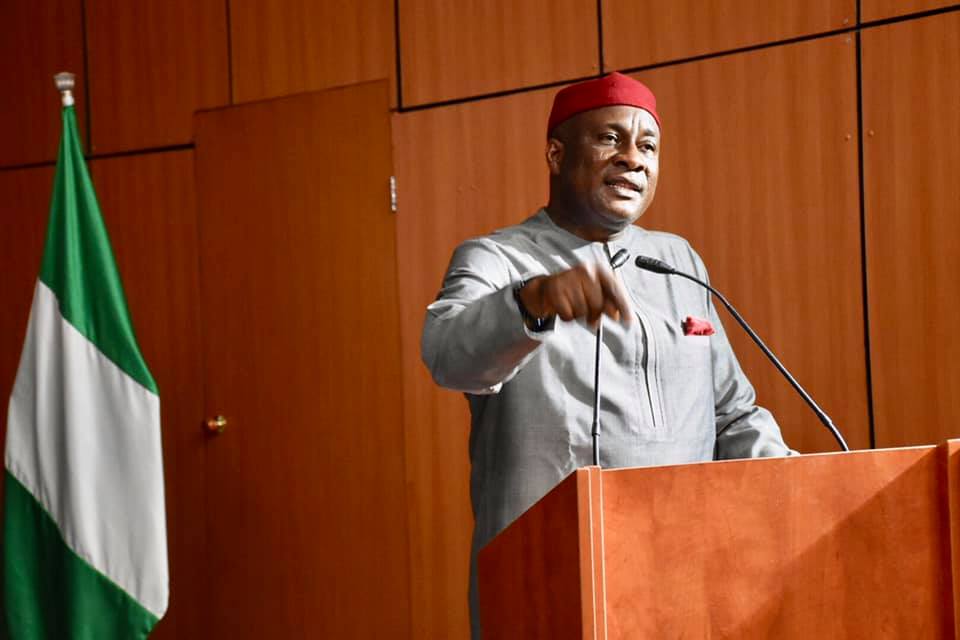
Air Peace Chairman and Chief Executive Officer Allen Onyema’s claim that Nigeria’s domestic flight fares are among the “lowest in the world” has sparked heated debate on social media and across the airline industry in recent days.
Mr Onyema made the remarks in an interview with Arise News on Sunday in response to allegations that Nigerian airlines are unfairly increasing fares during the Christmas season.
“That’s pretty damning information coming from an agency that should know better. Using words like ‘exploitation’ and ‘coordinated price-fixing’ is very unfair to the airlines. How did you come to that conclusion?” he asked.
He said price differences between passengers on the same flight are standard in the global airline industry and reflect operational realities rather than exploitation.
“It is not true that all fares are ₦400,000 or ₦500,000. If you check our inventory, you will still find tickets starting from ₦150,000. During the Christmas period, passengers who book in advance can still get tickets for ₦150,000,” Onyema said.
Passengers on the same flight may pay different prices depending on the timing of their booking and seat availability, which he described as “the norm in the airline industry.”

Onyema explained that the high fares are also related to operational pressures.
“Almost 65 to 70 per cent of revenue is not paid to airlines and is lost in taxes and levies. Yet airlines are accused of profiteering,” he added.
Aviation expert Noura Ahmed acknowledged that this pricing pattern is common in the industry.
“Various ticket prices for the same flight and higher fares during peak travel periods are common in the global airline industry. Airlines adjust prices based on demand and operating costs. While what Air Peace describes is consistent with the industry’s standard pricing mechanism, it may seem expensive to passengers,” he said.
Governance and institutional reform expert Joe Abbar said high fares reflected systemic incentives beyond the airlines’ control.
“When it comes to airfares, all parties – governments and airlines – benefit from high fares. The NCAA has the authority to guarantee fair market prices, but this only applies to base fares. That’s why airlines keep base fares low and add fuel surcharges and other charges onto the ticket price that the NCAA can’t regulate,” he said.
Abar added that agencies such as NCAA, FAAN and NAMA are self-funded and account for a portion of the airline’s revenue, giving them little incentive to lower fares.
He said the Federal Competition and Consumer Protection Commission (FCCPC) can review prices to ensure fairness, but cannot set prices.
“Everyone is benefiting: the airlines, the aviation authorities, the government. The only people who are not happy are the consumers,” Abbar said.
Reacting to the issue, the Nigeria Civil Aviation Authority (NCAA) Director of Public Affairs and Consumer Protection, Michael Achimugu, said the increase in fares was mainly due to seasonal demand.
“The increase in airfares is simply due to market forces, the dynamics of supply and demand, especially during the Christmas season. Airfares in December have nothing to do with taxes. Taxes were not increased in December,” he pointed out.
He added that he expected fares to drop in January 2026, when the peak travel season ends.
high price
An independent review of Air Peace’s official booking platform on Monday found a wide range of fares for domestic flights. One-way economy tickets from Abuja to Lagos ranged from ₦211,600 to ₦287,800 and from Abuja to Enugu and Asaba cost ₦335,500. The ticket from Abuja to Owerri cost ₦287,800. The fare to Port Harcourt was ₦240,200 and the fare from Abuja to Kano was ₦102,100 to ₦383,100.
For United Nigeria Airlines, routes from Lagos and Abuja to the South-East and South-South regions (including Owerri, Enugu, Anambra, Port Harcourt and Asaba) are normally fixed at ₦350,500 for one-way economy travel from December 1, 2025 to January 30, 2026. Fares have become cheaper on some routes after January 1, 2026.
These numbers show that although some low-fare seats exist, many travelers face significantly higher costs during the peak holiday season.
debate
Many Nigerians reacted to Onyema’s remarks on social media, sharing details of domestic and international fares.
President Bola Tinubu’s special assistant on economic affairs, Tope Fasua, wrote on Facebook that the trip from London to Dublin cost about £30 (about £60,000).
“These airlines should take it easy. It is misleading to say that airfares in Nigeria are cheap,” he said.
Related article: Why FG cannot intervene in domestic airfare hikes – Minister
On X, another user, Akinsola Akin, detailed an easyJet flight from London Gatwick to Glasgow that cost £37 (about 72,000 yen) for a 1 hour and 30 minute journey. “Nigerians are being overcharged,” he wrote.
Dipo Awojide said he flew from Birmingham to Scotland for around £180, while traveling between London and Manchester cost less than £200.
These calculations are in sharp contrast to holiday season domestic flight fares, which range from ₦300,000 to over ₦500,000 for a one-hour flight.
Mr. Onyema highlighted the availability of cheaper fare tickets and operational challenges, but many Nigerians continue to report being unable to afford affordable fares during peak travel times, amid calls for greater transparency, competition and policy clarity in Nigeria’s domestic aviation sector.
