


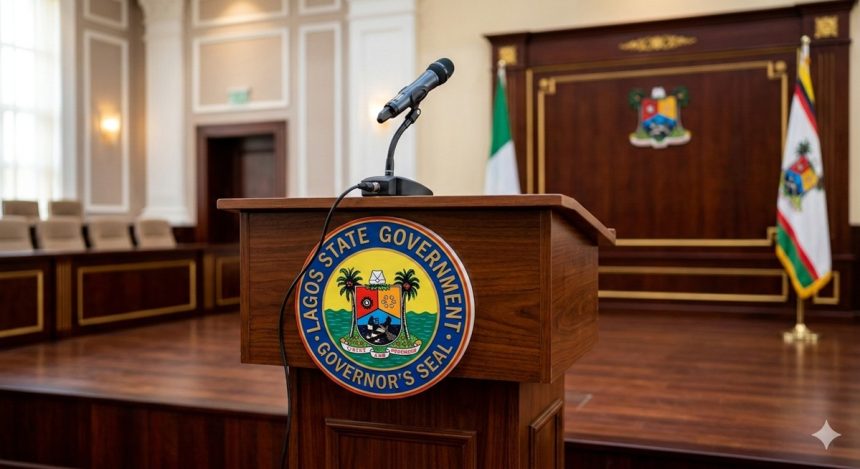
Lagos Governorship Race Heats Up Ahead of 2027 Elections
As the 2027 general elections draw nearer, the competition for the Lagos State governorship has officially ignited. Among the potential contenders is former governor Akinwumi Ambode, alongside notable figures such as Minister of Education Dr. Tunji Alausa, Senator Tokunbo Abiru of Lagos East, current Deputy Governor Obafemi Hamzat, and Hakeem Muri-Okunola, Chief of Staff to President Bola Tinubu.
While the ultimate decision on candidacy lies with President Tinubu, recent reports indicate that several of these hopefuls have initiated conversations with leaders of the All Progressives Congress (APC) in Lagos State. Addressing speculation regarding his political ambitions, Minister Alausa recently refuted claims suggesting he would resign from the Federal Executive Council (FEC) to pursue the governorship. Nevertheless, sources close to him assert that he remains a serious contender for the position.
Dr. Tunji Alausa’s Political Background
Dr. Alausa, a respected engineer and minister in the Tinubu administration, has maintained a significant role in Nigerian politics. As President Tinubu’s personal physician during the era of the National Democratic Coalition (NADECO), he played a critical role in supporting leaders who fled Nigeria during General Sani Abacha’s military regime. His tenure has showcased the President’s confidence in his reformist approach and policy execution, having served first as Minister of Health before his transition to Minister of Education.
Senator Tokunbo Abiru’s Financial Expertise
Senator Tokunbo Abiru, a seasoned banker and currently representing Lagos East in the Senate, also chairs the Senate Banking Committee. With a robust career in finance that includes prominence as Lagos State Treasurer and CEO of Polaris Bank, Abiru’s connection to Tinubu is built on a combination of political loyalty and structural alignment. He is widely recognized as a dedicated member of Tinubu’s influential political network, often referred to as the “Lagos political machine.”
Obafemi Hamzat’s Institutional Loyalty
Currently serving as the Deputy Governor of Lagos State, Obafemi Hamzat brings a wealth of experience as a long-standing technocrat within the Lagos political landscape. Trained as an engineer, he has held crucial positions, including Secretary of State for Science and Technology and Secretary-General for Works under previous administrations. His relationship with Tinubu is characterized by a deep-rooted institutional loyalty, having been welcomed into government in 2005 and maintaining consistency across various administrations aligned with Tinubu’s vision.
Akinwumi Ambode’s Complex Political Journey
A former governor of Lagos State from 2015 to 2019, Akinwumi Ambode has a background in accounting, having served within the Lagos civil service before entering politics. Initially supported by Tinubu for the governorship due to his technocratic capabilities, Ambode’s political fortunes shifted following a fallout over structural differences, culminating in his failure to secure a second term. Recently, Ambode and Lagos State House of Assembly Speaker Mudasir Obasa hosted a rally rallying support for President Tinubu’s re-election, emphasizing the significance of his reforms for the nation’s development.
During an interfaith prayer meeting in Ikeja to commemorate President Tinubu’s 74th birthday, Ambode praised the leadership and accomplishments of the president, urging citizens to consolidate support for his re-election. He asserted that Tinubu’s dedication to Nigeria’s progress is commendable, underscoring the collective responsibility to ensure the nation benefits fully from his reforms.
Hakeem Muri-Okunola’s Administrative Prowess
Hakeem Muri-Okunola is a distinguished bureaucrat who transitioned from Director of Services in Lagos State to become the Chief of Staff to the President. Coming from a prominent Lagos family, he has built a reputation for administrative skill and discretion within the state civil service. Muri-Okunola’s longstanding relationship with Tinubu is grounded in institutional trust, positioning him as a pivotal figure in the governance structure. Although not a politician, he has remained influential within Tinubu’s administration, recognized for his ability to coordinate and maintain continuity at the highest levels of governance.
