


Ann Arbor Council Approves Resolution to Display No Trespassing Signs Against ICE
On February 2, the Ann Arbor City Council passed Resolution R-26-042, which allows the public to display “No Trespassing” signs aimed at preventing U.S. Immigration and Customs Enforcement (ICE) agents from entering private property without consent. These signs, which residents can download and print in various sizes, state “Not consented to entry for civilian immigration purposes” and “Private Area/No Trespassing.” Currently available only in English, the city plans to expand the signs’ accessibility by offering translations in multiple languages in the future.
Legal Perspective on Trespassing Laws
Evan Kaminker, a constitutional law professor at the University of Michigan, explained in an interview with the Michigan Daily that ICE agents are generally prohibited from trespassing on private or city-owned property, independent of whether residents display these signs. The true legal status of property remains unchanged, regardless of signage.
Kaminker elaborated that in certain situations, ICE might gain access to private property through what is known as “tacit permission.” This legal concept suggests that property owners may implicitly allow certain individuals—like postal workers or neighbors—onto their premises. However, he contended that having “No Trespassing” signs can weaken the assumption of implied consent for ICE agents.
Impact of Symbolic Signage
According to Kaminker, the presence of clear “No Trespassing” signs can effectively negate any implied permission, clearly stating that no consent is granted for ICE officers to enter a property. He reiterated that ICE agents possess no legal authority to do anything beyond approaching the sidewalk in front of a residence.
Community Reactions to Anti-ICE Campaigns
Aaron Puno, a junior at LSA and a long-time Ann Arbor resident, recalled that he first noticed signs welcoming immigrants around 2017. While Puno appreciates the community’s efforts to support immigrants through public signage, he acknowledged the limited power of local government, noting that such signs often serve a symbolic rather than practical purpose.
“We’re a liberal town with a diverse population, many of whom are immigrants,” Puno remarked. “While it’s essential to signal our support, we should remember that signs alone will not resolve the deeper immigration issues facing our country.”
Business Community Takes a Stand
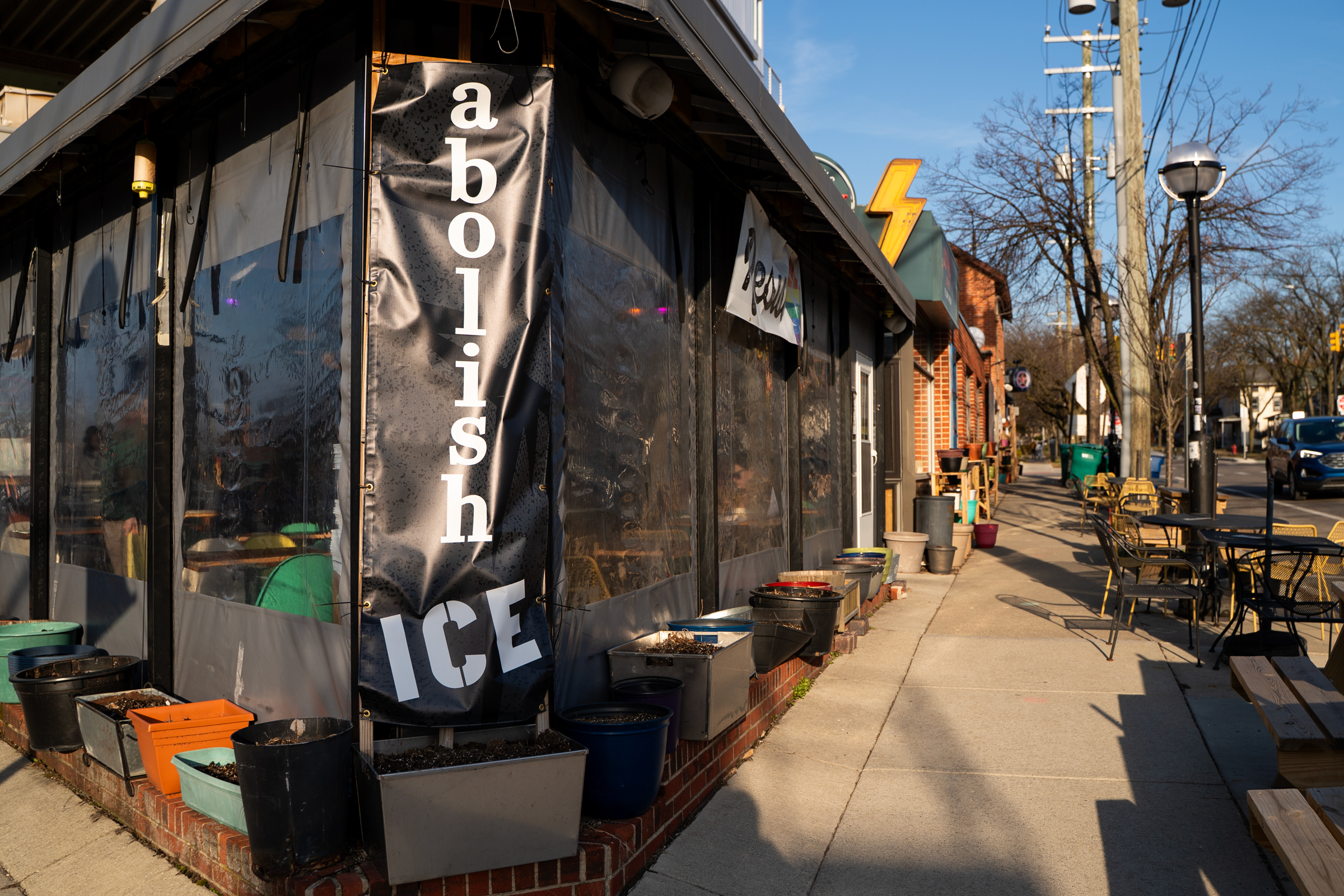
Phyllis Engelbart, owner of the Detroit Street Filling Station, shared her motivation for displaying large anti-ICE banners at her restaurant following the tragic death of Renee Nicole Good. Engelbart indicated that she offered similar signage to other local businesses, though many declined to participate.
On February 12, Engelbart received a prominent “Abolish ICE” sign, which she distributed freely to approximately 225 city residents, despite some businesses opting out of displaying them. Engelbart believes that empowering individuals to voice their concerns is crucial, and she hopes the City Council’s initiative to provide these resources will inspire more residents to speak out.
Grassroots Movement Gaining Momentum
Puno recognized that while some of the signs may not change the current political landscape, they symbolize the beginning of a grassroots movement aimed at fostering an inclusive America for all, including immigrants. “These signs represent the inception of a broader effort to reclaim this country and align it with values that foster freedom for everyone,” he stated.
Amid discussions, Engelbart emphasized the importance of public visibility and expressed her desire for the community to unite. “Silence is not an option in these situations,” she asserted. “The more visible we are and the louder we speak, the more protection we all gain. I believe it’s commendable that the city is leading by example, and I’m hopeful it will motivate others to join the cause.”
Daily staff reporter Rebecca Borlace can be reached at rborlac@umich.edu.
