


Artemis II Crew Reaches Lunar Space Community
The Artemis II astronauts have officially arrived in the lunar space community. Their Orion capsule crossed into the moon’s sphere of influence at approximately 12:41 a.m. ET on Monday, entering a region of space where the moon’s gravitational pull surpasses that of Earth.
A Significant Milestone for NASA
Nasa Flight Director Rick Henfling emphasized the importance of this achievement during a press conference held on Sunday. “This is an important milestone for our mission,” he stated, reflecting on the significance of the astronauts’ progress.
Understanding the Moon’s Influence
The moon’s sphere of influence serves as a mathematical boundary, indicating the astronauts’ proximity to the lunar body rather than a physical or tangible threshold. By crossing this boundary, NASA marks a historic moment as this is the first time in over 50 years that astronauts have entered this region, a milestone last reached during Apollo 17 in 1972.
A Glimpse of Earth from Space
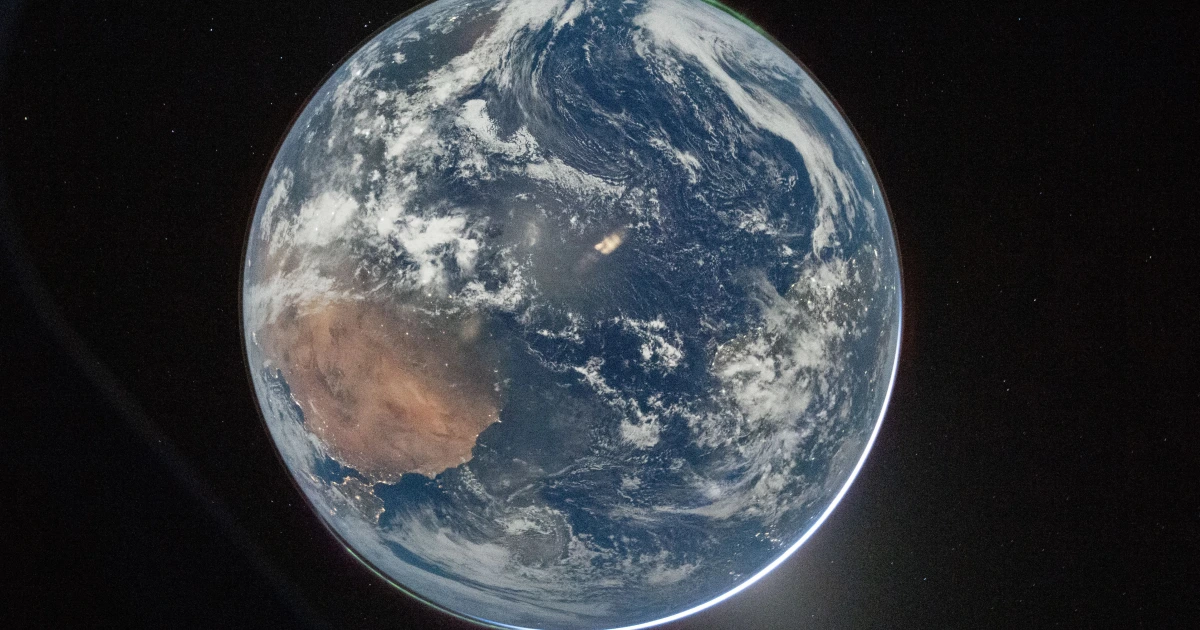
On their journey, the astronauts shared images capturing their “last view of Earth before reaching the moon.” These stunning photos depict the planet as a distant crescent, framed beautifully by the Orion spacecraft’s window.
Activities of the Artemis II Crew
The crew members, including NASA astronauts Reed Wiseman, Christina Koch, Victor Glover, and Canadian astronaut Jeremy Hansen, began their Sunday with an encouraging wake-up message from Apollo 16 astronaut Charlie Duke. Duke reminisced about landing on the moon in 1972 in a lunar module named Orion, and expressed pride in seeing a new version of Orion facilitating humanity’s return to lunar exploration.
Testing New Spacesuits for Safety
The astronauts also dedicated time to testing newly designed spacesuits tailored for this mission. While these vibrant orange suits are primarily worn during launch and reentry, they are crucial for emergencies, providing a breathable atmosphere for up to six days in the event of cabin depressurization.
Engine Adjustments and Upcoming Milestones
On Sunday, the Orion spacecraft executed a 14-second engine burn to maintain its correct orbital trajectory around the moon. Although initial correction burns were planned for other days, Henfling noted that the capsule’s orbit proved precise, allowing the mission to proceed without these adjustments earlier in the journey. The Artemis II crew is set to orbit the moon today, anticipated to reach a record distance of approximately 452,760 miles from Earth, surpassing the Apollo 13 crew’s previous record of 248,655 miles.
Lunar Observations and Scientific Endeavors
Beginning at 2:45 p.m. ET, the astronauts will survey and photograph the moon for around seven hours, focusing on uncharted areas of its surface. NASA will provide live coverage of this historic flyby starting at 1 p.m. ET. During this critical moment, the Orion spacecraft is expected to come within 4,070 miles of the moon’s surface, allowing the crew to capture vital scientific data using two Nikon D5 cameras and one Nikon Z9 camera.
Exploring Unique Geological Features
The mission prioritizes 30 scientific objectives, with focus on the Oriental Basin, a crater formed 3.8 billion years ago by a significant impact. This nearly 600-mile-wide region, located on both the near and far sides of the moon, contains unique geological features that offer insights into the moon’s ancient history. Additionally, the crew will explore the degraded features of the Hertzsprung basin, allowing scientists to compare the lunar topography over time.
Real-Time Decision Making during Exploration
Artemis II’s lunar science director, Kelsey Young, described the schedule as “packed” but remains confident in the crew’s ability to adapt. “They are scientists in the field and are encouraged to go off-script if they are inspired by what they observe,” she stated.
A Unique Cosmic Perspective
As their lunar viewing period concludes, astronauts will witness a solar eclipse from space lasting about an hour. The event will begin at 8:35 PM ET when the moon obscures the sun, revealing the sun’s corona and allowing for distinct opportunities to observe other planets like Mercury, Venus, Mars, and Saturn. Young underscored the unique advantage the crew has to become the first humans to view the moon from this perspective, highlighting the mission’s exploratory nature and the vital observations it will yield.
