


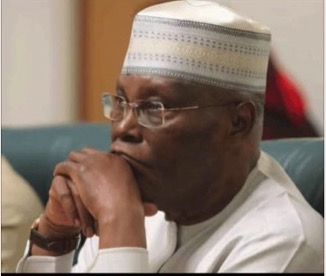
Atiku Abubakar Criticizes Security Situation Amidst Fuel Price Controversy
Former Vice President Atiku Abubakar has condemned the recent increase in violent attacks across Nigeria, highlighting the threat these pose to the nation’s peace, unity, and stability. His remarks were spurred by President Bola Tinubu’s recent comments comparing Nigeria’s fuel prices to those of other African nations, which Abubakar argues oversimplify a complex financial struggle faced by many Nigerians.
In a statement released on X’s official platform, Atiku denounced the ongoing incidences of terrorism and banditry, asserting that such violence against innocent civilians should not define Nigeria. He extended his condolences to the victims and affected communities, calling for authorities to enhance efforts to tackle the escalating security crisis. “The primary duty of any government is to safeguard life and property. Therefore, a united and coordinated approach is essential to overcome these challenges and restore public trust,” he stated. Atiku further acknowledged the support from the U.S. government in combating terrorism and underscored the importance of sustained international collaboration.
The statement comes amid a troubling surge in violent attacks across various regions. In Borno State, a recent assault on a military base in Benishek resulted in significant loss of life and damage, claiming the lives of soldiers, including Brigadier General OO Buraima. Despite extensive military operations, the northeastern region remains threatened by persistent insurgent activities from Boko Haram and its offshoot, the Islamic State West Africa Province. Other incidents during Easter highlighted the precarious security situation, with deadly assaults reported in Kaduna and Benue states.
In Kaduna, assailants targeted a church in Aliko village, resulting in the deaths of five worshipers and the abduction of 31 others. Concurrently, in Benue State, armed herdsmen killed 10 residents in the Gweru East local government area. Additional reports indicated a police officer was killed in Katsina State, and attacks on the Awapur community in Chibok Local Government Area of Borno left homes and businesses destroyed. Coordinated assaults in Kebbi and Kwara states reportedly resulted in at least 49 fatalities, with Kebbi alone recording 44 deaths across several communities in the Shanga Local Government Area.
These recent security incidents have sparked growing concerns about deteriorating safety, particularly in rural areas that often fall prey to armed groups. Despite the grim circumstances, Atiku expressed hope for Nigeria’s resilience, emphasizing that through collective determination, the country will ultimately prevail over its challenges.
Atiku Challenges Tinubu’s Comments on Fuel Pricing
Atiku also took issue with President Tinubu’s remarks regarding Nigeria’s fuel prices compared to those in other African nations. He articulated his viewpoint through a statement from his Senior Special Assistant on Public Communication, Plank Shaibu, in Abuja. The criticism followed Tinubu’s comments during a visit to Bayelsa State, where he acknowledged the hardships presented by rising costs yet urged Nigerians to appreciate that their petrol prices remain lower than in countries such as Kenya. The President also promised relief measures for those most affected.
In response, Atiku argued that the comparison made by the President was misguided and failed to reflect the true economic situation faced by Nigerians. He emphasized, “It’s perplexing and concerning that the president would focus solely on fuel prices as an indicator of economic well-being, neglecting critical factors such as purchasing power, income levels, and the overall cost of living.” According to Atiku, such a selective analysis reveals either a fundamental misunderstanding of economic realities or an intentional effort to divert attention from policy shortcomings.
While acknowledging that Nigeria’s petrol prices may appear lower than those in nations like Kenya and South Africa, Atiku noted that this comparison becomes less relevant when considering the broader economic context. He highlighted that Nigeria currently endures a higher cost of living than Kenya, with average living expenses significantly surpassing those related to fuel prices.
Atiku further pointed out the decline in Nigerians’ earning power, contrasting it with that of citizens in Kenya. “The sharp drop in earning capacity is alarming; Kenya’s per capita GDP is nearly double that of Nigeria. A minimum wage worker’s take-home pay in Nairobi is roughly N170,000, exceeding Nigeria’s N70,000,” he explained. “While Kenyans earn more and face higher costs, Nigerians grapple with lower incomes and increasing economic pressures—an essential aspect the President seems to overlook.”
Additionally, he criticized Nigeria’s wage structure, stating it fails to reflect regional economic differences. He reiterated that affordability extends beyond mere pricing; it also encompasses the relationship between personal income and expenses. “Nigerians have never known a more challenging economic landscape in this regard,” he stated. Atiku concluded by expressing disappointment that the president opted for a narrative based on selective statistics when the nation yearns for empathy, clarity, and strong leadership during such troubling times marked by rising poverty and inflation.
