


Major League Baseball Introduces Review System for Ball and Strike Calls
For over a century, baseball’s home plate umpires have relied on subjective interpretations of the strike zone to determine balls and strikes. This ambiguous approach has influenced at-bats, outcomes of games, and entire seasons, fueling endless debate among fans and players alike.
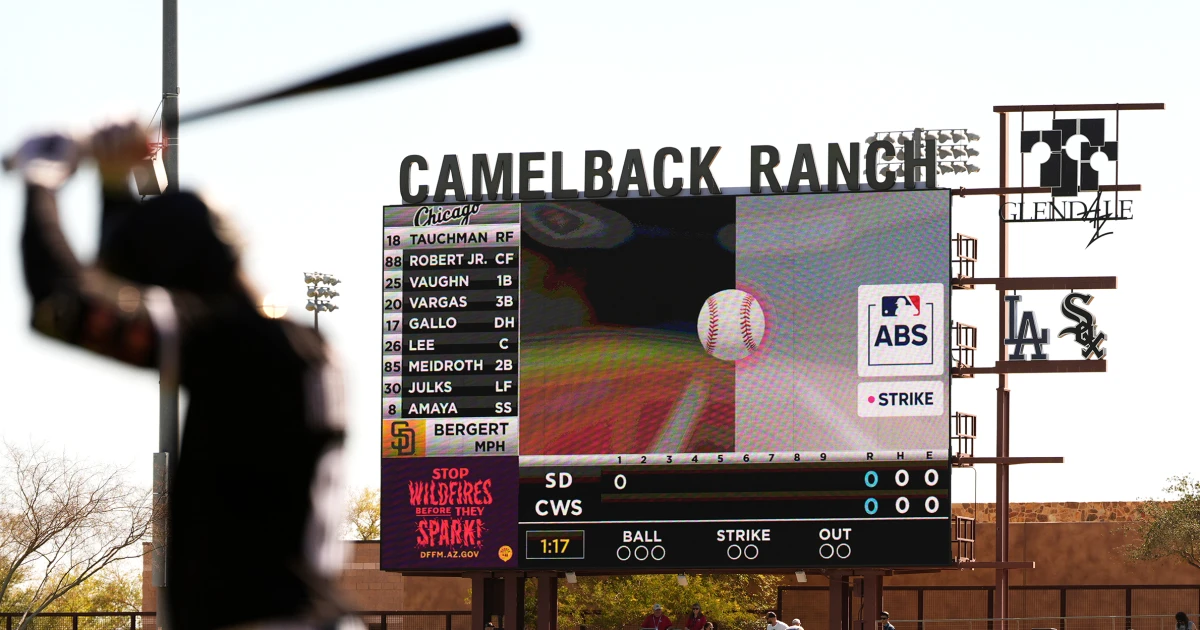
In a significant move, Major League Baseball (MLB) is rolling out a review system that allows players to challenge ball and strike calls for the first time this season. This innovation brings clarity to the strike zone, aiming to resolve long-standing disputes surrounding it.
The Automated Ball Strike (ABS) Challenge System, previously tested in minor leagues and MLB Spring Training, is set to debut on Wednesday night during the season opener featuring the San Francisco Giants and the New York Yankees, which conveniently takes place in the nation’s technology hub.
During games, after every pitch, umpires will make a call on balls and strikes, followed by a two-second window in which batters, pitchers, or catchers can initiate a challenge. If a review is triggered, the determination on whether the pitch passed through the strike zone will be displayed on the stadium’s scoreboard, creating palpable tension similar to tennis challenge systems.
Each team is permitted two challenges per game, and successful challenges allow teams to retain their appeals. To implement this system effectively, MLB had to establish a precise definition of the strike zone, a concept that has remained variable and subjective throughout baseball’s history.
This development represents a major shift in the sport, with the potential to alter gameplay and strategies significantly, much like the impact of the designated hitter rule adopted by the American League in the 1970s. According to MLB historian John Thorne, the significance of the ABS system may surpass even that of historical rule changes, including the foul strike rule from a century ago.
Defining the New Strike Zone
Historically, the strike zone has been a subjective area influenced by individual umpires. Traditionally, a strike was defined as a pitch that crosses home plate, with the upper boundary being set between the batter’s shoulders and the top of their uniform pants, while the lower edge is just below the kneecap.
Joe Martinez, MLB’s vice president of on-field strategy, explained that umpires often adjust their calls based on various factors like the game situation and score, leading to inconsistencies in strike zone interpretations. However, the new system mandates a stricter definition of the strike zone based on the batter’s height—designating a strike as a pitch that crosses home plate within 27% to 53.5% of the batter’s height.
Under this regulation, if a challenged pitch intersects this defined “pane of glass” at home plate, it will be called a strike, potentially minimizing the controversy that has long surrounded these calls.
Importance of Replay Reviews
The necessity for replay reviews in baseball became clear during the recent World Baseball Classic, where a pivotal third strike call in the semifinal game between the United States and the Dominican Republic left players and fans questioning the umpire’s decision.
Marlins catcher Liam Hicks noted that the pitch was unjustly called, emphasizing that an effective replay system could have altered the game’s trajectory. Even calls not directly leading to a walk or strikeout can have significant consequences, as subsequent pitch decisions can dramatically swing the count and influence a batter’s performance.
For instance, if a batter is ahead in the count at 3-1, their batting average, on-base percentage, and slugging percentage significantly improve; conversely, if the call is a strike, pushing the count to 2-2, the advantage flips to the pitcher.
Navigating Strategy with Instinct
Players face the challenge of deciding when to utilize their limited challenges without guidance from coaches or teammates. MLB regulations stipulate that players must make their appeal decisions independently. Martinez highlighted that should players receive outside assistance during a challenge, referees have the discretion to reject the appeal.
With a limited number of challenges per game, teams must use them strategically. Marlins manager Clayton McCullough indicated a preference for allowing catchers to make the call on challenges, as they are in a better position to assess the play in real time.
In Triple-A games last year, the challenge success rate hovered around 50%, underscoring the need for careful consideration when deciding to appeal. Many Major League Baseball players and managers have expressed intentions to reserve their challenges for critical moments in the game, focusing on high-leverage situations.
Adapting to the New System
Despite MLB’s efforts to educate fans about the new system with pregame tutorials, many remain unaware of its implementation. At a recent spring training game, fans expressed mixed feelings about the introduction of technology into the core of the game, with some preferring traditional methods over digital intervention.
Fan sentiments varied widely: while some embraced the innovation, others were skeptical, wishing for human oversight in key challenge decisions rather than reliance on automated systems. Concerns were voiced about the possible loss of the sport’s historical essence with increased technology integration.
